Showing posts with label cemetery. Show all posts

Friday, 8 June 2018

'Gudbuy T'Leeds': A Teeny Tiny Psychogeographical Goodbye to the University of Leeds

This is a very short film of my last wander on campus, saying goodbye to some of the places there. The title of the blog is a nod to Slade's 1972 single 'Gudbuy T'Jane', for those of you who can remember it. My trip was aided by Rob from Engineering, who you will briefly see in the film.

I'm off to the Manchester Fashion Institute at MMU now!

Click here for the film: Gudbuy T'Leeds


Saturday, 3 March 2012

St George's Field: Decontextualization and Desire


Following on from my post Traversing Transversality, I would like to provide an example of schizocartography as it appears in the space of St George's Field, the University of Leeds cemetery.

Sculpture by Charlotte Deponeo
© Deborah Gardner


For her BA project in the School of Design, Charlotte Deponeo took casts of the text on the gravestones in St George's Field and rather than making further sculptures from these casts, the casts themselves were presented as the actual sculptures. One sculpture was placed outside the cemetery, but still on the university campus, near the School of Design, where it could then be stumbled upon by accident: indeed a number of us from Leeds Psychogeography Group found it on an organised walk one day.

This process of spatially decontextualizing the gravestones in the form of the cast (which looks like a kind of tomb), being placed elsewhere becomes part of a process of deterritorialization in the opening up of the (en)closed space of the cemetery to the outside. Félix Guattari explains that subjectivity is attached to territories, spatial and otherwise, which are ascertained in many ways, for example, through social and cultural determinations. (2008: 471:2) However "Territory can be deterritorialized, that is, it can open up, engage in lines of flight, and even move off course." (2008: 472) The words on the gravestone have also been decontextualized and reappropriated. Instead of only existing on their separate gravestones in situ in the cemetery, individual parts of the text of particular gravestones have been taken and placed together on the inside of the sculpture. This means they have been formed into a new semiotic assemblage: "Schizoanalysis [...] is interested in a diversification of the means of semiotization [...] it abandons the terrain of signifying interpretation for that of the exploring of assemblages of enunciation." (italics Guattari's) (2008: 395)

Charlotte has created an assemblage of enunciation in the form of her sculpture, by re-presenting the cemetery back to the university (and, in a sense, back to itself) by placing it in a different context, both spatially and materially: "The work of art, for those who use use it, is an activity of unframing, of rupturing sense [...] which leads to a recreation and a reinvention of the subject itself." (1995: 131) Guattari explains that this process of “recomposition” enables “a search for enunciative nuclei which would institute new cleavages between other insides and other outsides and which would offer a different metabolism of past-future where eternity will coexist with the present moment.” (1995: 90)

The schizoanalytic process involved in the making of the sculpture also has the function of bringing the past into the present and, in a sense, de-mythologizing it. Guattari explains what is happening in these situations: “Existential Territories become diversified, heterogenised. The event is no longer enclosed in myth: it becomes a nucleus of processual relay." (1995: 105-106) The dominant order of the institution becomes momentarily translucent, its image fades away and other histories are momentarily made available. The concept of myth was also significant to the Situationist International. In their critique of consumer culture they saw the city as being a mythologised space representing the hollow sign that appeared in the form of the spectacle. This meant that the city could then become a place where private desires were then played out in the public domain in a consumerist form. (McDonough 1994: 76) Guattari's schizoanalytic cartography helps reveal the myth of controlling aesthetics and enables a space for subjective desires to come into play. Guy Debord sees the powers employed by capitalism in urban design as applying processes to space in such a way as it become homogenised. (2005: 165 and 171) The landscaping of the cemetery could be considered to have resulted in a homogenised space, losing (hiding) its 'real' character and separating it from its origins.

Links:
St George's Field Fallow Again: A Schizocartography
The Psychogeography of Other Spaces
St George's Field: Traversing Transversality

References:
Debord, Guy. 2005. The Society of the Spectacle (Detroit: Black and Red).
Guattari, Félix. 1995. Chaosmosis: An ethico-aesthetic paradigm, trans. by Paul Bains and Julian Pefanis (Bloomington and Indianapolis: Indiana University Press).
Guattari, Félix and Suely Rolnik. 2008. Molecular Revolution in Brazil, trans. by Karel Clapshow and Brian Holmes (Cambridge, Mass and London: The MIT Press).
McDonough, Thomas F. 'Situationist Space', October, 67, Winter (1994), 58-77.

Saturday, 25 February 2012

St George's Field: Traversing Transversality


Gary Genosko describes Guattari's transversality as “the tool used to open hitherto closed logics and hierarchies.” (2008: 54) In a section of his book Félix Guattari: An Abberrant Introduction entitled 'Extension', Genosko discusses urban space and walking. He explains that a “transversal territory” which operates within unconventional power structures “is the site of pure potentiality and marked by such valorized terms as 'transgress' – 'deviate' – 'defy' – 'cut across' – 'disorganize' – 'smooth space'.” (Genosko 2002: 57) He says that this mode of operating in space provides an alternative form of articulation, providing one with a different self to that which is expected by the dominant powers in the capitalistic city. (2002: 58)

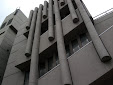
The act of traversing is a good example of a physical act of transversality. In mountaineering, traversing is the term used to describe how one moves sideways across a rock face, as can be seen below. This photo - taken in 2011 with a Diana F+ - shows a student who is traversing the old wall of the cemetery which now forms part of the base of the Henry Price Halls of Residence on the northern border of the University of Leeds cemetery St George's Field. This wall is located under the Henry Price building and the beams of the building can be seen in the top of the images. It is made from the original bricks of the cemetery wall and follows the original line.


Traverse is described in the Oxford English Dictionary as: "to pass or journey across, over, or through; to pass through (a region) from side to side, or from end to end". However it is further described as a type of writing: "To trace [...] continuously without lifting the pen or pencil", as a way of negotiation life: "To 'go through' life (life, time or anything figured as extended space or region)" and a form of reading: "to read through or consider thoroughly". This act of traversing in the cemetery also satisfies Genosko's list of verbs above in cutting across and deviating from the usual paths through the space. It is also an act of defiance and while the notices on the outside of the cemetery only forbid ball games, it is possible that traversing may be considered a transgressive act also. While the traversing student may not intentionally be acting defiantly, he does challenge the use of the space and also provides a new route that is inspired by his own subjective desire to respond to the environment in an unconventional way: "Transversality in the group is a dimension opposite and complementary to the structures that generate pyramidal hierarchization and sterile ways of transmitting messages." (1984: 22)

For Guattari it is desire that enables creativity to be expressed and challenges the accepted, and dominant, logic of a given situation. Desire is the productive, and constructive, force of life: "I propose to denominate as desire all forms of the will to live, the will to create, the will to love, the will to invent another society, another perception of the world, and another value system." (Guattari 2008: 318) To the student it might not be apparent they are crawling along the walls of the old cemetery, merely the wall of a modern building. Nevertheless, the very act itself questions both the permissions and power attached to allowing, and preventing, certain behaviours in particular places, and also the underlying logos of the space in the sense that individuals have certain 'common sense' actions expected of them.

Desire finds a route via transversality, allowing it to be released from overriding social forms that attempt to regulate the subjectivity of the individual.

Links:
St George's Field Fallow Again: A Schizocartography
The Psychogeography of Other Spaces

References:
Genosko, Gary. 2002. Félix Guattari: An Aberrant Introduction (London and New York: Continuum).
Genosko, Gary. 2008. 'The Life and Work of Félix Guattari', The Three Ecologies, trans. by Ian Pinder and Paul Sutton (London and New York: Continuum) pp. 46-78.
Guattari, Félix. 1984. Molecular Revolution: Psychiatry and Politics, trans. by Rosemary Sheed (Harmondsworth: Penguin Books).
Guattari, Félix and Suely Rolnik. 2008. Molecular Revolution in Brazil, trans. by Karel Clapshow and Brian Holmes (Cambridge, Mass and London: The MIT Press).

Sunday, 8 January 2012

A Trip to St Georges Field on a Not So Hotsy Totsy Sunny Day


Many Saturdays over this winter have I attempted to get some sun on the scene that is St George's Field - the cemetery at the University of Leeds - in order to get some good photos to accompany my thesis. And again this Saturday it was a dreary Northern sky overlooking the campus. However, I did manage to get all the photos I had planned to get except one, a nice clear image of the sculpture of James Schofield's helmet on the firemen's memorial near the gatehouse of the cemetery. The photo below was taken on a previous trip.*


Schofield died in the Dark Arches Fire of 1892. The Dark Arches are located near the rail station in Leeds. Apparently there were 100,000 mourners at his funeral.

One of the tasks I'd set myself was to photo all the entrance/exists to the cemetery, however I won't be including all of them in this blog, but rather some of the other phenomenon I came across: those things I wasn't expecting to encounter, like this rack of old paint, waiting to be chucked out along with much other rubbish. This entrance to the cemetery is located near the Maintenance building and behind the Old Mining Building. You would only find this entrance from the outside direction if you were snooping (as is my wont), because it is really well hidden.


At one point I spotted lots of magpies under this tree. When I got there I found they had been eating the apples that were strewn over the floor beneath. Most of the apples were rotten, but many looked fine and must have survived in the cold weather.


I came across this memorial for the first time. Apologies for the poor image, but it says:
"I don't care to belong to a club
that accepts people
like me as members"
Groucho Marks
Charlie Velu 1986-2010


I've never come across the memorial before. I can't seem to find any information on the university website or even on google. I guess, because of his age, he had been a student at the university.

The memorial that I am mostly interested in is this one, which I have previously written about. The twin sister of Pauline Mavis White, Christine Bairstow, has been in correspondence with the university over the moving of her sister's gravestone. Even as recently as 2008 there are articles in the Yorkshire Evening Post: Leeds pensioner begs university to mark sister's grave


I have visited this memorial a good few times over the past couple of years. Today I managed to get a good photo, which included some recently left red roses. So someone, probably her sister, still tends the memorial.

My trip to the cemetery was psychogeographically interesting as it almost always is. I've included this final photo because despite earlier saying it wasn't sunny, I note some beams of sunlight filtering through the top of my image.


*If anyone has a good crisp image of the helmet and would be happy to share it with me, that would be great. Thanks.

Links:
An Island of Heterotopia
St Georges Field, University of Leeds
For the Benefit of Mr. Kite
Uneasy Sunny Day Hotsy Totsy by Ian Dury