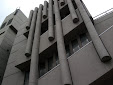
This is a very short film of my last wander on campus, saying goodbye to some of the places there. The title of the blog is a nod to Slade's 1972 single 'Gudbuy T'Jane', for those of you who can remember it. My trip was aided by Rob from Engineering, who you will briefly see in the film.
I'm off to the Manchester Fashion Institute at MMU now!
Click here for the film: Gudbuy T'Leeds
Showing posts with label St George's Field. Show all posts
Friday, 8 June 2018
Saturday, 13 June 2015
In Memory of Pauline Mavis White (1946)
Meeting Across Time and Space in St George’s Field
In May I was kindly invited by Christine Bairstow to a memorial event in the cemetery at the University of Leeds, St George’s Field. Every year Christine visits the cemetery on the campus where her sister, Pauline Mavis White, is buried. Pauline is Christine’s twin sister and died on the 10th of June 1946, when they were 6 months old, after a serious illness that they both suffered. This blog is to say thank you to Christine for generously asking me to share her very special afternoon. The images and text will be interspersed with relevant text from my doctoral thesis, which is actually how Christine found me to start with.
My thesis examined the way the university has historically used space and the contradictions between the higher level discourse of the institution and how it is spatially played out in regards to social history. There is a full chapter on the cemetery entitled ‘Finding St George’s Field’ and a section within that on Christine and Pauline called ‘In Memory of a Dear Sister’. You can read the full thesis here: ‘The Unseen University: A Schizocartography of the Redbrick Campus’
In summary, the University of Leeds acquired the cemetery during the major (Chamberlin, Powell and Bon) 1960s redevelopment period on campus. At this time Woodhouse Cemetery was in a state of disrepair. Initially the university had hoped to be able to maintain the cemetery as it was, but on further examination this turned out to be too expensive and they got an Act of Parliament in 1965 to enable them to purchase the shares for the plots and then turn the cemetery into a landscaped park. This led to the setting up of the Woodhouse Cemetery Defence Organisation to protect the cemetery, but the university won the battle in the end. The gravestones were removed, although the bodies still remain.
Wednesday 10th June 2015 was a beautiful sunny day and I caught site of Christine in the distance walking towards the space under a tree where the plaque is located. I recognised her from her facebook profile image. She was carrying flowers.
“It might not initially be apparent that the eventual procurement of the cemetery land by the university is one oriented towards a capitalist agenda, but as Guattari states, “capitalistic modes of production” do not necessarily manifest in obviously capitalist-oriented procedures (2008a: 21). I argue that while the cemetery acquisition, on a superficial examination, appears to have little to do with capital, it is a function of the agenda of the new university, the neoliberalist, posthistoric model. The social history of the cemetery is problematic for the university. Nevertheless, the capitalist agenda is one that is capable of eventually dealing with these conjunctions because it can both organise time and space in a way where incongruities become unproblematic: “The power sign’s polyvocality enables it to tolerate these structural alliances perfectly well” (Guattari 2006: 228). Polyvocality is capitalism’s recuperation of heterogeneity. It reformulates and repackages it and presents it back to us in an attractive, seemingly innocuous, form, to be further consumed. Thus, the cemetery is now consumed as a public garden.”
Christine told me about her sister and parents and about her own childhood. She explained that the university had a planted a tree for the family a little way away from the actual unmarked plot. She showed me the approximate place where Pauline is buried and she sat there and I took the photo above.
“In one sense St George’s Field, as a postmodern space located within an institutional setting, has become a reconciled space when situated within the larger project of capitalism. Its renaming, back to its original name, creates a form of distance from its ‘real’ function (it still is a graveyard after all) and its controversial recent history. St George’s Field, hence, becomes a new space making it easier to forget a past that is not attached to it via the proper noun (Woodhouse Cemetery or Leeds General Cemetery). St George’s Field is at odds with itself, in being both a cemetery and at the same time a public park of sorts. Can it simultaneously reconcile itself as a place of leisure and a sacred burial space? What is apparent is that changing its name has changed its function and this has enabled both a type of cultural forgetting to take place and also the availability of a whole new set of powers to both the Council and university in how they control, market and manage the space.”
Thank you, Christine, for inviting me along to your memorial day, I was extremely touched to be part of it and it was really lovely to meet you.
Related Links on St George’s Field:
Dying to Find It
A Not So Hotsy Totsy Sunny Day
The Psychogeography of Other Spaces
Fallow Again
In May I was kindly invited by Christine Bairstow to a memorial event in the cemetery at the University of Leeds, St George’s Field. Every year Christine visits the cemetery on the campus where her sister, Pauline Mavis White, is buried. Pauline is Christine’s twin sister and died on the 10th of June 1946, when they were 6 months old, after a serious illness that they both suffered. This blog is to say thank you to Christine for generously asking me to share her very special afternoon. The images and text will be interspersed with relevant text from my doctoral thesis, which is actually how Christine found me to start with.
My thesis examined the way the university has historically used space and the contradictions between the higher level discourse of the institution and how it is spatially played out in regards to social history. There is a full chapter on the cemetery entitled ‘Finding St George’s Field’ and a section within that on Christine and Pauline called ‘In Memory of a Dear Sister’. You can read the full thesis here: ‘The Unseen University: A Schizocartography of the Redbrick Campus’
In summary, the University of Leeds acquired the cemetery during the major (Chamberlin, Powell and Bon) 1960s redevelopment period on campus. At this time Woodhouse Cemetery was in a state of disrepair. Initially the university had hoped to be able to maintain the cemetery as it was, but on further examination this turned out to be too expensive and they got an Act of Parliament in 1965 to enable them to purchase the shares for the plots and then turn the cemetery into a landscaped park. This led to the setting up of the Woodhouse Cemetery Defence Organisation to protect the cemetery, but the university won the battle in the end. The gravestones were removed, although the bodies still remain.
Wednesday 10th June 2015 was a beautiful sunny day and I caught site of Christine in the distance walking towards the space under a tree where the plaque is located. I recognised her from her facebook profile image. She was carrying flowers.
“It might not initially be apparent that the eventual procurement of the cemetery land by the university is one oriented towards a capitalist agenda, but as Guattari states, “capitalistic modes of production” do not necessarily manifest in obviously capitalist-oriented procedures (2008a: 21). I argue that while the cemetery acquisition, on a superficial examination, appears to have little to do with capital, it is a function of the agenda of the new university, the neoliberalist, posthistoric model. The social history of the cemetery is problematic for the university. Nevertheless, the capitalist agenda is one that is capable of eventually dealing with these conjunctions because it can both organise time and space in a way where incongruities become unproblematic: “The power sign’s polyvocality enables it to tolerate these structural alliances perfectly well” (Guattari 2006: 228). Polyvocality is capitalism’s recuperation of heterogeneity. It reformulates and repackages it and presents it back to us in an attractive, seemingly innocuous, form, to be further consumed. Thus, the cemetery is now consumed as a public garden.”
Christine told me about her sister and parents and about her own childhood. She explained that the university had a planted a tree for the family a little way away from the actual unmarked plot. She showed me the approximate place where Pauline is buried and she sat there and I took the photo above.
“In one sense St George’s Field, as a postmodern space located within an institutional setting, has become a reconciled space when situated within the larger project of capitalism. Its renaming, back to its original name, creates a form of distance from its ‘real’ function (it still is a graveyard after all) and its controversial recent history. St George’s Field, hence, becomes a new space making it easier to forget a past that is not attached to it via the proper noun (Woodhouse Cemetery or Leeds General Cemetery). St George’s Field is at odds with itself, in being both a cemetery and at the same time a public park of sorts. Can it simultaneously reconcile itself as a place of leisure and a sacred burial space? What is apparent is that changing its name has changed its function and this has enabled both a type of cultural forgetting to take place and also the availability of a whole new set of powers to both the Council and university in how they control, market and manage the space.”
Thank you, Christine, for inviting me along to your memorial day, I was extremely touched to be part of it and it was really lovely to meet you.
Related Links on St George’s Field:
Dying to Find It
A Not So Hotsy Totsy Sunny Day
The Psychogeography of Other Spaces
Fallow Again
Saturday, 26 May 2012
When E.W.D. Hurst raises his arm, we follow...
...into
the bowels of the Parkinson Building at the University of Leeds. To
the university's secret place: the cemetery. And even into Ellie's
bedroom in the Henry Price Halls of Residence!
We
met E.W.D. Hurst on the iconic Parkinson Steps and were given our
special exploration pack and a new name:
We
had all responded to a call out for intrepid explorers and turned up
on the steps with our "pocketful of dreams" (E.W.D. Hurst)
ready to brave the hazards, hidden dangers and lurking monsters
secreted away in the nooks and crannies of the campus. And, of
course, to be impressed by all the extras who had been placed around
the campus in order to make it appear authentic. As you can see in
this photograph of actors in the cemetery pretending to enjoy the sun
after a hard week of exams:
We even had special pop-up actors - not extras because they had speaking parts - who pretended to be research fellows from the geography department. This one called himself Andy Turner and while it looks like he is wearing a tablecloth, it is the original flag from the first North/South pole expeditions... apparently:
Our exploration took us to a number of artworks around the campus. Some by the BA Fine Art students, but also some by guerilla artists. The image below shows us looking at a pop-up gallery in the Brotherton library, and below that is one of the more spontaneous installations:
We
had a great afternoon in the sunshine with the entertaining and
enigmatic E.W.D. Hurst and also met a fabulous group of people all
with pseudonyms which our leader, amazingly, seemed to remember. We
got to blow whistles, set off party poppers, applaud random groups of
people and had a thoroughly good time!
This
is Curly Richardson, at the university, signing off!
Related
Links:
Saturday, 12 May 2012
Richardson and Robinson in Ruins
The University in Ruins
Robinson in Ruins
Saturday, 17 March 2012
St George's Field: Aesthetico-Affective Acts
Odette Dewhurst, at the University of Leeds, alerted me to this gravestone in the university cemetery, St George's Field. She found it in August 2011 and when I went there in February this year (2012) it was still there (see image below).
The gravestone is of a similar style to many others located in this part of the garden. It is not of a particularly impressive design and contains the words "IN MEMORY OF/ JAMES ROBINSON MASON OF LEEDS/who died March 15th 1840/aged 45 Years". With yellow and red chalk or pastel someone has drawn a flying (rising?) bird in an expressionist style, in a way that makes the bird look like it is taking off and moving upwards. Odette has called it a phoenix. I am not sure if it was the intention of the artist to be a phoenix, but it does look like one and the semiotic context (a graveyard, death, ashes) could suggest it is.
This drawing is temporary: if it was not removed by anyone at the university (by estates staff or students), it would eventually be removed by 'the elements'. The artwork serves as a schizoanalytical action in that it incorporates both an "aesthetic production" and a "micro-political act". (Guattari 1998: 433) The artwork could also be considered in relation to the concept of death, providing one assumes it is a phoenix; but, also because of its situation in a graveyard. Félix Guattari poses the problem of the death instinct in relation to desire, explaining that in contemporary society with its dominant capitalist subjectivity, schizoanalysis enables the death instinct to be side-stepped by desire which then subjectively changes in differing situations. (1998: 72) For this reason the phoenix drawing could be considered the symbol that represents the presence of schizocartography actually taking place in St George's Field. The Situationist Raoul Vaneigem believed that for a true aesthetic of daily life we must all become artists in our negation of the death instinct in the way it was for Freud in the superego's submission to dominant individuals and structures. (2010: 95) This demonstrates that creativity does not have to be opposed to death but that, in a sense, they rise concurrently outside of any dichotomous relationship that dictates some inevitably destructive end.
Guattari says of his aesthetic paradigm that:
it has ethico-political implications because to speak of creation is to speak of the responsibility of the creative instance with regard to the thing created, inflection of the state of things, bifurcation beyond pre-established schemas, once again taking into account the fate of alterity in its extreme modalities. (1995: 105)
The creative instance of the phoenix drawing is something that we cannot temporally tie down exactly, since we do not know when it was created, nor who the artist is. However, we can examine it in regards to its moving away from dominant modes of representation and pose some questions around its reception. For example, is it an anarchic work of art? Could it be considered to be graffiti? And, if there were relatives of the deceased still living, and they liked the artwork, would either of the two questions be relevant?
I ask these questions so as to place the art in the context of a potential viewer of the work in the sense that they would become the interface of a new assemblage: the 'university' would likely view it differently than a random student wandering through the garden. This is why this artwork could be considered a transversal object, because it helps us consider the situation from two directions:
The establishment of such a transversalist bridge leads us to postulate the existence of a certain type of entity inhabiting both domains, such that the incorporeals of value and virtuality become endowed with an ontological depth both equal to objects set in energetico-spatial-temporal coordinates. (Guattari 1995: 109)
The question of aesthetics is not only posed in regards to the multiplicity of the subjectivities of the potential viewers, but we are also pointed in the opposite direction, towards the origins of the dead person in the grave, to their personal and familial history. This also draws our attention to the issue of alterity as it is for St George's Field; not only in relation to the paupers grave, none of which were properly spared in the 1960s landscaping, but also to the question of who decided which gravestone survived and which did not.
Links to St George's Field posts in this series:
Subjectification and Singularization
Decontextualization and Desire
Traversing Transversality
References:
Guattari, Félix.' Schizoanalysis', The Yale Journal of Criticism, 11, 2 (1998), 433-439.
Vaneigem, Raoul. 2010. The Revolution of Everyday Life: An Illustrated Reader: Part 1 (Great Britain: Justpress).
Guattari, Félix. 1995. Chaosmosis: An ethico-aesthetic paradigm. Trans. Paul Bains and Julian Pefanis. Bloomington and Indianapolis: Indiana University Press.
Sunday, 11 March 2012
St George's Field: Subjectification and Singularization
The chapel at the centre of St George's Field has an undercroft - or columbarium (a vaulted storage space, usually used for cremated remains) - which is no longer accessible from inside or outside the chapel. Despite this, on 23rd June 2011, during a Leeds Psychogeography Group walk, it was discovered that the outside 'wall' of the undercroft had fallen down in one place, revealing the inside.
The particular dérive that Leeds Psychogeography Group were on that day was organised on the University of Leeds campus, and took us to St George's Field. One of the members of the group mentioned the undercroft and we decided to explore it, discovering on our arrival that one of the walls had fallen down in one place, revealing the inside. Near the entrance, on the inside, was a plaque. Unfortunately, we did not photograph the plaque or record a dictation of the text appearing on it at the time, hoping to return at a later date with the appropriate equipment. However, when I returned it had been closed up, by replacing the bricks with new mortar.
I contacted the member of Leeds Psychogeography Group who read out the plaque to us, a geography research fellow at the University of Leeds, Andy Turner. This is what he remembered:
The plaque, just in from the hole, mentioned a woman from Potternewton who died as a young mother. I think she was the wife of someone and they had an infant child that died some time shortly afterwards (this was mentioned lower down on the plaque). I can't quite recall the name of the woman at present or the dates or ages that I think were mentioned. I've some vague recollection of these details...
I also contacted the Estates Office at the university in order to ask about the plaque therein, and to see if there was any information held on it by Estates. This is the relevant part of the reply, which also makes reference to it being closed up again:
Mystery solved. Our maintenance guys have blocked off the undercroft in recent months with stonework and railings to prevent access from outside by 'undesirables'. They confirm there is no access from inside the chapel and thus there is now no access in to the undercroft. They did take photographs of the plaques in the undercroft before they closed up BUT they were of such poor quality they didn't keep them. Sorry but it seems the plaques are locked up forever!
The above quote is an example of how hiding works in postmodern space in a response to administrative decisions (however, it is important to say that the original bricking-up of the undercroft goes back to the 1960s). But, also it is apparent that there are certain 'types' of people that are not welcome in the garden (the scare quotes surrounding 'undesirables' is part of the original email). One of the most troubling aspects of this closing of the undercroft is that it is now a piece of lost social history, since neither the Estates Office, nor Leeds Psychogeography Group, have the full information from the plaque. Also, while it is not clear what types of 'undesirables' are being referred to here (perhaps homeless people or maybe just inquisitive students), the space has been defined as a place that includes some people and not others, and these exclusions will involve those who are deemed not to be 'fit' as part of a wider notion of how the university should appear.
But despite this, the (re)discovery of the undercroft by Leeds Psychogeography Group provides a good illustration of how desire operates within the "subject-group". For Félix Guattari subject-groups are the opposite of subjected individuals or groups, in that they are groups or individuals who are not taken over by dominant systems of power, for example, the super-ego, or political power such as capitalism (2008a: 471). They form a line of flight which is able, in the moment, to traverse temporal and spatial boundaries at the same time bringing to light a piece of social-history which is buried within the territory.
This type of praxis satisfies Guattari's Three Ecologies: the environment, social relations and human subjectivity:
Ecological praxes strive to scout out the potential vectors of subjectification and singularization at each partial existential locus. They generally seek something that runs counter to the 'normal' order of things, a counter-repetition, an intensive given which invokes other intensities to form new existential materials. (Guattari 2008b: 30)
They momentarily create a new space in response to the subject-group currently in attendance in the territory, accounting for their collective modus operandi, but also through their individual affective reactions. Guattari calls this process "transversality", which is a particular form of communication forming a bridge that takes unconventional routes between systems. (1995: 23-24) For Guattari these connections would not be dyadic (dialectical) nor triadic (Oedipal), and would, hence, operate outside of hierarchical power structures and semiotics.
The university's representation of the cemetery as a specific territory under its control, requires that it manages its appearance (spatially and abstractly) in a specific way in order that its incongruences are not left open to criticism. It does this through the management of what Guattari calls "transformers of signification – concrete machines.” (1984: 156) However, despite its attempts to do this, schizocartography, which opposes dominant histories, creates avenues which can be opened, revealing the voice of the other: "The cartography of abstract machinisms makes history by dismantling dominant realities and significations: they constitute the navel, the point of emergence and creationism of the machinic phylum." (Guattari 1995: 174)
Links:
St George's Field: Decontextualization and Desire
St George's Field: Traversing Transversality
References:
Guattari, Félix. 1984. Molecular Revolution: Psychiatry and Politics. Trans. Rosemary Sheed. Harmondsworth: Penguin Books.
Guattari, Félix. 1995. Chaosmosis: An ethico-aesthetic paradigm. Trans. Paul Bains and Julian Pefanis. Bloomington and Indianapolis: Indiana University Press.
Guattari, Félix and Suely Rolnik. 2008a. Molecular Revolution in Brazil, trans. by Karel Clapshow and Brian Holmes (Cambridge, Mass and London: The MIT Press).
Guattari, Félix. 2008b. 'The Life and Work of Félix Guattari'. In The Three Ecologies, trans. Ian Pinder and Paul Sutton, 46-78. London and New York: Continuum.
Sunday, 8 January 2012
A Trip to St Georges Field on a Not So Hotsy Totsy Sunny Day
Many Saturdays over this winter have I attempted to get some sun on the scene that is St George's Field - the cemetery at the University of Leeds - in order to get some good photos to accompany my thesis. And again this Saturday it was a dreary Northern sky overlooking the campus. However, I did manage to get all the photos I had planned to get except one, a nice clear image of the sculpture of James Schofield's helmet on the firemen's memorial near the gatehouse of the cemetery. The photo below was taken on a previous trip.*
Schofield died in the Dark Arches Fire of 1892. The Dark Arches are located near the rail station in Leeds. Apparently there were 100,000 mourners at his funeral.
One of the tasks I'd set myself was to photo all the entrance/exists to the cemetery, however I won't be including all of them in this blog, but rather some of the other phenomenon I came across: those things I wasn't expecting to encounter, like this rack of old paint, waiting to be chucked out along with much other rubbish. This entrance to the cemetery is located near the Maintenance building and behind the Old Mining Building. You would only find this entrance from the outside direction if you were snooping (as is my wont), because it is really well hidden.
At one point I spotted lots of magpies under this tree. When I got there I found they had been eating the apples that were strewn over the floor beneath. Most of the apples were rotten, but many looked fine and must have survived in the cold weather.
I came across this memorial for the first time. Apologies for the poor image, but it says:
"I don't care to belong to a club
that accepts people
like me as members"
Groucho Marks
Charlie Velu 1986-2010
I've never come across the memorial before. I can't seem to find any information on the university website or even on google. I guess, because of his age, he had been a student at the university.
The memorial that I am mostly interested in is this one, which I have previously written about. The twin sister of Pauline Mavis White, Christine Bairstow, has been in correspondence with the university over the moving of her sister's gravestone. Even as recently as 2008 there are articles in the Yorkshire Evening Post: Leeds pensioner begs university to mark sister's grave
I have visited this memorial a good few times over the past couple of years. Today I managed to get a good photo, which included some recently left red roses. So someone, probably her sister, still tends the memorial.
My trip to the cemetery was psychogeographically interesting as it almost always is. I've included this final photo because despite earlier saying it wasn't sunny, I note some beams of sunlight filtering through the top of my image.
*If anyone has a good crisp image of the helmet and would be happy to share it with me, that would be great. Thanks.
Links:
An Island of Heterotopia
St Georges Field, University of Leeds
For the Benefit of Mr. Kite
Uneasy Sunny Day Hotsy Totsy by Ian Dury
Subscribe to:
Posts (Atom)