In May I was kindly invited by Christine Bairstow to a memorial event in the cemetery at the University of Leeds, St George’s Field. Every year Christine visits the cemetery on the campus where her sister, Pauline Mavis White, is buried. Pauline is Christine’s twin sister and died on the 10th of June 1946, when they were 6 months old, after a serious illness that they both suffered. This blog is to say thank you to Christine for generously asking me to share her very special afternoon. The images and text will be interspersed with relevant text from my doctoral thesis, which is actually how Christine found me to start with.
My thesis examined the way the university has historically used space and the contradictions between the higher level discourse of the institution and how it is spatially played out in regards to social history. There is a full chapter on the cemetery entitled ‘Finding St George’s Field’ and a section within that on Christine and Pauline called ‘In Memory of a Dear Sister’. You can read the full thesis here: ‘The Unseen University: A Schizocartography of the Redbrick Campus’
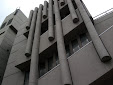
In summary, the University of Leeds acquired the cemetery during the major (Chamberlin, Powell and Bon) 1960s redevelopment period on campus. At this time Woodhouse Cemetery was in a state of disrepair. Initially the university had hoped to be able to maintain the cemetery as it was, but on further examination this turned out to be too expensive and they got an Act of Parliament in 1965 to enable them to purchase the shares for the plots and then turn the cemetery into a landscaped park. This led to the setting up of the Woodhouse Cemetery Defence Organisation to protect the cemetery, but the university won the battle in the end. The gravestones were removed, although the bodies still remain.

Wednesday 10th June 2015 was a beautiful sunny day and I caught site of Christine in the distance walking towards the space under a tree where the plaque is located. I recognised her from her facebook profile image. She was carrying flowers.
“It might not initially be apparent that the eventual procurement of the cemetery land by the university is one oriented towards a capitalist agenda, but as Guattari states, “capitalistic modes of production” do not necessarily manifest in obviously capitalist-oriented procedures (2008a: 21). I argue that while the cemetery acquisition, on a superficial examination, appears to have little to do with capital, it is a function of the agenda of the new university, the neoliberalist, posthistoric model. The social history of the cemetery is problematic for the university. Nevertheless, the capitalist agenda is one that is capable of eventually dealing with these conjunctions because it can both organise time and space in a way where incongruities become unproblematic: “The power sign’s polyvocality enables it to tolerate these structural alliances perfectly well” (Guattari 2006: 228). Polyvocality is capitalism’s recuperation of heterogeneity. It reformulates and repackages it and presents it back to us in an attractive, seemingly innocuous, form, to be further consumed. Thus, the cemetery is now consumed as a public garden.”

Christine told me about her sister and parents and about her own childhood. She explained that the university had a planted a tree for the family a little way away from the actual unmarked plot. She showed me the approximate place where Pauline is buried and she sat there and I took the photo above.
“In one sense St George’s Field, as a postmodern space located within an institutional setting, has become a reconciled space when situated within the larger project of capitalism. Its renaming, back to its original name, creates a form of distance from its ‘real’ function (it still is a graveyard after all) and its controversial recent history. St George’s Field, hence, becomes a new space making it easier to forget a past that is not attached to it via the proper noun (Woodhouse Cemetery or Leeds General Cemetery). St George’s Field is at odds with itself, in being both a cemetery and at the same time a public park of sorts. Can it simultaneously reconcile itself as a place of leisure and a sacred burial space? What is apparent is that changing its name has changed its function and this has enabled both a type of cultural forgetting to take place and also the availability of a whole new set of powers to both the Council and university in how they control, market and manage the space.”
Thank you, Christine, for inviting me along to your memorial day, I was extremely touched to be part of it and it was really lovely to meet you.
Related Links on St George’s Field:
Dying to Find It
A Not So Hotsy Totsy Sunny Day
The Psychogeography of Other Spaces
Fallow Again