Wednesday, 29 February 2012

The Lickless Dérive


Almost opposite Lickless Drive (off Low Lane in Horsforth, Leeds) there is a metal gate with large boulders in front of it, deterring any entry by car. If you pass through the partly-open gate and walk a few yards down the slope, this is what you'll find:


This liminal place looks like it is waiting for something to happen. The potential happening might be connected to the proposed Woodside Train Station which is meant to be located at nearby Woodside Quarry (although development seems to be on hold at the moment). In the meantime it is an interesting space with parts of buildings still remaining:


...and, the compulsory graffiti, some of which looks quite old, as even parts of the bricks have fallen off in places, the graffiti clearly pre-dating this.


This area is huge and is easy to see on google earth. I'm wondering if maybe these were industrial buildings of some sort, and were never actually homes. But it's hard to tell. This area, to the East of Low Lane, does have a lot of industrial-type buildings still, with a mill just up the road, now turned into offices. It's difficult to work out what this building originally was, as I was standing at the roof level of it.


I like the image below. The three broken walls echo the slope of the land behind them. It's interesting to see that the broken edges of the wall have been filled over with concrete.


This is what the OED says about the word 'liminal':
a.gen. Of or pertaining to the threshold or initial stage of a process. rare.
b.spec. in Psychol. Of or pertaining to a ‘limen’ or ‘threshold’.
Cultural Anthropol. Of, relating to, or characterized by liminality.
1967 V. W. Turner Forest of Symbols iii. 77 The liminal condition between two periods of active social life.

Saturday, 25 February 2012

St George's Field: Traversing Transversality


Gary Genosko describes Guattari's transversality as “the tool used to open hitherto closed logics and hierarchies.” (2008: 54) In a section of his book Félix Guattari: An Abberrant Introduction entitled 'Extension', Genosko discusses urban space and walking. He explains that a “transversal territory” which operates within unconventional power structures “is the site of pure potentiality and marked by such valorized terms as 'transgress' – 'deviate' – 'defy' – 'cut across' – 'disorganize' – 'smooth space'.” (Genosko 2002: 57) He says that this mode of operating in space provides an alternative form of articulation, providing one with a different self to that which is expected by the dominant powers in the capitalistic city. (2002: 58)

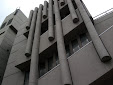
The act of traversing is a good example of a physical act of transversality. In mountaineering, traversing is the term used to describe how one moves sideways across a rock face, as can be seen below. This photo - taken in 2011 with a Diana F+ - shows a student who is traversing the old wall of the cemetery which now forms part of the base of the Henry Price Halls of Residence on the northern border of the University of Leeds cemetery St George's Field. This wall is located under the Henry Price building and the beams of the building can be seen in the top of the images. It is made from the original bricks of the cemetery wall and follows the original line.


Traverse is described in the Oxford English Dictionary as: "to pass or journey across, over, or through; to pass through (a region) from side to side, or from end to end". However it is further described as a type of writing: "To trace [...] continuously without lifting the pen or pencil", as a way of negotiation life: "To 'go through' life (life, time or anything figured as extended space or region)" and a form of reading: "to read through or consider thoroughly". This act of traversing in the cemetery also satisfies Genosko's list of verbs above in cutting across and deviating from the usual paths through the space. It is also an act of defiance and while the notices on the outside of the cemetery only forbid ball games, it is possible that traversing may be considered a transgressive act also. While the traversing student may not intentionally be acting defiantly, he does challenge the use of the space and also provides a new route that is inspired by his own subjective desire to respond to the environment in an unconventional way: "Transversality in the group is a dimension opposite and complementary to the structures that generate pyramidal hierarchization and sterile ways of transmitting messages." (1984: 22)

For Guattari it is desire that enables creativity to be expressed and challenges the accepted, and dominant, logic of a given situation. Desire is the productive, and constructive, force of life: "I propose to denominate as desire all forms of the will to live, the will to create, the will to love, the will to invent another society, another perception of the world, and another value system." (Guattari 2008: 318) To the student it might not be apparent they are crawling along the walls of the old cemetery, merely the wall of a modern building. Nevertheless, the very act itself questions both the permissions and power attached to allowing, and preventing, certain behaviours in particular places, and also the underlying logos of the space in the sense that individuals have certain 'common sense' actions expected of them.

Desire finds a route via transversality, allowing it to be released from overriding social forms that attempt to regulate the subjectivity of the individual.

Links:
St George's Field Fallow Again: A Schizocartography
The Psychogeography of Other Spaces

References:
Genosko, Gary. 2002. Félix Guattari: An Aberrant Introduction (London and New York: Continuum).
Genosko, Gary. 2008. 'The Life and Work of Félix Guattari', The Three Ecologies, trans. by Ian Pinder and Paul Sutton (London and New York: Continuum) pp. 46-78.
Guattari, Félix. 1984. Molecular Revolution: Psychiatry and Politics, trans. by Rosemary Sheed (Harmondsworth: Penguin Books).
Guattari, Félix and Suely Rolnik. 2008. Molecular Revolution in Brazil, trans. by Karel Clapshow and Brian Holmes (Cambridge, Mass and London: The MIT Press).

Sunday, 5 February 2012

Using Psychogeography to Discover the Hidden Consequences of Social Reproduction


In the opening to her essay on the regeneration project at Grand Central Station in New York during the 1990s, Cindi Katz states: "The hidden city is itself an outcome and a representation of what might be understood as 'postmodern geographical praxis', but so too is the project of its unhiding." (2001: 93) Commenting on the complexity of heteretopic spaces, and their implicit heterogeneity, she discusses the partitioning of space through "domination and privilege". (2001: 94) This is done by looking at particular neighbourhoods, the relationship 'the other' has with specific spaces, and the process of hiding (in public policy) and unhiding (in this case a deconstructive form of revealing produced by her own critique). Katz states: "it is clear that the spatial forms associated with increasingly globalized capitalist production are indeed masterful at hiding the consequences and contradictions of the associated social relations associated with it." ( 2001: 96) Comparisons can be made between postmodern geographical praxis and psychogeography in the way that "Psychogeography comprehen[ds] buildings through their use, their history, and their collective and associative generation of meaning and mood". (Sadler 2001: 160)


Katz explains how the process of privatizing space is at the heart of the neoliberalist project such that this raises important issues in relation to place and meaning. This is also remarked upon by Michel Foucault. When commenting on the "human site" he says that it is a function of our times that a certain type of knowledge is required when examining space, such that "knowing what relations of propinquity, what type of storage, circulation, marking, and classification of human elements should be adopted in a given situation in order to achieve a given end." (2001: 238) This becomes pertinent when applied to the process of capital accumulation inasmuch as when the "given end" is the project of acquiring space, then a knowledge of how processes such as "circulation" and "marking" operate become useful in altering the appearance of spaces such that they manifest in a new way, occluding their socio-historical origins. Guy Debord also remarks on aesthetics and urban semiotics in a similar way to both Katz and Foucault. He states: "What is false creates taste, and reinforces itself by knowingly eliminating any possible reference to the authentic." (1998: 50) He explains that "Today [...] the tendency to replace the real with the artificial is ubiquitous [...] Everything will be more beautiful than before, for the tourists' cameras." (1998: 51) In Katz's case study, removing the signs of homelessness was one of the priorities of the Grand Central Partnership. Postmodern geographical praxis is what is employed to reveal these types of heterotopic inconsistencies.


Links:


The North/South Divide: Spaces of Illusion and Compensation in Leeds
Cindi Katz
Grand Central Terminal

References:
Debord, Guy. 1998. Comments on the Society of the Spectacle (London and New York: Verso).
Foucault, Michel. 2001. 'Of Other Spaces', The Visual Culture Reader, ed. by Nicholas Mirzooeff (London and New York: Routledge). pp. 237-244.
Katz, Cindi. 2001. ''Hiding the Target: Social Reproduction in the Privatized Urban Environment'', Postmodern Geography: Theory and Praxis, ed. by Claudio Minca (Oxford: Blackwell Publishers). pp. 93-110.
Sadler, Simon. 2001. The Situationist City (Cambridge: The MIT Press).

Thursday, 2 February 2012

The North/South Divide: Heterotopias of Illusion and Compensation in Leeds


Last week I was fortunate enough to be interviewed for an upcoming BBC Radio 4 programme on the North/South divide. So, on Thursday 26th of February the radio producer Mary Ward-Lowery and the insomniac writer-psychogeographer Ian Marchant came 'ooop norfff' to walk and talk with me in Leeds.

After researching Danny Dorling's work in this area, where the above map comes from, I decided to take them on a walk that looks at the north/south enclaves within these areas. For instance, a north/south divide actually within the north. I chose the border of Holbeck Urban Village and Holbeck 'proper'.

While I didn't take any photos on the walk, it is an area I have spent much time in before, so all the photos in this blog are of Holbeck in Leeds. The first photo below is from the, now, 'trendy' urban village, emerging as a post-yuppy space with modern flats for 'young professionals' and new-media companies. The other image is taken in the 'old' Holbeck itself, the streets where the people live while the redbrick terraces are being pulled down around them.


On the walk I decided to compare these adjacent areas with the similar, but much larger project at the Isle of Dogs in London, Canary Wharf. This area in Leeds does include Granary Wharf, so it's not that much of a stretch. London has its One Canada Square and we have our Bridgewater Place.

While I have lots to say about these postmodern urban village projects and how they effect the local community, what I would like to do is comment on this situation from the perspective of Michel Foucault and Cindi Katz. I won't include my deconstructive comments on borders and space that were part of the interview, as I think they could be included in the radio show, but will add to the border dichotomy by including some work I have done on space in the last week since the radio interview.


Katz explains how the process of privatizing space is at the heart of the neoliberalist project such that this raises important issues in relation to place and meaning. This is also remarked upon by Foucault. When commenting on the "human site" he says that it is a function of our times that a certain type of knowledge is required when examining space, such that "knowing what relations of propinquity, what type of storage, circulation, marking, and classification of human elements should be adopted in a given situation in order to achieve a given end." (2001: 238) This becomes pertinent when applied to the process of capital accumulation inasmuch as when the "given end" is the project of acquiring space, then a knowledge of how processes such as "circulation" and "marking" operate become useful in altering the appearance of spaces such that they manifest in a new way, occluding their socio-historical origins.


As Katz explains, this appears in the form of a "visible monumentality [that] is built on rendering invisible those who are on the losing end of the great and growing divide between rich and poor". (2001: 103) Foucault touches upon these binary states as they relate to heterotopias. He discusses how, in a deconstructive way, the act of creating a space forms partitions that define both sides of these boundaries: for example, defining an illusory space will reaffirm a real space, and, he continues: "Or [...] creat[ing] a space that is other, another real space, as perfect, as meticulous, as well arranged as ours is messy, ill constructed, and jumbled." (2001: 243) Foucault describes these two types of spaces as heterotopias of "illusion" (the former) and "compensation" (the latter). (ibid.) Which become particularly relevant in regards to the regeneration project in Holbeck.


Katz uses terms such as "reordering", "regulation" and "sanitation" when discussing the rhetoric attached to these projects. (2001: 102) She explains that this compensatory function has the effect of organising space and the lived experience, such that it fits into a specific agenda. (ibid.) The colonially occupied space of Holbeck is becoming a heterotopia of compensation, in the process of being marked by its new occupiers.

Links:
Spitfires on the Line
The North South Divide - Where is the Line?

References:
Foucault, Michel. 2001. 'Of Other Spaces', The Visual Culture Reader, ed. by Nicholas Mirzooeff (London and New York: Routledge). pp. 237-244.
Katz, Cindi. 2001. ''Hiding the Target: Social Reproduction in the Privatized Urban Environment'', Postmodern Geography: Theory and Praxis, ed. by Claudio Minca (Oxford: Blackwell Publishers). pp. 93-110.

Saturday, 28 January 2012

The Psychogeography of Other Spaces: St George's Field


Michel Foucault offers the space and concept of a cemetery as an example of a heterotopia; he explains that it is such because over time the function of the cemetery has changed to reflect the prevailing culture. (2001: 241) At one time being the centre of the city, reflecting a more religious community spirit, in the Victorian times which brought with them not only a more atheistic attitude but also a greater awareness of disease, they were moved to the suburbs. (ibid.) St George's Field (the cemetery at the University of Leeds) as it is discussed on this blogspot, confirms Foucault's second principle of the heterotopia, a historical place that has a determined position within culture, which can then be superseded by another function at a later time (ibid.): in this case, the change of use from graveyard to garden.

What is interesting about St George's Field, is that it not only holds true of the basic principles of what classifies a heterotopic space, it also has further qualities that a 'regular' cemetery might not. These further qualities have come about because of its condition of reuse set out in the 1960s. For example, as Foucault states in his third principle: "The heterotopia is capable of juxtaposing in a single real place several places, several sites that are in themselves incompatible." (ibid.) Is it possible for the cemetery to also be a garden? Can it comfortably be a sanctified place of rest for the dead and also a park-like area, open to all and contained within the boundaries and administrative structure of a university campus? I pose these questions, not because I intend to answer them, but so as to highlight the tensions inherent in the place. These very tensions being what creates a heterotopia in the first place. Foucault describes these simultaneous places as being "foreign to one another" (ibid.) and while the example of the cemetery as a heterotopia is apparent enough, he also provides the garden as an example of a heterotopia, because in antiquity gardens were originally created to represent a small version of the world. (2001: 238) To complicate the space of St George's Field further, the chapel is also a storage place for the university library and even has a library code assigned to it as a storage facility: STCHA. Foucault also classifies libraries as heterotopias, because they represent the modernist concept of "accumulating everything, of establishing a sort of general archive, the will to enclose [...] the idea of constituting a place of all times that is itself outside of time and inaccessible to its ravages". (2001: 242) Maybe this is even more so for St George's Field: since the chapel is already a preserved building, it is even more stable as a place than our high street public libraries, that have been under threat in the past few years.


Foucault uses the mirror to explain the relationship with utopias (sites without places) and heterotopias. He describes the mirror as a type of utopia, by his own definition "a placeless place". (2001: 239) The mirror projects us into a place where we are not. However, the mirror is also a heterotopia in the sense that it does exist as a real object in space, enabling us to "discover [our] absence from the place where [we are]", since we can see we are located elsewhere. (ibid.) This has the effect whereby the gaze as it is located in the ground of the reflection, can be traced back towards us as the viewer, via the glass, and back into ourselves through our eyes, where we become restructured. (ibid.) As Foucault states, this has the effect of making the location of the subject conjured in the act of looking at the glass both "absolutely real" and "absolutely unreal". (ibid.) For a heterotopia such as a cemetery, this mirroring effect might also be evoked by the surface of the ground and the gravestones locating 'loved ones'.

The mirroring effect that Foucault mentions, as they relate to a relationship between heterotopias and utopias, is very pertinent to the cemetery, especially in relation to the visitor of a grave. Firstly, because cemeteries, as they were developed in the nineteenth century, were a utopian concept. It was considered that everyone, rich or poor, had a right to a place of burial. Sylvia Barnard explains how the 'guinea graves' (paupers graves) operated in Leeds in Victorian times. These graves contained many bodies, all listed on a single gravestone located above them. The poor would pay approximately a pound to bury their family member, and were assured of a 'proper' burial with their relative listed, in the form of minimal information, on the gravestone. Barnard describes the practice as a "brilliant and humanitarian concept" (2009: 54) Secondly, one can view the surface of cemetery land as a kind of mirror. A visitor to the burial plot of a family member actually gazes at the headstone and the surface of the grave, but, in a sense, they are also looking past the surface to the body below. This produces a recognition inherent in kinship, where one sees oneself in other family members. So the visitor also sees themselves, especially in family plots where a space is also kept available for a spouse who is still alive. Even though married couples are not biologically related, this mirroring could still be considered to occur in the sense that the unit created in marriage produces a projection whereby the other half of the unit reaffirms oneself. So the husband or wife visiting the grave of their partner, sees a reflection of themselves echoing back from the surface in a shadow-like form, a reflection "that enables me to see myself there where I am absent". (Foucault 2001: 240)

Please note: The images shown here, despite looking old, were taken in 2010 with a lomography camera, a Diana F+.

Links:
St George's Field, Fallow Again: A Schizocartography
Dying to Find It: Where is the University Cemetery?

References:
Barnard, Sylvia M. 2009. To Prove I'm Not Forgot: Living and Dying in a Victorian City (Stroud: The History Press).
Foucault, Michel. 2001. 'Of Other Spaces', The Visual Culture Reader, ed. by Nicholas Mirzooeff (London and New York: Routledge). pp. 237-244.