Showing posts with label Leeds. Show all posts

Friday, 24 February 2017

Terminalia 2017: A Geographer's Account

Terminus - The God of Boundary Markers
Terminalia
by Andy Turner

1. Introduction

1.1. Metadata

1.2. Contents

2. Background

3. 2017-02-23

3.1. Do all things have a beginning and an end? An exploration into linking things together

  • So another year passes and I pick up to some extent where I left off near South Gate by The Adelphi just South of the river.
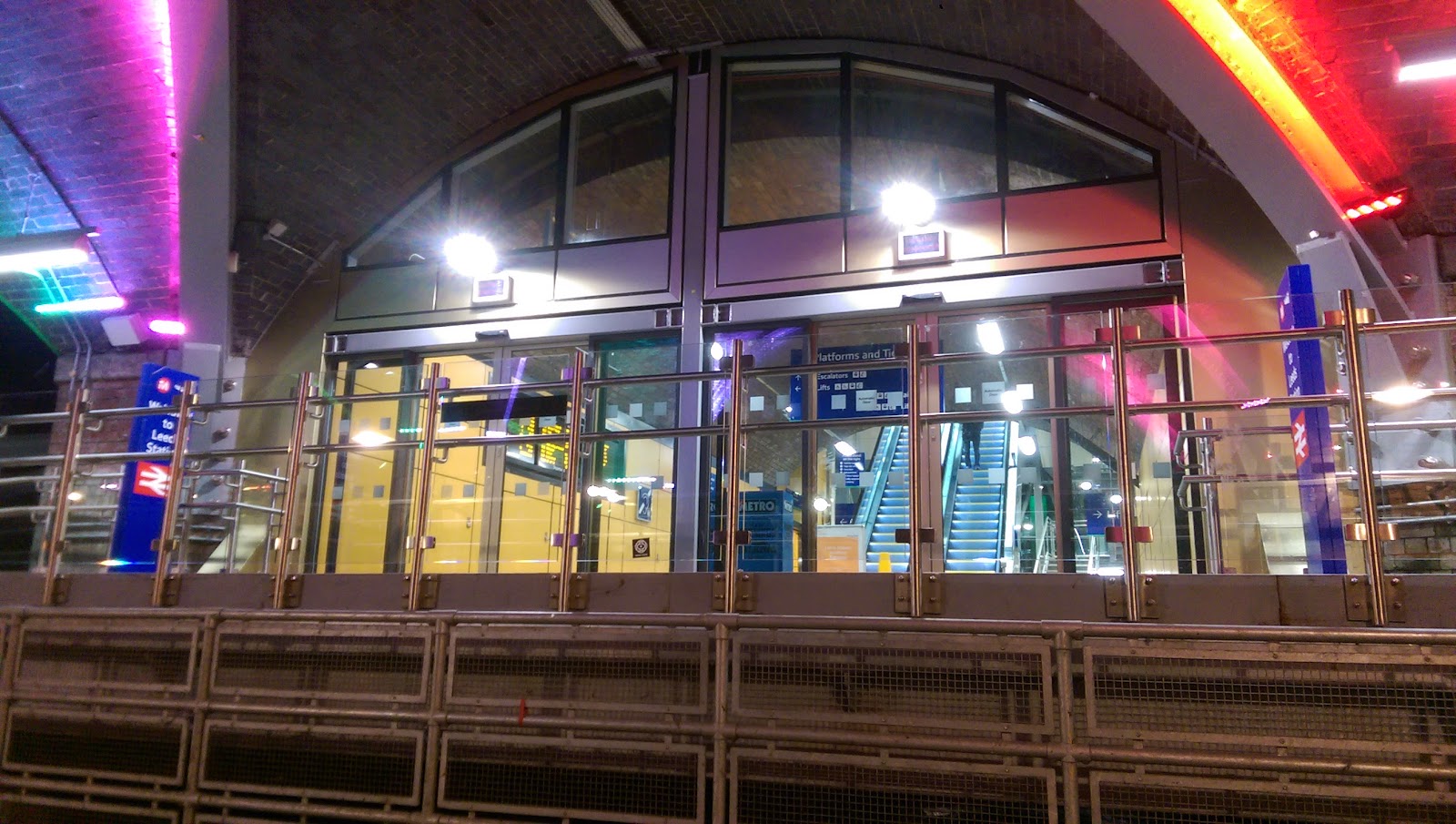
  • Before that I had a happy dérive over water under train with an old map of the bounds and some chance meetings by waterhouse place not far from old haunts and new.
IMAG1640[1].jpg

4. References

Monday, 28 September 2015

SCRIB 'Social City: Reinscribe - Involve - Belong'


The SCRIB Project (working title) is about engaging heterogeneous communities within the process of urban regeneration. SCRIB stands for Social City: Reinscribe – Involve – Belong. It aims to produce a model of how local communities can work with property developers, architects and masterplanners to build a more engaging and inclusive vision of the future for cities.

While the pilot project concentrates on an area within Leeds, the broader project will look to build on the pilot in order to engage developers and relevant agencies with communities. It will effectively utilise business networks, project management methodologies, social networking and marketing to raise the profile of academic-based projects. And it offers up a model which can be adopted by other cities who have the desire to engage a diversity of ‘stakeholders’, from grassroots level through to corporations, in order to effect social change.

What does SCRIB stand for?
What is the SCRIB Project?

Friday, 3 April 2015

The Rites of Passing in Mourning and Memorial

Kitsch Memorials at Lawnswood Cemetery


Lawnswood Cemetery is just off the Ring Road in North Leeds, north of Headingley and quite near the old Halls of Residence that used to belong to the University of Leeds, Bodington Hall. It has a really interesting topography which is worth checking out on Google earth. It is a well-kept cemetery with intricate pathways that enable you to weave your way around the complex terrain and even has a map at the entrance:


Lawnswood Cemetery has its own architecture manifesting in cloisters, archways and alcoves with memorials everywhere even these tiny kerb-level ones…


…however what I’d like to discuss are the, what I have termed, kitsch memorials, since these are the ones that often cause controversy in graveyards as depicted in the British media.


While there are strict rules at Lawnswood Cemetery about what you can and cannot place at your gravestone/memorial I include a couple that I describe as kitsch. In an article about this on the BBC website sociologist Professor Deborah Steinberg says:
People need to make loss concrete. They need to evoke the person they are missing. There are lots of different gestures that do that for people. I've been to lots of graveyards where I've seen tons of memorabilia, plastic windmills and so on. The disapproval of it has a history about decorum and appropriate behaviour and the aesthetics of mourning. (‘Should Graveyard Wind Chimes and Plastic Displays be Banned?’ BBC 2011).

Placed under the rubric of ‘taste wars’ people are polarised about these self-created memorials, with those who are in support of them offended by the terms used (such as ‘tacky’). Professor Tony Walter says: "There is no right or wrong in all this. But it means that cemetery and churchyard management requires great sensitivity and tact, trying to achieve in death a tolerance of others' tastes and a class harmony that we fail to achieve in life." (ibid.).

Related links:
Friends of Lawnswood Cemetery
St Michael’s Church Graveyard (Headingley)
St Chad’s Church Graveyard (Far Headingley)
St George’s Field Cemetery, University of Leeds
Kitsch and the Danger of Guilty Pleasures

Sunday, 26 May 2013

Clayton Wood Arising

Last weekend I went for a walk to explore the Clayton Wood Rise Industrial Estate in Horsforth, Leeds. It's directly south of Clayton Wood and is in stark contrast to the wooded area which abuts it. You can climb over one of the low barriers around one of the business outlets there, and actually get into the wood at the back of the industrial park.


The above photo was shot from the edge of the wood overlooking the industrial park. The photo montage below is a dialectic of images of the wood set against those taken in the industrial estate..


Links to other Horsforth Walks:
The Lickless Dérive
The Morphology of Trinity

Sunday, 22 July 2012

The Scopophilic Psychogeographer and The Other-as-Exhibition


© Simon Bradley


This is me looking into a window of a small shop in Holbeck, Leeds. It is an area that I am particularly interested in because it is on the edge of one of those Urban Village projects which is a short distance away at the South side of Leeds railway station: Holbeck Urban Village. This photo was taken in, what I call, 'Holbeck Proper'. It is an area that is a large square of terraces that you can see here:


These terraces are gradually being pulled down by the council, although this has come to a temporary halt because they have run out of money (a local solicitor informed me). If you walk around this area, you can see the gaps left where some of the terraces were standing not long ago.


Holbeck Proper is an area of Leeds that is part of the urban regeneration programme. It is not a very well-off area and properties are selling at around £60,000 at the moment. I am not sure what the council are offering - money-wise - to those who they want to move in order to redevelop the area. I also heard that at some point the postcode will be changed to LS1 so as to include it in the Central Leeds region. The repercussions of this move are far-reaching in relation to property values and for those who will be priced out of the market in an area that is currently considered to be mostly working-class (unlike Holbeck Urban Village).


I find this a really intriguing area for many reasons. But I also have a problem with my own interest in the area. I like it, aesthetically, because it is a concentrated area of lovely back-to-back redbricks, which have a long and fascinating history in relation to urban planning. It is also interesting in regards to the demographic, with areas of white working-class and also first, second and third, generation Asian locals. I did find an online article in a US paper recently that mentioned some tensions between the youths of these two groups in the context of a discussion on two 'rival' groups in New York.


My problem is not new in the field of ethnography (not that that is my field) or in any field where one is observing another group where there may be issues relating to power in regards to representation in socio-political life. It has a long history in relation to the postcolonial other, so there is much written about it, especially in cultural theory. My own concern is with regards to my own practice, that of psychogeography. Much of the time this isn't a problem, as I am usually the one who is challenging the boundaries of power. This is mostly manifest in the classic security-guard-phenomena whereby they often seem to be ignorant of a law whereby providing you are standing on public property, you can take a photo. For my own experiences on this, see the following two blogs:


What troubles me is that while psychogeography is a psychological response to urban space that takes in all the senses, being a psychogeographer can be a very scopophilic pursuit (the love of looking). And while this isn't an issue in regards to power most of the time, in certain situations it does feel like it is. I don't mean that I am a scientist observing another culture in an anthropological sense, but that I am in someone else's space, observing it, photographing it, and commenting upon it. And there are more than ethics involved in this process of observing "ethnoscapes"(Arjun Appadurai).


Links:

Sunday, 10 June 2012

Cutting up Space, Part 1: L = S - [l + c + i = e + p]


As a psychogeographer I am particularly interested in pieces of land that appear to be waiting for something to happen. These can be owned by either the local council or a property developer and can be in abeyance for many reasons, including land-sitting (buying property to stop someone else buying it, or buying land speculatively). Sometimes, in the case of local councils, funding might have run out and the land development halted. Rarely, are they owned by individuals, although there are cases of private houses being left vacant, as has appeared on the news recently.

The land in the image above is off Low Lane, Horsforth, Leeds, and I think it might be waiting for further development in relationship to the future Woodside Railway Station in Horsforth, although I'm not certain.

This strange liminal space is in Hunstanton, Norfolk (below), is just off the promenade, but is easy to miss. Who does it belong to? Was it part of someone's garden? Do the council own it?


Philip Kivell's book 'Land and the City' is a really interesting book and discusses these issues:

He introduces a neat formula that is used in calculating land value which is dependant on the market value of existing properties in the local area:


L = S - [l + c + i = e + p]


Where:
L = developer's bid price for the land
S = anticipated selling price of completed development
l = estimated land preparation and infrastructure costs
c = estimated construction costs
i = estimated interest charges on land and construction costs
e = estimated legal and marketing costs
p = estimated developer's profits

There is a lot of development going on in the Holbeck area of Leeds, although it has somewhat come to a halt recently; for instance, the demolition of the terraced houses in one particular area. The satellite map below shows the rows of terraced houses that are under threat. It is not easy to see, because the road names block the view of the actual streets, but some of the terraces have already been pulled down. A local solicitor told me that the only reason that the demolition has stopped is because the council ran out of money.


Local councils acquire space currently used for private housing through Compulsory Purchase Orders. They just need to have a 'good reason' to do this, invariably economic, and it can be done with little recourse. The laws in this regard changed in the 1980s and became vaguer in relation to urban policy. This meant that just about anything could be done under the aegis of adding economic value to a region. We can thank Margaret Thatcher for this. Anna Minton writes about it in her book Ground Control

Kivell comments on land speculation when discussing power in relation to acquisition. He remarks that some critics of it claim that it "provoked the 1974 recession through an unbalanced flow of land onto the markets, the distortion of production costs of firms and the reduction in the spending power of households." (p. 131). I have heard this theory from other sources, too.

While Kivell does not talk philosophically about the cutting up of space (this is not his field), he does talk about zoning: the demarcation of space by the State for specific purposes. I think G. Spencer Brown's Laws of Form may be a useful way to approach this, coupled with deconstruction, so Part 2 of the blog will investigate the cutting up of space from that perspective.


Please click here for part 2 of this blog:

The following links may be of interest:
What else could go here?
Student farm in Brooklyn