Saturday, 21 April 2012

Cyborg Attack Over Bridgewater Place


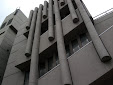
Here are some images I took over Leeds from the top of West Riding House last summer (2011).

There's something surreal about this car park, which looks more like a childs' toy than a real car park.


While this one of cranes is a bit disorienting, I think I was fortunate to just be in the right place to get them to appear like they are crossing over each other.


Here is the famous Leeds Dalek aka Bridgewater Place. Where I was standing I was unable to get the sloping section on the other side which gives it the Dalek-effect. However, there does seem to be a supernatural/cosmic occurrence taking place above it, which can only be some kind of cyborg attack .

Links:
The Lickless Derive (Horsforth)

Sunday, 8 April 2012

Why did the psychogeographer cross the road?

Here are my limited edition 2012 Easter Cards. A short run of 12 , hand-made, that friends were forced to volunteer to receive. Many of the map-pouches were customised for the district that the individual lived in, well those who lived in London anyway. So the front showed their road and the back was perforated over a 'sniff here' instruction of which emanated the smell of rose incense. Here are the various comments, all hugely positive, I would say ; )
Anonymous from Hemel Hempstead council district (via text, not a psychogeographer): "Thank you for my Easter card. Not sure what to say really..."

Tina to Anonymous from Meanwood, Leeds (in person, a psychogeographer, should know better): "Did you get the Easter card?"
Anonymous from Meanwood: "Aah...yes...thanks"

Anonymous from Middlesex (via facebook): "Thanks for the Easter Card, Tina. I'm impressed with the way the white strip of paper inscribed 'Why did the psychogeographer cross the road?' passes right through my living room."

Anonymous from Golders Green (via facebook): "Thanks for my card too, Tina. Golders Green has never smelt so good!"

Anonymous from (district withheld) on expressing an interest in the Easter card: "I'd love a chunk of [somewhere in London] - I've no idea why the psychogeographer crossed the road but I bet when they got there they found Iain Sinclair had already written about it."

Author's brother from Milton Keynes:

SILENCE!

I bet my friends can't wait to see what Christmas brings...

Links:
The Psychogeography Franchise
Using Psychogeography to Discover the Hidden Consequences of Social Reproduction

Sunday, 1 April 2012

Taking an Urban Walk With Freud (part 2): The Red Light District


This is the second part of my Freud-as-psychogeographer-blog. For the first part, please click here: Gradiva's Gait

Before I introduce Freud's urban wanderings in a "small Italian town", I would like to say a little about the complex term 'uncanny' as it appears in Freud's essay The Uncanny. Freud takes the word from the German unheimlich which means the opposite of what one might find familiar (heimlich meaning familiar - homely, but be careful here, because for Freud the two terms become conflated in what he means by 'uncanny'). So, the uncanny has the qualities of both the familiar and the unfamiliar at the same time. I would describe it as producing a strange kind of affective dissonance, which is disturbing. It throws you into this spaceless space in between the two binary oppositions (recognisable/unrecognisable, understandable/incomprehensible). Sometimes, the thing recognised is known, but is out of place and this decontextualisation can create the feeling of the uncanny.

Freud uses a super example in E.T.A Hoffman's story The Sandman to tease out what uncanny means. Although the term can appear somewhat contradictory, mysterious and hard to pin down, this is not because Freud does not do a good job in explaining it, but rather because of its unconscious origins in the person feeling this subjective reaction. Once you have started to explore the uncanny, you will understand it by comparing it to some experiences you will have likely had yourself.

Freud spends many pages analysing the term from a number of sources. Here is a definition he provides which I particularly like, and I include it here because it is a useful springboard for me to take you into Freud's walk in Italy:
"Uncanny is what one calls everything that was meant to remain secret and hidden and has come into the open."


So...Freud uses a moment when he accidentally walks into the red light district of this town in Italy, to provide his own example of the uncanny. Basically it goes thus (quotation marks are when I am using his own terms):

Freud strolls through "unfamiliar" streets in the town and stumbles upon the red light district. He quickly attempts to move out of this area and walks for a while down a few different streets. After a while he suddenly finds himself back in the same district and realises people were looking at him. He then attempts to leave again, but ends up there for the third time. At this point he gets the uncanny feeling. Freud describes this as "the unintentional return", which then enables him to talk about one of his well-known, and most fascinating theories, the "compulsion to repeat".

What I find interesting about Freud's example here is his lack of analysis (of himself) of why he might have ended up there three times. Freud would not have let his own analysand 'off the hook' if this story had been regaled to him, so I am sure he has his own theory about how his unconscious took him there three times, (well at least twice, let's say). So, in regards to the quote above: is what was meant to "remain secret and hidden" the overt buying/selling of sex by men/women on the streets of Italy, or is it some desire Freud had to witness this - what would be for him as an analyst - fascinating transaction?

Saturday, 24 March 2012

Taking an Urban Walk With Freud (part 1): Gradiva's Gait


You may not be aware of Freud's text 'Delusions and Dreams in Jensen's Gradiva'. In this essay, in his usual microscopic style, Freud analyses Wilhelm Jensen's 1903 novel Gradiva, trying to tease out the latency inherent in the text-as-dream.

Being quite familiar with Freud, I hadn't considered him from a psychogeographical perspective until this essay was referred to me by one of my thesis supervisors. Here Freud psychoanalyses the behaviour of the protagonist of Jensen's fiction, Hanold. Perhaps his interest in the novel was sparked by a relief he had of Gradiva in his office (latin translation: the woman who walks), which you can see in my picture above. I have placed an image of the relief next to a photograph of an artists' mannequin that I have attempted to stand in the same position as Gradiva.

I haven't read the original novel (but it is on order now), only Freud's translation and specifically the references to walking, the gait and the footprints, which were of particular interest to me as a psychogeographer. Here are a few extracts by Freud, commenting on the protagonist in the story:

"But now he found himself confronted by an ostensibly scientific problem which called for a solution. It was a question of his arriving at a crucial judgement as to 'whether Gradiva's gait as she stepped along had been reproduced by the sculptor in a life-like manner'. He found that he himself was not capable of imitating it, and in his quest for the 'reality' of this gait he was led 'to make observations of his own from life in order to clear this matter up.'" (page 8)

"When they reached the Herculean Gate [...] Norbert Hanold paused and asked the girl to go ahead of him. She understood him, 'and, pulling up her dress a little with her left hand, Zoe Bergang, Gradiva rediviva, walked past, held in his eyes, which seemed to gaze as though in a dream; so, with her quietly tripping gait, she stepped through the sunlight over the stepping-stones to the other side of the street.' With the triumph of love, what was beautiful and precious in the delusion found recognition as well." (page 12)

Freud is fascinating. He always reveals so much of himself when analysing others. The projections (obsessions) of Hanold's he comments on in this essay, could likely be compared to Freud's own. Freud saw the original Gradiva in Rome, had a copy of the relief in his Hampstead office and then wrote an essay about Jensen's novel.

My second part of this blog will look at another 'psychogeographical' reference by Freud in The Uncanny. I will be providing my own analysis of Freud in this upcoming blog.

Links
Taking an Urban Walk with Freud (part 2): The Red Light District

References:
The extracts of Freud's text are from Crossing Aesthetics edited by Werner Hamacher and David E. Wellbery (Stanford University Press 1997).

Saturday, 17 March 2012

St George's Field: Aesthetico-Affective Acts


Odette Dewhurst, at the University of Leeds, alerted me to this gravestone in the university cemetery, St George's Field. She found it in August 2011 and when I went there in February this year (2012) it was still there (see image below).


The gravestone is of a similar style to many others located in this part of the garden. It is not of a particularly impressive design and contains the words "IN MEMORY OF/ JAMES ROBINSON MASON OF LEEDS/who died March 15th 1840/aged 45 Years". With yellow and red chalk or pastel someone has drawn a flying (rising?) bird in an expressionist style, in a way that makes the bird look like it is taking off and moving upwards. Odette has called it a phoenix. I am not sure if it was the intention of the artist to be a phoenix, but it does look like one and the semiotic context (a graveyard, death, ashes) could suggest it is.

This drawing is temporary: if it was not removed by anyone at the university (by estates staff or students), it would eventually be removed by 'the elements'. The artwork serves as a schizoanalytical action in that it incorporates both an "aesthetic production" and a "micro-political act". (Guattari 1998: 433) The artwork could also be considered in relation to the concept of death, providing one assumes it is a phoenix; but, also because of its situation in a graveyard. Félix Guattari poses the problem of the death instinct in relation to desire, explaining that in contemporary society with its dominant capitalist subjectivity, schizoanalysis enables the death instinct to be side-stepped by desire which then subjectively changes in differing situations. (1998: 72) For this reason the phoenix drawing could be considered the symbol that represents the presence of schizocartography actually taking place in St George's Field. The Situationist Raoul Vaneigem believed that for a true aesthetic of daily life we must all become artists in our negation of the death instinct in the way it was for Freud in the superego's submission to dominant individuals and structures. (2010: 95) This demonstrates that creativity does not have to be opposed to death but that, in a sense, they rise concurrently outside of any dichotomous relationship that dictates some inevitably destructive end.

Guattari says of his aesthetic paradigm that:
it has ethico-political implications because to speak of creation is to speak of the responsibility of the creative instance with regard to the thing created, inflection of the state of things, bifurcation beyond pre-established schemas, once again taking into account the fate of alterity in its extreme modalities. (1995: 105)

The creative instance of the phoenix drawing is something that we cannot temporally tie down exactly, since we do not know when it was created, nor who the artist is. However, we can examine it in regards to its moving away from dominant modes of representation and pose some questions around its reception. For example, is it an anarchic work of art? Could it be considered to be graffiti? And, if there were relatives of the deceased still living, and they liked the artwork, would either of the two questions be relevant?

I ask these questions so as to place the art in the context of a potential viewer of the work in the sense that they would become the interface of a new assemblage: the 'university' would likely view it differently than a random student wandering through the garden. This is why this artwork could be considered a transversal object, because it helps us consider the situation from two directions:
The establishment of such a transversalist bridge leads us to postulate the existence of a certain type of entity inhabiting both domains, such that the incorporeals of value and virtuality become endowed with an ontological depth both equal to objects set in energetico-spatial-temporal coordinates. (Guattari 1995: 109)

The question of aesthetics is not only posed in regards to the multiplicity of the subjectivities of the potential viewers, but we are also pointed in the opposite direction, towards the origins of the dead person in the grave, to their personal and familial history. This also draws our attention to the issue of alterity as it is for St George's Field; not only in relation to the paupers grave, none of which were properly spared in the 1960s landscaping, but also to the question of who decided which gravestone survived and which did not.


Links to St George's Field posts in this series:
Subjectification and Singularization
Decontextualization and Desire
Traversing Transversality

References:
Guattari, Félix.' Schizoanalysis', The Yale Journal of Criticism, 11, 2 (1998), 433-439.
Vaneigem, Raoul. 2010. The Revolution of Everyday Life: An Illustrated Reader: Part 1 (Great Britain: Justpress).
Guattari, Félix. 1995. Chaosmosis: An ethico-aesthetic paradigm. Trans. Paul Bains and Julian Pefanis. Bloomington and Indianapolis: Indiana University Press.

Sunday, 11 March 2012

St George's Field: Subjectification and Singularization


The chapel at the centre of St George's Field has an undercroft - or columbarium (a vaulted storage space, usually used for cremated remains) - which is no longer accessible from inside or outside the chapel. Despite this, on 23rd June 2011, during a Leeds Psychogeography Group walk, it was discovered that the outside 'wall' of the undercroft had fallen down in one place, revealing the inside.


The particular dérive that Leeds Psychogeography Group were on that day was organised on the University of Leeds campus, and took us to St George's Field. One of the members of the group mentioned the undercroft and we decided to explore it, discovering on our arrival that one of the walls had fallen down in one place, revealing the inside. Near the entrance, on the inside, was a plaque. Unfortunately, we did not photograph the plaque or record a dictation of the text appearing on it at the time, hoping to return at a later date with the appropriate equipment. However, when I returned it had been closed up, by replacing the bricks with new mortar.


I contacted the member of Leeds Psychogeography Group who read out the plaque to us, a geography research fellow at the University of Leeds, Andy Turner. This is what he remembered:
The plaque, just in from the hole, mentioned a woman from Potternewton who died as a young mother. I think she was the wife of someone and they had an infant child that died some time shortly afterwards (this was mentioned lower down on the plaque). I can't quite recall the name of the woman at present or the dates or ages that I think were mentioned. I've some vague recollection of these details...

I also contacted the Estates Office at the university in order to ask about the plaque therein, and to see if there was any information held on it by Estates. This is the relevant part of the reply, which also makes reference to it being closed up again:
Mystery solved. Our maintenance guys have blocked off the undercroft in recent months with stonework and railings to prevent access from outside by 'undesirables'. They confirm there is no access from inside the chapel and thus there is now no access in to the undercroft. They did take photographs of the plaques in the undercroft before they closed up BUT they were of such poor quality they didn't keep them. Sorry but it seems the plaques are locked up forever!

The above quote is an example of how hiding works in postmodern space in a response to administrative decisions (however, it is important to say that the original bricking-up of the undercroft goes back to the 1960s). But, also it is apparent that there are certain 'types' of people that are not welcome in the garden (the scare quotes surrounding 'undesirables' is part of the original email). One of the most troubling aspects of this closing of the undercroft is that it is now a piece of lost social history, since neither the Estates Office, nor Leeds Psychogeography Group, have the full information from the plaque. Also, while it is not clear what types of 'undesirables' are being referred to here (perhaps homeless people or maybe just inquisitive students), the space has been defined as a place that includes some people and not others, and these exclusions will involve those who are deemed not to be 'fit' as part of a wider notion of how the university should appear.

But despite this, the (re)discovery of the undercroft by Leeds Psychogeography Group provides a good illustration of how desire operates within the "subject-group". For Félix Guattari subject-groups are the opposite of subjected individuals or groups, in that they are groups or individuals who are not taken over by dominant systems of power, for example, the super-ego, or political power such as capitalism (2008a: 471). They form a line of flight which is able, in the moment, to traverse temporal and spatial boundaries at the same time bringing to light a piece of social-history which is buried within the territory.

This type of praxis satisfies Guattari's Three Ecologies: the environment, social relations and human subjectivity:
Ecological praxes strive to scout out the potential vectors of subjectification and singularization at each partial existential locus. They generally seek something that runs counter to the 'normal' order of things, a counter-repetition, an intensive given which invokes other intensities to form new existential materials. (Guattari 2008b: 30)

They momentarily create a new space in response to the subject-group currently in attendance in the territory, accounting for their collective modus operandi, but also through their individual affective reactions. Guattari calls this process "transversality", which is a particular form of communication forming a bridge that takes unconventional routes between systems. (1995: 23-24) For Guattari these connections would not be dyadic (dialectical) nor triadic (Oedipal), and would, hence, operate outside of hierarchical power structures and semiotics.

The university's representation of the cemetery as a specific territory under its control, requires that it manages its appearance (spatially and abstractly) in a specific way in order that its incongruences are not left open to criticism. It does this through the management of what Guattari calls "transformers of signification – concrete machines.” (1984: 156) However, despite its attempts to do this, schizocartography, which opposes dominant histories, creates avenues which can be opened, revealing the voice of the other: "The cartography of abstract machinisms makes history by dismantling dominant realities and significations: they constitute the navel, the point of emergence and creationism of the machinic phylum." (Guattari 1995: 174)

Links:
St George's Field: Decontextualization and Desire
St George's Field: Traversing Transversality

References:
Guattari, Félix. 1984. Molecular Revolution: Psychiatry and Politics. Trans. Rosemary Sheed. Harmondsworth: Penguin Books.
Guattari, Félix. 1995. Chaosmosis: An ethico-aesthetic paradigm. Trans. Paul Bains and Julian Pefanis. Bloomington and Indianapolis: Indiana University Press.
Guattari, Félix and Suely Rolnik. 2008a. Molecular Revolution in Brazil, trans. by Karel Clapshow and Brian Holmes (Cambridge, Mass and London: The MIT Press).
Guattari, Félix. 2008b. 'The Life and Work of Félix Guattari'. In The Three Ecologies, trans. Ian Pinder and Paul Sutton, 46-78. London and New York: Continuum.

Saturday, 3 March 2012

St George's Field: Decontextualization and Desire


Following on from my post Traversing Transversality, I would like to provide an example of schizocartography as it appears in the space of St George's Field, the University of Leeds cemetery.

Sculpture by Charlotte Deponeo
© Deborah Gardner


For her BA project in the School of Design, Charlotte Deponeo took casts of the text on the gravestones in St George's Field and rather than making further sculptures from these casts, the casts themselves were presented as the actual sculptures. One sculpture was placed outside the cemetery, but still on the university campus, near the School of Design, where it could then be stumbled upon by accident: indeed a number of us from Leeds Psychogeography Group found it on an organised walk one day.

This process of spatially decontextualizing the gravestones in the form of the cast (which looks like a kind of tomb), being placed elsewhere becomes part of a process of deterritorialization in the opening up of the (en)closed space of the cemetery to the outside. Félix Guattari explains that subjectivity is attached to territories, spatial and otherwise, which are ascertained in many ways, for example, through social and cultural determinations. (2008: 471:2) However "Territory can be deterritorialized, that is, it can open up, engage in lines of flight, and even move off course." (2008: 472) The words on the gravestone have also been decontextualized and reappropriated. Instead of only existing on their separate gravestones in situ in the cemetery, individual parts of the text of particular gravestones have been taken and placed together on the inside of the sculpture. This means they have been formed into a new semiotic assemblage: "Schizoanalysis [...] is interested in a diversification of the means of semiotization [...] it abandons the terrain of signifying interpretation for that of the exploring of assemblages of enunciation." (italics Guattari's) (2008: 395)

Charlotte has created an assemblage of enunciation in the form of her sculpture, by re-presenting the cemetery back to the university (and, in a sense, back to itself) by placing it in a different context, both spatially and materially: "The work of art, for those who use use it, is an activity of unframing, of rupturing sense [...] which leads to a recreation and a reinvention of the subject itself." (1995: 131) Guattari explains that this process of “recomposition” enables “a search for enunciative nuclei which would institute new cleavages between other insides and other outsides and which would offer a different metabolism of past-future where eternity will coexist with the present moment.” (1995: 90)

The schizoanalytic process involved in the making of the sculpture also has the function of bringing the past into the present and, in a sense, de-mythologizing it. Guattari explains what is happening in these situations: “Existential Territories become diversified, heterogenised. The event is no longer enclosed in myth: it becomes a nucleus of processual relay." (1995: 105-106) The dominant order of the institution becomes momentarily translucent, its image fades away and other histories are momentarily made available. The concept of myth was also significant to the Situationist International. In their critique of consumer culture they saw the city as being a mythologised space representing the hollow sign that appeared in the form of the spectacle. This meant that the city could then become a place where private desires were then played out in the public domain in a consumerist form. (McDonough 1994: 76) Guattari's schizoanalytic cartography helps reveal the myth of controlling aesthetics and enables a space for subjective desires to come into play. Guy Debord sees the powers employed by capitalism in urban design as applying processes to space in such a way as it become homogenised. (2005: 165 and 171) The landscaping of the cemetery could be considered to have resulted in a homogenised space, losing (hiding) its 'real' character and separating it from its origins.

Links:
St George's Field Fallow Again: A Schizocartography
The Psychogeography of Other Spaces
St George's Field: Traversing Transversality

References:
Debord, Guy. 2005. The Society of the Spectacle (Detroit: Black and Red).
Guattari, Félix. 1995. Chaosmosis: An ethico-aesthetic paradigm, trans. by Paul Bains and Julian Pefanis (Bloomington and Indianapolis: Indiana University Press).
Guattari, Félix and Suely Rolnik. 2008. Molecular Revolution in Brazil, trans. by Karel Clapshow and Brian Holmes (Cambridge, Mass and London: The MIT Press).
McDonough, Thomas F. 'Situationist Space', October, 67, Winter (1994), 58-77.