Saturday, 28 July 2012

The Perturbed Psychogeographer: Contemplating Olympic Space, the Shard and Architectural Phalluses in General


The oversubscribed Olympic space in London has got me thinking lately. In the run-up everyone who was anyone was talking about what the East End meant to them (Paloma Faith, Dizzee Rascal, et al). Then in addition all the 'psychogeographers' were also providing their responses, albeit rather less publicly or media-led. I pondered on what I would do if I was a London-based psychogeographer. Would I just refuse to talk/write/blog about it? Would I get out of London and write about somewhere else instead, by way of protest? Or, would I try to do something really unconventional? (if that is at all possible within an already unorthodox domain).


Coincidentally I came across a paragraph by Henri Lefevbre this week in The Production of Space where he mentions this oversubscribing, or over-inscribing, as he calls it. He says:

"Both natural and urban spaces are...'over-inscribed': everything therein resembles a rough draft, jumbled and self-contradictory. Rather than signs, what one encounters here are directions - multifarious and overlapping instructions. If there is indeed text, inscription or writing to be found here, it is in a context of conventions, intentions and order (in the sense of social order versus disorder). That space signifies is incontestable. But what it signifies is dos and don'ts - and this brings us back to power. (page 142)"

Needless to say, these manifestations of power are what many psychogeographers are interested in in the urban sphere, but this paragraph above also reminds us of how those who are moving in, around and out of the Olympic area (or London in general) will be responding directly to the urban décor placed there to control their behaviour. What the Situationists described as "fixed points and vortexes that strongly discourage entry into or exit from certain zones."


In this sense - as symbols and phenomenon of seemingly latent power - Freud may be useful for explaining how the signs in the urban environment operate on us unconsciously. His term 'overdetermination' is often used in dream analysis. It demonstrates that many different elements appearing in the manifest dream can be traced back to a smaller number of latent elements. For instance - and to be both obvious and facetious - the broken stick on the pavement, the knife in the drawer and the clipped off end of the cigar, are all manifestations of the fear of castration that might appear in this hypothetical dream.

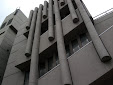
So on that note I'll leave you with a great big phallus - London's newest, which I photographed last autumn while it was still under constructions, The Shard. It is a perfect example of the superego in operation in public space. In my slightly-more-than-amateur analysis it represents: erection (in both the architectural and male sense), power and domination over those below (see De Certeau's opening to 'Walking in the City') and 'the voice of the father' (if you don't try and seduce your mother, or kill me, you can have all this too)!


Links:
The Overdetermination of the Space of the University

Bibliography:
Lefebvre, Henri. 1991. The Production of Space, trans. by Donald Nicholson-Smith (Oxford: Blackwell).

Sunday, 22 July 2012

The Scopophilic Psychogeographer and The Other-as-Exhibition


© Simon Bradley


This is me looking into a window of a small shop in Holbeck, Leeds. It is an area that I am particularly interested in because it is on the edge of one of those Urban Village projects which is a short distance away at the South side of Leeds railway station: Holbeck Urban Village. This photo was taken in, what I call, 'Holbeck Proper'. It is an area that is a large square of terraces that you can see here:


These terraces are gradually being pulled down by the council, although this has come to a temporary halt because they have run out of money (a local solicitor informed me). If you walk around this area, you can see the gaps left where some of the terraces were standing not long ago.


Holbeck Proper is an area of Leeds that is part of the urban regeneration programme. It is not a very well-off area and properties are selling at around £60,000 at the moment. I am not sure what the council are offering - money-wise - to those who they want to move in order to redevelop the area. I also heard that at some point the postcode will be changed to LS1 so as to include it in the Central Leeds region. The repercussions of this move are far-reaching in relation to property values and for those who will be priced out of the market in an area that is currently considered to be mostly working-class (unlike Holbeck Urban Village).


I find this a really intriguing area for many reasons. But I also have a problem with my own interest in the area. I like it, aesthetically, because it is a concentrated area of lovely back-to-back redbricks, which have a long and fascinating history in relation to urban planning. It is also interesting in regards to the demographic, with areas of white working-class and also first, second and third, generation Asian locals. I did find an online article in a US paper recently that mentioned some tensions between the youths of these two groups in the context of a discussion on two 'rival' groups in New York.


My problem is not new in the field of ethnography (not that that is my field) or in any field where one is observing another group where there may be issues relating to power in regards to representation in socio-political life. It has a long history in relation to the postcolonial other, so there is much written about it, especially in cultural theory. My own concern is with regards to my own practice, that of psychogeography. Much of the time this isn't a problem, as I am usually the one who is challenging the boundaries of power. This is mostly manifest in the classic security-guard-phenomena whereby they often seem to be ignorant of a law whereby providing you are standing on public property, you can take a photo. For my own experiences on this, see the following two blogs:


What troubles me is that while psychogeography is a psychological response to urban space that takes in all the senses, being a psychogeographer can be a very scopophilic pursuit (the love of looking). And while this isn't an issue in regards to power most of the time, in certain situations it does feel like it is. I don't mean that I am a scientist observing another culture in an anthropological sense, but that I am in someone else's space, observing it, photographing it, and commenting upon it. And there are more than ethics involved in this process of observing "ethnoscapes"(Arjun Appadurai).


Links:

Saturday, 7 July 2012

Cutting up Space, Part 2: The Laws of Form


G. Spencer Brown's fabulous book on the calculus of indications, The Laws of Form, begins thus:


The theme of this book is that a universe comes into being when a space is severed or taken apart. The skin of a living organism cuts off an inside from an outside. So does the circumference of a circle in a plane. By tracing the way we represent such a severance, we can begin to reconstruct, with an accuracy and coverage that appear almost uncanny, the basic forms underlying linguistic, mathematical, physical, and biological science, and can begin to see how the familiar laws of our own experience follow inexorably from the original act of severance.


Who would not want to continue reading this book after that enticingly fabulous introduction? Especially someone like myself who is interested in both language and urban space (specifically psychogeography and poststructuralist theory).

While the above paragraph sounds very philosophical, the book is nevertheless a mathematics-based book also, which includes Boolean algebra, the algebra of logic. This mostly appears in the form of symbols and simple formula, most of which is beyond me. However, I do understand the philosophical material, al lot of which is redolent of non-dual eastern philosophical discussion - and indeed G. Spencer Brown was a student of R. D. Laing (many of the terms Brown uses are translatable into psychoanalysis: for example, condensation and compensation). The concepts can also be applied to theories of self and other, of which Laing has written.

The book was described in its day as a mathematics of consciousness and became useful as a springboard into the theory of autopoiesis (Maturana and Varela) and in second-order observation.

The basic symbol of the theory is the cross: the 'mark' or cross'.

It is a mark that forms a boundary, separating one space from another by creating a distinction. An inside and an outside, or a 'this' and everything else that isn't 'this, if you will. It also assumes an observer of the differentiation. Various actions can then be taken that involve crossing the boundary - once or twice, crossing then returning, etc. - and the result of carrying out these transactions. This mark, the cross, when it exists creates a marked state. When it does not it is an unmarked state, or the void, or nothingness (hence it's relationship to non-dual Eastern religion).

Already you may be able to see the potential relationship with deconstruction and its interest in the binary oppositions inherent in language. Not as much as you might expect has been written about the relationship between the two, although Niklas Luhman has done so, since he is a proponent of second-order observation theory too. There is also some parergonal logic in the Brown text. As discusses by Jacques Derrida in The Truth in Painting (in very simple terms, where the framing of the artwork creates both a division but also a bridge, this concept also being applied to theory itself).

My potential interest in the book in relationship to its uses in psychogeography are around the ideas of inclusion/exclusion, directions of observation, urban planning and zoning, crossing boundaries, self and 'the other', etc. I'd be interested in any mathematical psychogeographers who might have some more thoughts about it.

I'll sign off with this brilliant passage from the notes at the end of the book:


[In order for the universe to have the function of seeing itself] evidently it must first cut itself up into at least one state which sees, and at least one other state which can be seen. In this severed and mutilated condition, whatever it sees is only partially itself. We may take it that the world undoubtedly is itself (i.e. is indistinct form itself), but, in any attempt to see itself as an object, it must, equally undoubtedly, act so as to make itself distinct from, and therefore false too, itself. In this condition it will always partly elude itself.


NB: I have a beautiful second edition copy of the book. I had wanted a copy for a long time so treated myself to one for completing my Masters. It has a great 1970s-esque cover, shown below:


Please click here for Part 1 of this blog: Cutting up Space, Part 1: L = S - [l + c + i = e + p]


Sunday, 10 June 2012

Cutting up Space, Part 1: L = S - [l + c + i = e + p]


As a psychogeographer I am particularly interested in pieces of land that appear to be waiting for something to happen. These can be owned by either the local council or a property developer and can be in abeyance for many reasons, including land-sitting (buying property to stop someone else buying it, or buying land speculatively). Sometimes, in the case of local councils, funding might have run out and the land development halted. Rarely, are they owned by individuals, although there are cases of private houses being left vacant, as has appeared on the news recently.

The land in the image above is off Low Lane, Horsforth, Leeds, and I think it might be waiting for further development in relationship to the future Woodside Railway Station in Horsforth, although I'm not certain.

This strange liminal space is in Hunstanton, Norfolk (below), is just off the promenade, but is easy to miss. Who does it belong to? Was it part of someone's garden? Do the council own it?


Philip Kivell's book 'Land and the City' is a really interesting book and discusses these issues:

He introduces a neat formula that is used in calculating land value which is dependant on the market value of existing properties in the local area:


L = S - [l + c + i = e + p]


Where:
L = developer's bid price for the land
S = anticipated selling price of completed development
l = estimated land preparation and infrastructure costs
c = estimated construction costs
i = estimated interest charges on land and construction costs
e = estimated legal and marketing costs
p = estimated developer's profits

There is a lot of development going on in the Holbeck area of Leeds, although it has somewhat come to a halt recently; for instance, the demolition of the terraced houses in one particular area. The satellite map below shows the rows of terraced houses that are under threat. It is not easy to see, because the road names block the view of the actual streets, but some of the terraces have already been pulled down. A local solicitor told me that the only reason that the demolition has stopped is because the council ran out of money.


Local councils acquire space currently used for private housing through Compulsory Purchase Orders. They just need to have a 'good reason' to do this, invariably economic, and it can be done with little recourse. The laws in this regard changed in the 1980s and became vaguer in relation to urban policy. This meant that just about anything could be done under the aegis of adding economic value to a region. We can thank Margaret Thatcher for this. Anna Minton writes about it in her book Ground Control

Kivell comments on land speculation when discussing power in relation to acquisition. He remarks that some critics of it claim that it "provoked the 1974 recession through an unbalanced flow of land onto the markets, the distortion of production costs of firms and the reduction in the spending power of households." (p. 131). I have heard this theory from other sources, too.

While Kivell does not talk philosophically about the cutting up of space (this is not his field), he does talk about zoning: the demarcation of space by the State for specific purposes. I think G. Spencer Brown's Laws of Form may be a useful way to approach this, coupled with deconstruction, so Part 2 of the blog will investigate the cutting up of space from that perspective.


Please click here for part 2 of this blog:

The following links may be of interest:
What else could go here?
Student farm in Brooklyn

Saturday, 26 May 2012

When E.W.D. Hurst raises his arm, we follow...


...into the bowels of the Parkinson Building at the University of Leeds. To the university's secret place: the cemetery. And even into Ellie's bedroom in the Henry Price Halls of Residence!

We met E.W.D. Hurst on the iconic Parkinson Steps and were given our special exploration pack and a new name:


We had all responded to a call out for intrepid explorers and turned up on the steps with our "pocketful of dreams" (E.W.D. Hurst) ready to brave the hazards, hidden dangers and lurking monsters secreted away in the nooks and crannies of the campus. And, of course, to be impressed by all the extras who had been placed around the campus in order to make it appear authentic. As you can see in this photograph of actors in the cemetery pretending to enjoy the sun after a hard week of exams:


We even had special pop-up actors - not extras because they had speaking parts - who pretended to be research fellows from the geography department. This one called himself Andy Turner and while it looks like he is wearing a tablecloth, it is the original flag from the first North/South pole expeditions... apparently:


Our exploration took us to a number of artworks around the campus. Some by the BA Fine Art students, but also some by guerilla artists. The image below shows us looking at a pop-up gallery in the Brotherton library, and below that is one of the more spontaneous installations:


We had a great afternoon in the sunshine with the entertaining and enigmatic E.W.D. Hurst and also met a fabulous group of people all with pseudonyms which our leader, amazingly, seemed to remember. We got to blow whistles, set off party poppers, applaud random groups of people and had a thoroughly good time!

This is Curly Richardson, at the university, signing off!

Related Links:


Saturday, 12 May 2012

Richardson and Robinson in Ruins


Patrick Keiller's follow up to Robinson in Space, Robinson in Ruins, came out in 2010. This time narrated by Vanessa Redgrave, it gave me the opportunity to make a homage to Keiller based on my research in St George's Field, the cemetery at the University of Leeds. This film is re-appropriated from the trailer for Keiller's film. Please click below to see both.
The University in Ruins
Robinson in Ruins

Sunday, 29 April 2012

The Art of Cartocraftery or Mischevious Mappage

Cartography: "The drawing of maps or charts"
Craft: "A skillful contrivance, a device, artifice, or expedient"
-ery, suffix: "classes of goods...used in the coinage of jocular nonce-words"

Full Definition: Cartocraftery is the tongue-in-cheek re-approriation of maps for the purposes of détournement (the recuperation of past forms and ideas). Old items are 'mapped' through the process of paper lacquering, then decorated and given an amusing name based on the map used. For instance, see Least Anglia and an interview about the object on Anything LS:


This, now, storage box is made from an old black 40-year-old suitcase, while the image, below, is an old gift box which has been mapped with Leicestershire and renamed More-or-Less-Tershire. The original box can still be seen through tiny holes which were punched in the small torn-up pieces of the county:


Click here to see the Easter cards which started off the whole project: Why did the psychogeographer cross the road?

Please feel free to contact me for commissions.