Showing posts with label Walking in the City. Show all posts

Saturday, 28 July 2012

The Perturbed Psychogeographer: Contemplating Olympic Space, the Shard and Architectural Phalluses in General


The oversubscribed Olympic space in London has got me thinking lately. In the run-up everyone who was anyone was talking about what the East End meant to them (Paloma Faith, Dizzee Rascal, et al). Then in addition all the 'psychogeographers' were also providing their responses, albeit rather less publicly or media-led. I pondered on what I would do if I was a London-based psychogeographer. Would I just refuse to talk/write/blog about it? Would I get out of London and write about somewhere else instead, by way of protest? Or, would I try to do something really unconventional? (if that is at all possible within an already unorthodox domain).


Coincidentally I came across a paragraph by Henri Lefevbre this week in The Production of Space where he mentions this oversubscribing, or over-inscribing, as he calls it. He says:

"Both natural and urban spaces are...'over-inscribed': everything therein resembles a rough draft, jumbled and self-contradictory. Rather than signs, what one encounters here are directions - multifarious and overlapping instructions. If there is indeed text, inscription or writing to be found here, it is in a context of conventions, intentions and order (in the sense of social order versus disorder). That space signifies is incontestable. But what it signifies is dos and don'ts - and this brings us back to power. (page 142)"

Needless to say, these manifestations of power are what many psychogeographers are interested in in the urban sphere, but this paragraph above also reminds us of how those who are moving in, around and out of the Olympic area (or London in general) will be responding directly to the urban décor placed there to control their behaviour. What the Situationists described as "fixed points and vortexes that strongly discourage entry into or exit from certain zones."


In this sense - as symbols and phenomenon of seemingly latent power - Freud may be useful for explaining how the signs in the urban environment operate on us unconsciously. His term 'overdetermination' is often used in dream analysis. It demonstrates that many different elements appearing in the manifest dream can be traced back to a smaller number of latent elements. For instance - and to be both obvious and facetious - the broken stick on the pavement, the knife in the drawer and the clipped off end of the cigar, are all manifestations of the fear of castration that might appear in this hypothetical dream.

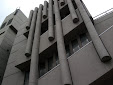
So on that note I'll leave you with a great big phallus - London's newest, which I photographed last autumn while it was still under constructions, The Shard. It is a perfect example of the superego in operation in public space. In my slightly-more-than-amateur analysis it represents: erection (in both the architectural and male sense), power and domination over those below (see De Certeau's opening to 'Walking in the City') and 'the voice of the father' (if you don't try and seduce your mother, or kill me, you can have all this too)!


Links:
The Overdetermination of the Space of the University

Bibliography:
Lefebvre, Henri. 1991. The Production of Space, trans. by Donald Nicholson-Smith (Oxford: Blackwell).

Monday, 31 October 2011

To the Ordinary Man - Michel de Certeau


I'd like to post this beautiful and poetic forward (I believe it is not really a forward but a for-forward, if that is a real term in bibliographical parlance) by Michel de Certeau from the beginning of his book The Practice of Everyday Life.

The reasons I like it are multifarious: it is inspiring and hopeful (even utopian). It contains the history of the 'man in the crowd' and the metropolitan personality. Also, it heralds the onset of the multitude and introduces the postmodern subject that exists in a textural space. But, I guess, more importantly, it offers up the city to us as an "anonymous subject" in its own right - the city that proffers us a particular appearance that is desirous of political administration, of the streamlining of processes and systems, of geographic zoning and capital accumulation. An appearance that disguises the hidden consequences of social reproduction. One that tells a different tale of the city, if only we can spend the time to reveal it behind the spectacle. One that is open to interpretation.

To the ordinary man.

To a common hero, an ubiquitous character, walking in countless thousands on the streets. In invoking here at the outset of my narratives the absent figure who provides both their beginning and their necessity, I inquire into the desire whose impossible object he represents. What are we asking this oracle whose voice is almost indistinguishable from the rumble of history to license us, to authorize us to say, when we dedicate to him the writing that one formerly offered in praise of the gods or the inspiring muses?

This anonymous hero is very ancient. He is the murmuring voice of societies. In all ages, he comes before texts. He does not expect representations. He squats now at the center of our scientific stages. The floodlights have moved away from the actors who possess proper names
and social blazons, turning first toward the chorus of secondary characters, then settling on the mass of the audience. The increasingly sociological and anthropological perspective of inquiry privileges the anonymous and the everyday in which zoom lenses cut out metonymic
details—parts taken for the whole. Slowly the representatives that formerly symbolized families, groups, and orders disappear from the stage they dominated during the epoch of the name. We witness the advent of the number. It comes along with democracy, the large city, administrations, cybernetics. It is a flexible and continuous mass, woven tight like a fabric with neither rips nor darned patches, a multitude of quantified heroes who lose names and faces as they become the ciphered river of the streets, a mobile language of computations and rationalities that belong to no one.

Sunday, 6 March 2011

Walking to the Beach


Video: Walking to the Beach

Walking affirms, suspects, tries out, transgresses respects, etc., the trajectories it "speaks". All the modalities sing a part in this chorus, changing from step to step, stepping in through proportions, sequences, and intensities which vary according to the time, the path taken and the weather. These enunciatory operations are of an unlimited diversity. They therefore cannot be reduced to their graphic trail. (De Certeau 2006: 99)


Reading the Arcades/Reading the Promenades
This mini-blog is part of the above project. All my seaside schizocartography posts are available here:
Reading the Arcades/Reading the Promenades
Or click here to link to my previous blog on the Norfolk seaside resort of Hunstanton: The Seaside in Winter

Bibliography
De Certeau, Michel. 2006. 'Walking in the City', The Practice of Everyday Life, trans. by Steven Rendall (Berkeley, Los Angeles and London: University of California Press) pp. 91-110