Showing posts with label London. Show all posts

Saturday, 22 July 2017

Paul's Walk, London Drift 1/7/17 – Part 1


By Paul Hazlehurst

As the train passed the goods yards and graffiti covered walls approaching Euston Station, I again felt the joyous excitement that a visit to a city brings to me. The beginning of a new adventure, wandering around with no set plan, seeing what will happen and where I would end up.

I was travelling with my twin brother John and his friend Brian. They were not psychogeographers, but both enjoy walking and were looking forward to visiting London. We picked up our rucksacks and exited the train. Standing in the station foyer, Brian started to tap his mobile phone, conjuring maps and data from his fingertips, whilst I checked my camera settings. We decided to get the tube to Archway and explore Highgate.

We picked up tube navigation easily enough, but on leaving the station at Archway soon got lost. Brian's phone map started to mess up and he lost direction at a crossroads, walking about with his phone in front of him like a Geiger counter. I was about to suggest that we just wandered, but after five minutes John asked a passer-by for directions.

Climbing up Highgate Hill, a flyer on the pavement advertised the Freud Museum, ahead was the Whittington Stone, a monument marking the point where Dick Whittington heard the Bow bells chime: "Turn again Whittington, thrice Lord Mayor of London". Cutting through Waterlow Park, the area was leafy and luxurious - oozing wealth. Toned bodies in Lycra were all around. More pulled up on racer bikes outside a gated community which was the size of a small village. A man pushed a pram down Parliament Hill, as a woman lifted weights on top. The voices of personal trainers filled Hampstead Heath. The city looked far away again, a spiky graph line.


We decided to go on the cemetery tour, which gave a history of the city and how it buried the dead. The tour was enjoyable, with a mix of Hammer Horror, dark catacombs, poisoned Russian spies, the Highgate Vampire, and celebrities from Karl Marx to Jeremy Beadle. Funnelling out of Camden Town tube station like grains of sand in an hour glass, the relaxing pace was broken. John looked panic stricken: "stay together, don't get lost", he said as the barriers were opened and the crowd of passengers swarmed onto Camden High Street.


The street was a riot of noise and colour - people flowing in every direction - it was impossible to take it all in at once. John ducked into a souvenir shop looking for a key ring - he needed something solid to hold onto to calm his nerves, after years of weekly shopping at the local supermarket this was a shock for him. Brian was looking for an escape route but the sun was shining on his phone screen rendering it useless. The market looked too crowded, so we headed along the Regents Canal towpath, passing a floating Chinese restaurant and an art deco narrow-boat. Street art and tags adorned the walls. The crowds of people started to thin, passing the London Zoo. Brian examined his phone under the shade of an iron bridge, picking Abbey Road as our next place to head for.

Click here for Part 2

Monday, 11 July 2016

The Ghost Walks in London


By Richard Brown

Walking is everywhere. It is becoming increasingly central to contemporary cultural practice and critical theory. According to Thoreau’s much-revered 1861 essay, walking is a sacred activity, the etymology of the word ‘saunter’ tracked down to the medieval pilgrims and alms-seekers who were headed for the ‘Sainte-Terre’ or Holy Land. This is readily taken up by current environmental theorists of walking such as Frederic Gros in his Philosophy of Walking (2014), Rebecca Solnit in her more physically grounded Wanderlust: A History (2014) or Robert MacFarlane in The Old Ways (2013), where the ‘enabling’ environmental politics of walking is a recurrent theme. Thanks to classic works of urban cultural theory from Walter Benjamin to Henri Lefevre, Michel De Certeau and Guy Debord, walking in the city is regularly now seen as key to the psychological and political survival of the modern and postmodern subject. The Baudelairean flâneur enjoyed a primarily aesthetic response to the newly-configured city space of the Paris of the Second Empire, otherwise increasingly determined by profit and work. Neither entrapped office worker nor distracted consumer, modernist and postmodern pedestrians express acts of cultural knowledge, empowerment and resistance, asserting their fragile subjectivity and cultural agency against the increasing threats of the surrounding environment, whether physical, economic, cultural or political. The surrealism of Breton and the situationist dérive turn this into radical cultural practice.

James Joyce’s work has been shown to embody comparable responses to modernity, accessible through and even informing such theory and he is seen to anticipate postmodern cultural practices in his definitive conceptions of city-walking from Dubliners to Ulysses where the locations of the real city and the characters’ precise movements within it can be traced. Little wonder then that Will Self, one of the most prominent writers to embrace the cultural practice of ‘psychogeography’, introducing Matthew Beaumont’s Nightwalking should turn to Joyce. As we know, a large section of Ulysses is concerned with Stephen’s and Bloom’s walks in the city of Dublin at night...

Please click here to read and download the whole article from the Joyce Broadsheet.

You can also click here to download a map of a Shakespeare walk undertaken in London on 16 June 2016.

Saturday, 30 August 2014

The Park Tower Knightsbridge: Corn-on-the-Cob


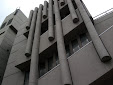
While at the Royal Geographical Society this week, I went for a stroll over to Knightsbridge and discovered another one of Richard Siefert’s buildings: The Park Tower (1973). Originally the Sheraton Park Tower (and previously the Skyline Park Tower Hotel) it is compared to Elmbank Gardens in Glasgow (according to Wikipedia), but how they could not compare it to One Kemble Street in Holborn is a serious oversight.


Park Tower was renovated in 2013 and the Hyde Park Penthouse Suite sells at £7,200/night in this brutalist hotel. You pay extra for your own butler. The cheapest room I could find was £319.
Centre Point is often considered to be Seifert’s most famous building, but it’s Tower 42 that’s actually my favourite London building. A few of his buildings have been demolished in recent times, Wembley Conference Centre, for instance.

On www.postwarbuildings.com it describes The Park Tower thus:
The building consists of a 15-storey rotunda housing 300 bedrooms, on a two-storey podium containing bars, a lobby and reception areas. The tower is formed of a reinforced-concrete service core, around which rooms are massed on a frame supported by pilotis at podium level. The most distinctive feature of the Park Tower is the façade treatment of the rotunda. Likened by Charles Jencks to corn-on-the-cob, each of the twenty rooms per floor, is articulated by a projecting bay window and clad in ochre mosaic. This gives the building an extremely tactile surface, while the rhythm of the windows goes some way to alleviating the bulk and emphasizing the vertical. This cellular façade treatment was a particularly Seifert architectural device and many of his buildings share this motif.

Relates blogs:
Negotiating Brutalist Space at the University of Leeds
Brutalist Access Points and Disappeared Stationers

Saturday, 26 July 2014

How We Used To Live – A Psychogeography of Your London


I rarely come out of a film feeling uplifted, or think this is my best film of [insert year]. Some of my years don’t even have my-best-film-ofs attached to them, as the films I saw were all so unmemorable. However my favourite film of 2014 is How We Used to Live (2013), written by Paul Kelly and Travis Elborough. I saw it this week at the Hyde Park Picture House in Leeds.

I’ve never been a fan of Ian MacShane, but he was the narrator and his voice was marvellous. There was a spooky resemblance to John Hurt’s narration on the Art of Noise’s The Seduction of Claude Debussey (“imagine me saying the following”). The timbre of their voices is so similar. Interestingly, the music was not dissimilar to the Art of Noise, as St Etienne provided the soundtrack.

I should image that anyone who can remember the 60s, or who knows London from maybe at least the 80s, would find this film extremely nostalgic. From fashion, to music, to social history, we are taken through the decades from the late 50s. But this is not a stuffy overly sentimental historic trip. It is also amusing and includes strange little moments, like a young woman in a green dress being grabbed off the street and put into the back of a car. What happened to her? We don’t know. But the film is more because of these quirky moments.

The film uses British Film Institute archive footage and the film format reflects this history – no widescreen format for the postwar Brit. Also, the aesthetics of the titles, etc, is in keeping with the period:
“Whenever you go down the road, you travel not in three dimensions, but in four. The fourth dimension is the past.”
You can read a Channel 4 review here: Can You Spot the London You Know?

Related links:
For my favourite film of 2013: The Great Walk - A Film, a Mystery, a Cult. . .
Film overviews: Le Pont Du Nord and Urbanized

Wednesday, 28 August 2013

One Kemble Street: The Sixties Space House


When in London last week, I turned off the Aldwych into Kingsway and caught a glimpse of this familiar building. I knew it from the nineties, when I was attending an evening class in the area at CityLit.


Completed in 1966 One Kemble Street used to be called the Space House and was designed by Richard Seifert, whose buildings included hotels, railways stations and office blocks. He was known for his 1960s and 1970s designs and for having been a big influence on London architecture during that period. According to scryscrapernews.com Seifert “originally designed the building to be a proper tower almost twice as high that would have served as a luxury hotel, but objections from Camden Council saw it reduced in height to what has been built today.” I actually like its stubbiness and don’t think doubling its height would have added anything to its aesthetic.


While Seifert is most famous for Centrepoint (which I also like), and the Natwest Tower, now called Tower 42 (my favourite London building), there is something about the smallness of the Space House that makes it more subtle and less ‘grand’ than the other two buildings. It’s like the difference between a sinewy Greyhound and a stocky Corgi. Both are lovely, and you wouldn’t reject the Corgi simply because it is small.


Relates blogs:
The Sound of the Sixties: Brutalist Architecture

Saturday, 28 July 2012

The Perturbed Psychogeographer: Contemplating Olympic Space, the Shard and Architectural Phalluses in General


The oversubscribed Olympic space in London has got me thinking lately. In the run-up everyone who was anyone was talking about what the East End meant to them (Paloma Faith, Dizzee Rascal, et al). Then in addition all the 'psychogeographers' were also providing their responses, albeit rather less publicly or media-led. I pondered on what I would do if I was a London-based psychogeographer. Would I just refuse to talk/write/blog about it? Would I get out of London and write about somewhere else instead, by way of protest? Or, would I try to do something really unconventional? (if that is at all possible within an already unorthodox domain).


Coincidentally I came across a paragraph by Henri Lefevbre this week in The Production of Space where he mentions this oversubscribing, or over-inscribing, as he calls it. He says:

"Both natural and urban spaces are...'over-inscribed': everything therein resembles a rough draft, jumbled and self-contradictory. Rather than signs, what one encounters here are directions - multifarious and overlapping instructions. If there is indeed text, inscription or writing to be found here, it is in a context of conventions, intentions and order (in the sense of social order versus disorder). That space signifies is incontestable. But what it signifies is dos and don'ts - and this brings us back to power. (page 142)"

Needless to say, these manifestations of power are what many psychogeographers are interested in in the urban sphere, but this paragraph above also reminds us of how those who are moving in, around and out of the Olympic area (or London in general) will be responding directly to the urban décor placed there to control their behaviour. What the Situationists described as "fixed points and vortexes that strongly discourage entry into or exit from certain zones."


In this sense - as symbols and phenomenon of seemingly latent power - Freud may be useful for explaining how the signs in the urban environment operate on us unconsciously. His term 'overdetermination' is often used in dream analysis. It demonstrates that many different elements appearing in the manifest dream can be traced back to a smaller number of latent elements. For instance - and to be both obvious and facetious - the broken stick on the pavement, the knife in the drawer and the clipped off end of the cigar, are all manifestations of the fear of castration that might appear in this hypothetical dream.

So on that note I'll leave you with a great big phallus - London's newest, which I photographed last autumn while it was still under constructions, The Shard. It is a perfect example of the superego in operation in public space. In my slightly-more-than-amateur analysis it represents: erection (in both the architectural and male sense), power and domination over those below (see De Certeau's opening to 'Walking in the City') and 'the voice of the father' (if you don't try and seduce your mother, or kill me, you can have all this too)!


Links:
The Overdetermination of the Space of the University

Bibliography:
Lefebvre, Henri. 1991. The Production of Space, trans. by Donald Nicholson-Smith (Oxford: Blackwell).