Monday, 19 September 2011

The Semiotic System of Capitalism (Fèlix Guattari) - Part 1

Below is an interesting extract from Fèlix Guattari's Molecular Revolution: Psychiatry and Politics (1972) on the systems and processes of capitalism:

What capitalizes capital is semiotic power. But not just any power - because in that case there would be no way of demarcating the earlier forms of exploitation - a semiotically de-territorialized power. Capitalism confers on certain social sub-systems a capacity for the selective control of society and production by means of a system of collective semiotization. What specifies it historically is that it only tries to control the different components which come together to maintain its processual character. Capitalism does not seek to exercise despotic power over all the wheels of society. It is even crucial to its survival that it manage to arrange marginal freedoms, relative spaces for creativity. What is of primary importance to it is the mastery of the semiotic wheels which are essential for the key productive arrangements and especially those which are involved in changing machine processes (the adjustments of machine power). Doubtless it is obliged by the force of history to interest itself in all domains of the social - public order, education, religion, the arts, etc. But, originally, this is not its problem; it is first of all continuously a mode of evaluation and technical means of control of power arrangements and their corresponding formulations. (page 275)

Click here for The Semiotic System of Capitalism (Fèlix Guattari) - Part 2

Thursday, 15 September 2011

Schizoanalysing the University Campus: Three Little Films


Below are three psychogeographical films about the University of Leeds. They form part of a growing schizocartography of the campus.

Axis of Exploration and Failure in the Search for a Situationist 'Great Strike'

Click here for film

This animated map is appropriated from the Situationist map by Guy Debord called Axis of Exploration and Failure in the Search for a Situationist "Great Passage" (1957). My map is based on the recent education-related strikes in Leeds, in particular at the University of Leeds and Leeds Metropolitan University in the last year. My own image takes sections from various University of Leeds maps, it includes a photo I took of the J30 strike in June.

The Situation at the University

Click here for film

"Our central purpose is the construction of situations, i.e. the concrete construction of temporary settings of life and their transformations into a higher passionate nature. We must develop an intervention, directed by the complicated factors of two great components in perpetual interaction: the material setting of life and the behaviours that it incites and that overturn it." Guy Debord (Situationist International) 1957


The Sound of the Sixties

Click here for film

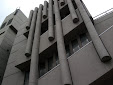
This 3 minute film is an acoustic psychogeographical response to the area called the precinct at the University of Leeds represented by the architecture of Chamberlin, Powell and Bon. The film features two of the most impressive of the buildings designed by the architects: the Worsley Building and the Roger Stevens Lecture Theatre (now a Grade II listed building). It alludes to a moment-in-time architecturally, with the popular cultural reference of the title - The Sound of the Sixties, a radio and TV series playing pop music form that era - and the 1964 track by the R&B British pop band Manfred Mann. The song title 5-4-3-2-1 provides a countdown to the walk, which was actually 8 individual edited films, appearing in the sequence they were recorded.

So as to avoid being distracted by the campus scenery only the feet were shot, they being the instrument used to tap out the sound on the surface of the topography of the precinct. I considered just supplying the sound without the visuals of the walking feet, but I decided that the trace left by the feet becomes a form of cartography which has a number of functions that to me, as a psychogeographer, are important, and which also support the tenets of schizocartography.

Saturday, 10 September 2011

Austerity & the University of Excellence Part 2


Discarded Phenomena at the University of Leeds.
Image CC Tina Richardson


We are not outside the university, we occupy it every day and this is the place from which any considerations for a future university will be made. However, we need to be cognisant of the problems that occur through living in a historical university: a past that refuses to completely disappear, that manifests itself in a contradictory and haunting co-presence, and that needs to be considered, first and foremost, as a place that is occupied by the people of the present. Any new way of living in the university will require an understanding of the complexity of space that the posthistoric university has inherited. We need to explore the university in an attempt to acknowledge its past, a search that may require a form of revealing to occur in order for us to understand what the university of today, and tomorrow, might mean.

What I would like to propose is a critique of today's university that helps to reveal a material life that can easily be forgotten when dealing with the abstracted notions and alienating practices associated with technological systems and knowledge generating processes. The university is a physical body existing in geographical space, occupied by people who traverse its roads, paths and corridors. To fully understand the university of today, and be able to respond to a new university, it needs to be excavated both archivally and topographically.

If we are to believe Félix Guattari, then we need to seek out modes that are counter to the dominant consciousness that appears in the form of power. All dominant powers require a particular worldview to take place in order for the status quo to be maintained. The university presents a particular outward face. This face is a consciously structured one that supports its specific messages. The university does not say everything about itself, in the same way that a business doesn't, because it would not be 'good practice'. The process of representation is a mediated one in which the university attempts to foster a like-minded view in the recipients of its representational medium, whether it be the university website, or how the campus looks.

In order that governing bodies can carry out policy, consent is the optimal reaction rather than opposition. Alternative voices are not encouraged, revolutionary ones need to be crushed or at the very least assuaged through hegemonic means; or, post event, they can be ignored entirely by being written out of history. However, these other voices and histories are still part of the body that makes up the institution as it appears today, even if they might be sidelined, for strategic reasons or otherwise. If the university is not conscious of its past, if it does not acknowledge its shadow qualities, it would be difficult for it to think of itself as a place of community, of consensus or belonging. In order to confront its unconscious the university needs to come to terms with its past-and-present relationships, especially those that stir up a sense of dissonance in the pit of the institutional stomach.

I would like to suggest that this can be done by looking for the hidden university, the one that is behind the veil of the manufactured image. It is the one that appears in the darkest part of the university: in its archives and in its lost or forgotten places. It can be found through a bottom-up method of psychogeographical exploration and archival research which will reveal a more complete university, one that can be traced in the palimpsest layers that form its spatial manifestation, and in its archival attempts at a de-prioritisation of certain data.

While we need to accept that the past still haunts the corridors of the institution, it needs to be acknowledged in its spectral manifestation. Neither should it be seen as something nostalgic, a time when ideas about the university were pure, honourable and righteous. The university always represents a mirror of society. While having the ruined signs of the ghost of university past all around us, the complexity of postmodern space - with its abyssal protocols and procedures - demands a renegotiation of that space. And I think Bill Readings expresses this most eloquently when he compares the university to an Italian city. So I will leave you with his quote:

Dwelling in the ruins of the University thus means giving a serious attention to the present complexity of space, undertaking an endless work of détournement of the spaces willed to us by a history whose temporality we no longer inhabit. Like the inhabitants of some Italian city, we can seek neither to rebuild the Renaissance city-state nor to destroy its remnants and install rationally planned tower-blocks; we can seek only to put its angularities and winding passages to new uses, learning from and enjoying the cognitive dissonances that enclosed piazzas and non-signifying campanile induce. (1999: 127)

Related link: Austerity & the University of Excellence Part 1

Bibliography
Readings, Bill. 1999. The University in Ruins (Cambridge, Massachusetts and London: Harvard University Press).

Monday, 5 September 2011

Austerity & the University of Excellence Part 1

The Parkinson Steps at the University of Leeds.
Image CC Tina Richardson


During modernity the university's relationship with commerce grew out of a direct response to an economic need, whereby the university reacted to demands for a certain type of knowledge requirement. In postmodernity the university has acquired the mantle of a business-oriented philosophy in its own right, this means that attempting to demarcate industry and institution as separate entities is far more complex. In order to compete in a globalised market the contemporary university is expected to think and operate as if it were a business: it has to take up the procedures and practices of commerce.

What this means for the university is that in its corporate incarnation it is essential that it becomes part of the globalised marketplace and in that move adopts the modes of operating that capitalism endorses. It needs to involve itself in the transfer of capital within society both at home and abroad. The university does this in a number of ways, from its relationship with industry in its vocational courses, to research that directly benefits business and technology.

However, even as far back as 1990 academics were writing about the negative aspects of applying a commercial formula to every aspect of education. In her essay ''Hard' Decisions and 'Tough' Choices: The Business Approach to University Decline' Cynthia Hardy says:
The tough choices advocated in business literature are likely to escalate the political conflict that surrounds declining resources, not resolve it. Draconian measures - terminations and program closures - can send shock waves through the university community. The more marketable individuals will leave to find less hostile surroundings; potential recruits will resort to political infighting, as they try to protect their departments. (1990: 317)

I provide this illustration not because I think academics do not know this already, but because I wish to emphasise that this current period of austerity is situated within the greater issue of how organisations operate under neoliberalism. And, not just organisations, but individuals also. We no longer look to the nation-state for our sense of cultural identity, nor the modernist university, but to the High Street. We are first and foremost consumers.

This is how Mark Fisher puts it: "Capital follows you when you dream. Time ceases to be linear, becomes chaotic, broken down into punctiform divisions. As production and distribution are restructured, so are nervous systems." And Félix Guattari would agree. He believes that while we have many subjectivities available to us, the prevailing consciousness is a capitalist one. He says that capitalism works in such a way as to prevent anything that is antithetical to its project from taking hold. The signs that capitalism creates discourage any singular processes of individuation and attempt to reroute subjective desires back into capitalist production: this is anti-production, and here Guattari situates it in the context of education:
It is impossible to separate the production of any consumer commodity from the institution that supports that production. The same can be said of teaching, training, research, etc. The State machine and the machine of repression produce anti-production, that is to say signifiers that exist to block and prevent the emergence of any subjective process. (1984: 34)

So what are we to do if this is less to do with the current crisis and more to do with 'the postmodern condition': the restructuring of education under neo-liberlism and the prevalence of a capitalist consciousness?

I think the clues are in the ruins of the university. Not only in those left by Bill Readings in his posthumously published book The University in Ruins but also in the material of the university which we inhabit today, the physical and abstract space of the university behind the spectacle.

Because the university needs to reduplicate itself internally, and also express that reduplication externally, what this means for the university is a spectacle-like appearance in the form of signs that appear as representable data, the output of the excellence process. These signs present the university in the guise of what Guy Debord would describe as "commodity as spectacle". Debord explains that the spectacle is "where the tangible world is replaced by a selection of images which exist above it, and which simultaneously impose themselves as the tangible par excellence." This is problematic for the university because it means it is removed from its original idealised functions - the pursuit of knowledge, high quality academic research, education for all, etc. Readings believes that the university as a concept no longer has any content: "The University of Excellence is the simulacrum of the idea of a university". And while this might sound negative, or even hopeless, herein also lies the possibility for it to be remade under a different concept; as Readings says "the wider social role of the university is now up for grabs".

In a time where grand narratives no longer hold sway, where culture and ideology is decentralised and where the once autonomous subject can even be argued to be posthuman, we need a different model of consciousness to help us negotiate the postmodern terrain and those institutions that are manifest in them. This is well-noted by Frederic Jameson in Postmodernism, or the Cultural Logic of Late Capitalism when he calls for a new cognitive map:
It may now be suggested that this alarming disjunction point between the body and its environment [...] can itself stand as the symbol and analogon1 of that even sharper dilemma which is the incapacity of our minds, at least at present, to map the great global multinational and decentered communicational network in which we find ourselves caught as individual subjects. (2009: 44)

This is echoed by Fisher when he states: "To function effectively as a component of just-in-time production you must develop a capacity to respond to unforseen events, you must learn to live in conditions of total instability, or 'precarity'" (2009: 34)

So, if we are to believe that a predictable future is unavailable to us in this simulacra-like university that is inseparable from these global networks, how do we find the university of tomorrow?

Related link: Austerity and the University of Excellence Part 2

Bibliography:
Debord, Guy. 2005. The Society of the Spectacle (Detroit: Black and Red).
Fisher, Mark. 2009. Capitalist Realism: Is there no alternative? (Winchester: Zero Books).
Guattari, Félix. 1984. Molecular Revolution: Psychiatry and Politics, trans. by Rosemary Sheed (Harmondsworth: Penguin Books).
Hardy, Cynthia. ''Hard' Decisions and 'Tough' Choices: The Business Approach to University Decline', Higher Education, 20, 3 (1990), 301-321.
Jameson, Frederic. 2009. Postmodernism or The Cultural Logic of Late Capitalism (London and New York: Verso).
Readings, Bill. 1999. The University in Ruins (Cambridge, Massachusetts and London: Harvard University Press).

Sunday, 21 August 2011

The English Summer Riots: Signification and Group Behaviour

Paris May 1968 Riots

The following text is from Fèlix Guattari's Molecular Revolution: Psychiatry and Politics (1972) and I think it serves well as an analysis of the August riots in England:

The gang of young men that forms spontaneously in a section of town does not recruit members or charge a subscription; it is a matter of recognition and internal organization. Organizing such a collective depends not only on the words that are said, but on the formation of images underlying the constitution of any group, and these seem to me something fundamental - the support upon which all their other aims and objects rest. I do not think one can fully grasp the acts, attitudes or inner life of any group without grasping the thematics and functions of its 'acting out' of phantasies.

You cannot relate the sum of a group's phantasy phenomena to any system of deductions working only with motivations made fully explicit at the rational level. . . . There is, to start with, a kind of solidification, a setting into a mass; this is us, and other people are different, and usually not worth bothering with - there is no communication possible. There is a territorialization of phantasy, an imagining of the groups as a body, that absorbs subjectivity into itself. From this there flow all the phenomena of misunderstanding, racism, regionalism, nationalism and other archaisms that have utterly defeated the understanding of social theorists. (pages 35-36)

Please click below to see related link:
Paul Gilroy speaking on the August 2011 riots

Sunday, 7 August 2011

Axis of Exploration and Failure in the Search for a Situationist "Great Strike"


The above map is appropriated from the Situationist map by Guy Debord called Axis of Exploration and Failure in the Search for a Situationist "Great Passage" (1957). My map is based on the recent education-related strikes in Leeds, in particular at the University of Leeds and Leeds Metropolitan University in the last year. My own image takes sections from various University of Leeds maps, it includes a photo I took of the J30 strike in June, and I'll leave you to work out what the top image is . . .

Here is how Tom McDonough describes Debord's map in The Situationists and the City:
...a novel sort of map, or perhaps we might better say a work that stands halfway between the realms of art and cartography...This was one of a series called 'psychogeographic' maps he made of Paris at that moment, maps intended to chart "the specific effects of the geographic milieu, consciously planned or not, acting on the affective comportment of individuals." It in fact records one particular expedition...undertaken three years earlier by Debord and Chtcheglov (seen in their photograph at the top left) across their favored neighborhoods on the Left Bank, pictured in four collaged aerial photographs linked by arrows signalling various possible routes of entry and egress from one 'ambiance' to another. At the bottom right we find a poetic emblem of this voyage, a reproduction of Claude Lorrain's Seaport with the Embarkation of Saint Ursula of 1641...The three elements together - along with the work's title, which characteristically unites a rather dry, technical description with the fanciful reference to the 'great' (that is, northwest) passage sought by explorers from Christopher Columbus forward in their quest for a more direct route to the east - produce an idiosyncratic plan of the city, one that privileges psychology as much as topography.

Please note: Unfortunately I cannot find a link to the original map of Debord's, although it is reproduced in McDonough's text, which is actually the first time I came across it.

Here is an animated version of the map: Axis of Exploration

Please click below to see my other Situationist-based maps:
Guide Psychogeographique de University of Leeds
A Psychogeographical Guide to Hunstanton Promenade

Wednesday, 3 August 2011

University as City


In his article originally appearing in the Architectural Review in January 1974 but also reproduced in the Henry Moore Institute publication The New Monumentality (2009), Lance Wright refers to how the campus development at the University of Leeds in the 1960s was oriented around "university-as-ideal-city". (2009: 33) The development, led by the architects Chamberlin, Powell and Bon (CPB), was considered at the time to be both an attempt to create a kind of university-as-city in its own right, but also to integrate the university itself into the city of which it belonged. Even more so today, campus universities are relatively self-contained inasmuch as they house all the facilities and amenities required for students not to just study but also to live and socialise: supermarkets, eateries, cash-machines, bars and clubs, and a variety of shops from travel agents to opticians. Because the ideology behind the massive sixties development plan for the campus orients it within a city-based model, it serves us to consider some of the relevant texts that take a postmodern aesthetic and subjective perspective on the city as an object of study.

David Pinder's Visions of the City (2005) takes a primarily Situationist look at the city and discusses détournement, the dérive and their cartography in depth. Preferring the Situationists' approach to the Surrealists' he states: "The dérive placed more emphasis on a conscious analytic subject, investigating and contesting terrain." (2005: 3) Pinder believes that the maps produced by Debord, and the performative acts behind them, go towards altering conceptions of the city and the lived experience therein. (2005: 159)

Jonathan Raban also discusses the individual's response to living in the city in Soft City (1974). He begins by explaining that the city, your own city, has a language that speaks to you and that your recognise: "the language you've always known, the language from which being you, being me, are inseparable." (1998: 3) Raban's poetic prose on the city - describing a flexible space that can be bent to our will - views the city as malleable, encouraging fluid identities in its citizens. In not seeing the city as being full of 'evils' that can create an alienating effect, Raban prefers to show us aspects that we can use and mold for our individual purposes:
For at moments like this, the city goes soft; it awaits the imprint of an identity. For better or worse, it invites you to remake it, to consolidate it into a shape you can live in. You, too. Decide who you are, and the city will again assume a fixed form around you. (ibid.)

Raban's text echoes elements of Roland Barthes comments on the city: "The city is a discourse and this discourse is truly a language: the city speaks to its inhabitants, we speak our city, the city where we are, simply by living in it, by wandering through it, by looking at it." (2004: 168)

Another interesting and relevant aspect of Raban's text looks at ideas around the concept of reason that have historically been attached to texts on the city, in particular because of the dichotomies around urban/rural and refined/uncivilised. (1998: 153) In postmodernity this idea of reason could be transferred to a view on the rationalist approach attached to capitalism, especially the rhetoric in circulation concerning it. Not just the idea that countries that are capital-generating are considered to be more civilised than those that are not, but, also, the expressions that are promulgated, dismissing any alternative model of living than the consumerist one.

Texts on the city also lend themselves to being used for analysing campus space because the posthistoric university has many qualities that are comparable to city living. The university puts consumers and products into circulation, enabling an analysis from the perspective of networks and flows. Space is designed, from a rational standpoint, to control the flows of people, machines and materials in a way that encourages the efficient running of university space while also supporting the ideology behind it. This means that the campus can be analysed from the perspective of how capital might use and acquire that space, for example, through capital accumulation. Also, the university, like the city, has an appearance in the form of which it appears, its referent. The university, in manifest form, is a representation, supported by a particular discourse, which means it can be deconstructed linguistically.

Bibliography:
Barthes, Roland. 2004. 'Semiology and Urbanism', Rethinking Architecture, ed. by Neil Leach (London: Routledge). pp. 166-172.
Pinder, David. 2005. Visions of the City: Utopianism, Power and Politics in Twnetieth-Century Urbanism (Edinburgh: Edinburgh University Press Ltd).
Raban, Jonathan. 1998. Soft City (London: The Harvill Press).
Wright, Lance. 2009. ‘University of Leeds: Criticism’, The New Monumentality (Leeds: Henry Moore Institute) pp. 32-34.