Showing posts with label Debord. Show all posts

Saturday, 10 September 2011

Austerity & the University of Excellence Part 2


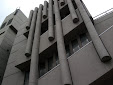
Discarded Phenomena at the University of Leeds.
Image CC Tina Richardson


We are not outside the university, we occupy it every day and this is the place from which any considerations for a future university will be made. However, we need to be cognisant of the problems that occur through living in a historical university: a past that refuses to completely disappear, that manifests itself in a contradictory and haunting co-presence, and that needs to be considered, first and foremost, as a place that is occupied by the people of the present. Any new way of living in the university will require an understanding of the complexity of space that the posthistoric university has inherited. We need to explore the university in an attempt to acknowledge its past, a search that may require a form of revealing to occur in order for us to understand what the university of today, and tomorrow, might mean.

What I would like to propose is a critique of today's university that helps to reveal a material life that can easily be forgotten when dealing with the abstracted notions and alienating practices associated with technological systems and knowledge generating processes. The university is a physical body existing in geographical space, occupied by people who traverse its roads, paths and corridors. To fully understand the university of today, and be able to respond to a new university, it needs to be excavated both archivally and topographically.

If we are to believe Félix Guattari, then we need to seek out modes that are counter to the dominant consciousness that appears in the form of power. All dominant powers require a particular worldview to take place in order for the status quo to be maintained. The university presents a particular outward face. This face is a consciously structured one that supports its specific messages. The university does not say everything about itself, in the same way that a business doesn't, because it would not be 'good practice'. The process of representation is a mediated one in which the university attempts to foster a like-minded view in the recipients of its representational medium, whether it be the university website, or how the campus looks.

In order that governing bodies can carry out policy, consent is the optimal reaction rather than opposition. Alternative voices are not encouraged, revolutionary ones need to be crushed or at the very least assuaged through hegemonic means; or, post event, they can be ignored entirely by being written out of history. However, these other voices and histories are still part of the body that makes up the institution as it appears today, even if they might be sidelined, for strategic reasons or otherwise. If the university is not conscious of its past, if it does not acknowledge its shadow qualities, it would be difficult for it to think of itself as a place of community, of consensus or belonging. In order to confront its unconscious the university needs to come to terms with its past-and-present relationships, especially those that stir up a sense of dissonance in the pit of the institutional stomach.

I would like to suggest that this can be done by looking for the hidden university, the one that is behind the veil of the manufactured image. It is the one that appears in the darkest part of the university: in its archives and in its lost or forgotten places. It can be found through a bottom-up method of psychogeographical exploration and archival research which will reveal a more complete university, one that can be traced in the palimpsest layers that form its spatial manifestation, and in its archival attempts at a de-prioritisation of certain data.

While we need to accept that the past still haunts the corridors of the institution, it needs to be acknowledged in its spectral manifestation. Neither should it be seen as something nostalgic, a time when ideas about the university were pure, honourable and righteous. The university always represents a mirror of society. While having the ruined signs of the ghost of university past all around us, the complexity of postmodern space - with its abyssal protocols and procedures - demands a renegotiation of that space. And I think Bill Readings expresses this most eloquently when he compares the university to an Italian city. So I will leave you with his quote:

Dwelling in the ruins of the University thus means giving a serious attention to the present complexity of space, undertaking an endless work of détournement of the spaces willed to us by a history whose temporality we no longer inhabit. Like the inhabitants of some Italian city, we can seek neither to rebuild the Renaissance city-state nor to destroy its remnants and install rationally planned tower-blocks; we can seek only to put its angularities and winding passages to new uses, learning from and enjoying the cognitive dissonances that enclosed piazzas and non-signifying campanile induce. (1999: 127)

Related link: Austerity & the University of Excellence Part 1

Bibliography
Readings, Bill. 1999. The University in Ruins (Cambridge, Massachusetts and London: Harvard University Press).

Monday, 5 September 2011

Austerity & the University of Excellence Part 1

The Parkinson Steps at the University of Leeds.
Image CC Tina Richardson


During modernity the university's relationship with commerce grew out of a direct response to an economic need, whereby the university reacted to demands for a certain type of knowledge requirement. In postmodernity the university has acquired the mantle of a business-oriented philosophy in its own right, this means that attempting to demarcate industry and institution as separate entities is far more complex. In order to compete in a globalised market the contemporary university is expected to think and operate as if it were a business: it has to take up the procedures and practices of commerce.

What this means for the university is that in its corporate incarnation it is essential that it becomes part of the globalised marketplace and in that move adopts the modes of operating that capitalism endorses. It needs to involve itself in the transfer of capital within society both at home and abroad. The university does this in a number of ways, from its relationship with industry in its vocational courses, to research that directly benefits business and technology.

However, even as far back as 1990 academics were writing about the negative aspects of applying a commercial formula to every aspect of education. In her essay ''Hard' Decisions and 'Tough' Choices: The Business Approach to University Decline' Cynthia Hardy says:
The tough choices advocated in business literature are likely to escalate the political conflict that surrounds declining resources, not resolve it. Draconian measures - terminations and program closures - can send shock waves through the university community. The more marketable individuals will leave to find less hostile surroundings; potential recruits will resort to political infighting, as they try to protect their departments. (1990: 317)

I provide this illustration not because I think academics do not know this already, but because I wish to emphasise that this current period of austerity is situated within the greater issue of how organisations operate under neoliberalism. And, not just organisations, but individuals also. We no longer look to the nation-state for our sense of cultural identity, nor the modernist university, but to the High Street. We are first and foremost consumers.

This is how Mark Fisher puts it: "Capital follows you when you dream. Time ceases to be linear, becomes chaotic, broken down into punctiform divisions. As production and distribution are restructured, so are nervous systems." And Félix Guattari would agree. He believes that while we have many subjectivities available to us, the prevailing consciousness is a capitalist one. He says that capitalism works in such a way as to prevent anything that is antithetical to its project from taking hold. The signs that capitalism creates discourage any singular processes of individuation and attempt to reroute subjective desires back into capitalist production: this is anti-production, and here Guattari situates it in the context of education:
It is impossible to separate the production of any consumer commodity from the institution that supports that production. The same can be said of teaching, training, research, etc. The State machine and the machine of repression produce anti-production, that is to say signifiers that exist to block and prevent the emergence of any subjective process. (1984: 34)

So what are we to do if this is less to do with the current crisis and more to do with 'the postmodern condition': the restructuring of education under neo-liberlism and the prevalence of a capitalist consciousness?

I think the clues are in the ruins of the university. Not only in those left by Bill Readings in his posthumously published book The University in Ruins but also in the material of the university which we inhabit today, the physical and abstract space of the university behind the spectacle.

Because the university needs to reduplicate itself internally, and also express that reduplication externally, what this means for the university is a spectacle-like appearance in the form of signs that appear as representable data, the output of the excellence process. These signs present the university in the guise of what Guy Debord would describe as "commodity as spectacle". Debord explains that the spectacle is "where the tangible world is replaced by a selection of images which exist above it, and which simultaneously impose themselves as the tangible par excellence." This is problematic for the university because it means it is removed from its original idealised functions - the pursuit of knowledge, high quality academic research, education for all, etc. Readings believes that the university as a concept no longer has any content: "The University of Excellence is the simulacrum of the idea of a university". And while this might sound negative, or even hopeless, herein also lies the possibility for it to be remade under a different concept; as Readings says "the wider social role of the university is now up for grabs".

In a time where grand narratives no longer hold sway, where culture and ideology is decentralised and where the once autonomous subject can even be argued to be posthuman, we need a different model of consciousness to help us negotiate the postmodern terrain and those institutions that are manifest in them. This is well-noted by Frederic Jameson in Postmodernism, or the Cultural Logic of Late Capitalism when he calls for a new cognitive map:
It may now be suggested that this alarming disjunction point between the body and its environment [...] can itself stand as the symbol and analogon1 of that even sharper dilemma which is the incapacity of our minds, at least at present, to map the great global multinational and decentered communicational network in which we find ourselves caught as individual subjects. (2009: 44)

This is echoed by Fisher when he states: "To function effectively as a component of just-in-time production you must develop a capacity to respond to unforseen events, you must learn to live in conditions of total instability, or 'precarity'" (2009: 34)

So, if we are to believe that a predictable future is unavailable to us in this simulacra-like university that is inseparable from these global networks, how do we find the university of tomorrow?

Related link: Austerity and the University of Excellence Part 2

Bibliography:
Debord, Guy. 2005. The Society of the Spectacle (Detroit: Black and Red).
Fisher, Mark. 2009. Capitalist Realism: Is there no alternative? (Winchester: Zero Books).
Guattari, Félix. 1984. Molecular Revolution: Psychiatry and Politics, trans. by Rosemary Sheed (Harmondsworth: Penguin Books).
Hardy, Cynthia. ''Hard' Decisions and 'Tough' Choices: The Business Approach to University Decline', Higher Education, 20, 3 (1990), 301-321.
Jameson, Frederic. 2009. Postmodernism or The Cultural Logic of Late Capitalism (London and New York: Verso).
Readings, Bill. 1999. The University in Ruins (Cambridge, Massachusetts and London: Harvard University Press).

Sunday, 17 October 2010

The Cootie Catcher Dérive or A Walk With Some Really Interesting Dutch Chaps


A Device for a Chance Route
A few weeks ago I was very fortunate to be invited, along with a number of other Leeds-based organisations, to take some visitors from Holland on an urban walk around Leeds. So, on Monday October 11th I headed off to Temple Works in Holbeck to meet them.


Along with a dice, which I had made specially for the event, that gave instructions on turning in particular directions (e.g. first left), I also made the above device. We used to play with these at school, but I couldn't remember the name of them - neither could anyone else. Having searched for it on the web, it appears to be a Paper Fortune Teller. How dull! I thought it was going to have a much more exciting name. . . But then I found out it was also called a 'Cootie Catcher', which sounds a bit dodgy, yet much more interesting!

Paper Fortune Teller

My own paper fortune teller has numbers on the outside, then small symbols representing urban phenomena on the next face (motorway, trains, etc.), and inside, various instructions such as: head towards the nearest blue object, or look for the nearest railings.

On the walk, while I took my usual photos of prohibition signs, etc., I decided to concentrate my attention on images that were aesthetically pleasing (click on the images to get the full advantage of them).


Discarded Objects


One of the things I believe is important for someone exploring urban space is to reconsider the detritus of everyday life by reframing it. For instance, when looking at the above chairs it is hard to understand why, when they look perfectly fine, they have been thrown away. However, the side-effect of this casual act is that it enables a recontextualisation to occur, the product of which is the above photo.

While I understand this is not a new way of looking at the phenomenon in space, I think it enables discussions that digress from those that tend to begin in the area of whether you 'like' something or not; in other words it encourages a non-dialectical discussion. To me, liking something or not is, kind of, irrelevant: as this means attaching positive or negative terms to these objects, which always end in an impossible impasse (see discussions on classical v contemporary architecture). Of course, these images are of rubbish: however, there is rubbish everywhere and attempting to reframe it, aesthetically - as in, is it interesting?, what does this rubbish say about contemporary society? - may be a way through this problem.


What I try to do with the refuse that I see when walking is look for patterns, or seek an attractive composition, or engage with it on some theoretical/philosophical, if possible. After all, it is a product, well actually a by-product, of our postmodern age, and is hugely significant and should not be ignored. In a way it is the outcome of the spectacle of which Debord spoke. We all have too much 'stuff', we don't need all these consumer products - we discard perfectly useful objects without considering the repercussions: and I don't just mean that in an ecological way


The above image is interesting for a number of reasons: why did the trees get cut down (this area hasn't even really been redeveloped properly); also, if it were a rural area, there would likely be some local pressure group that would prevent the sawing down of these trees (in other words, dare I say, a regional middle-class demographic that had some power). Anyway, it provided me with a lovely, organic image...


In Conclusion
I'm obviously not the first person to have recognised the significance of these liminal areas such as Holbeck. Nevertheless, to prevent it from being just another theoretical discussion (either locally or nationally) it should be visited and (re)considered in the context of postmodern space and in the light of capital accumulation...


Relates websites:
Fonds BKVB
What's Up, What's Down