Showing posts with label détournement. Show all posts

Saturday, 10 September 2011

Austerity & the University of Excellence Part 2


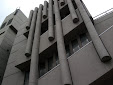
Discarded Phenomena at the University of Leeds.
Image CC Tina Richardson


We are not outside the university, we occupy it every day and this is the place from which any considerations for a future university will be made. However, we need to be cognisant of the problems that occur through living in a historical university: a past that refuses to completely disappear, that manifests itself in a contradictory and haunting co-presence, and that needs to be considered, first and foremost, as a place that is occupied by the people of the present. Any new way of living in the university will require an understanding of the complexity of space that the posthistoric university has inherited. We need to explore the university in an attempt to acknowledge its past, a search that may require a form of revealing to occur in order for us to understand what the university of today, and tomorrow, might mean.

What I would like to propose is a critique of today's university that helps to reveal a material life that can easily be forgotten when dealing with the abstracted notions and alienating practices associated with technological systems and knowledge generating processes. The university is a physical body existing in geographical space, occupied by people who traverse its roads, paths and corridors. To fully understand the university of today, and be able to respond to a new university, it needs to be excavated both archivally and topographically.

If we are to believe Félix Guattari, then we need to seek out modes that are counter to the dominant consciousness that appears in the form of power. All dominant powers require a particular worldview to take place in order for the status quo to be maintained. The university presents a particular outward face. This face is a consciously structured one that supports its specific messages. The university does not say everything about itself, in the same way that a business doesn't, because it would not be 'good practice'. The process of representation is a mediated one in which the university attempts to foster a like-minded view in the recipients of its representational medium, whether it be the university website, or how the campus looks.

In order that governing bodies can carry out policy, consent is the optimal reaction rather than opposition. Alternative voices are not encouraged, revolutionary ones need to be crushed or at the very least assuaged through hegemonic means; or, post event, they can be ignored entirely by being written out of history. However, these other voices and histories are still part of the body that makes up the institution as it appears today, even if they might be sidelined, for strategic reasons or otherwise. If the university is not conscious of its past, if it does not acknowledge its shadow qualities, it would be difficult for it to think of itself as a place of community, of consensus or belonging. In order to confront its unconscious the university needs to come to terms with its past-and-present relationships, especially those that stir up a sense of dissonance in the pit of the institutional stomach.

I would like to suggest that this can be done by looking for the hidden university, the one that is behind the veil of the manufactured image. It is the one that appears in the darkest part of the university: in its archives and in its lost or forgotten places. It can be found through a bottom-up method of psychogeographical exploration and archival research which will reveal a more complete university, one that can be traced in the palimpsest layers that form its spatial manifestation, and in its archival attempts at a de-prioritisation of certain data.

While we need to accept that the past still haunts the corridors of the institution, it needs to be acknowledged in its spectral manifestation. Neither should it be seen as something nostalgic, a time when ideas about the university were pure, honourable and righteous. The university always represents a mirror of society. While having the ruined signs of the ghost of university past all around us, the complexity of postmodern space - with its abyssal protocols and procedures - demands a renegotiation of that space. And I think Bill Readings expresses this most eloquently when he compares the university to an Italian city. So I will leave you with his quote:

Dwelling in the ruins of the University thus means giving a serious attention to the present complexity of space, undertaking an endless work of détournement of the spaces willed to us by a history whose temporality we no longer inhabit. Like the inhabitants of some Italian city, we can seek neither to rebuild the Renaissance city-state nor to destroy its remnants and install rationally planned tower-blocks; we can seek only to put its angularities and winding passages to new uses, learning from and enjoying the cognitive dissonances that enclosed piazzas and non-signifying campanile induce. (1999: 127)

Related link: Austerity & the University of Excellence Part 1

Bibliography
Readings, Bill. 1999. The University in Ruins (Cambridge, Massachusetts and London: Harvard University Press).

Thursday, 30 July 2009

The Posthistoric University: From Détournement to Denudement

Dwelling in the ruins of the University thus means giving a serious attention to the present complexity of space, undertaking an endless work of détournement of the spaces willed to us by a history whose temporality we no longer inhabit. Like the inhabitants of some Italian city, we can seek neither to rebuild the Renaissance city-state nor to destroy its remnants and install rationally planned tower-blocks; we can seek only to put its angularities and winding passages to new uses, learning from and enjoying the cognitive dissonances that enclosed piazzas and and non-signifying campanile induce.
(Readings 1999: 129)

Bill Readings critique of the postmodern (what he calls posthistoric) university in his book The University in Ruins (1996), analyses the university in its redirection from a historico-cultural legacy to its current incarnation in the form of a capital-generating, consumer-oriented, corporate entity. His investigation focuses on the quality of 'excellence' which he sees as being the watchword of the corporate university. For Readings, 'excellence' is a hollow term that has no absolute definition; he sees it as a construct of the bureaucratic university that provides a marker of simulacra-like value: “[...] excellence is not a fixed standard of judgement but a qualifier whose meaning is fixed in relation to something else” (1999: 24), and “Excellence is […] a means of relative ranking among the elements of an entirely closed system” (1999: 27).

While Readings examination of the university is not an obvious reading of space, he often makes spatial references in relation to capitalist power: geo-political, architectural and noetic/psychic space. This is especially apparent in the chapter entitled 'Dwelling in the Ruins', where associations can be made to the language of the Situationist International group (SI), even though Readings does not make direct reference to this (other than his use of the term détournement, the only obvious reference is on page 17 where he mentions Guy Debord and provides a definition of 'the spectacle'). In this chapter Readings discusses the idea of architectural ruins, and how this ties in with his thesis on the posthistoric university, analysing the university from a number of perspectives, including ideological, pragmatic and romantic. I shall return to the notion of 'the ruins' in the chapter of this dissertation entitled 'Resituating the Ruins'.

It is apparent in the opening quote that Readings uses architecture as a vehicle for his critique of today's university. Even though he is discussing historical, philosophical, ideological and/or political space in the opening extract, rather than geographical, he nevertheless uses the language of the concrete to make his point: the Italian city. He also uses a term appropriated by the SI, détournement, to express the need for a continual re-working of the past in order to appropriate and resituate it in the form of the new. Here is an oft-quoted definition of 'détournement' provided by the SI:
Short for: détournement of preexisting aesthetic elements. The integration of present and past artistic production into a superior milieu. In this sense there can be no situationist use of these means. In a more primitive sense, détournement within the old cultural spheres is a method of propaganda, a method which testifies to the wearing out and loss of importance of those spheres.
(Situationist International 1996: 70)1.


It is apparent from the above definition that the process of détournement can be utilised within any form of production and is not something solely associated within an act of challenging capitalist power, as it would have been for the SI. The above quote makes reference to how it has historically been used in an ideological way, through propaganda. The act/process of détournement is not something that has only been used in a utopian project, such as that of the SI, but can be employed for any 'political' end, or indeed artistic means. As the SI state above: “In this sense there can be no situationist use of these means.”; this seems somewhat contradictory, since they have already appropriated the word in an attempt to reuse it in another setting. Also, in relation to the power invested in the term in essays by many members of the group, including Debord's essay 'Détournement as Negation and Prelude' (1959), it is clear from accounts that the Situationists did use the process in a practical sense, as Simon Sadler explains in The Situationist City: “Détournement would permit anyone to take part in raids on official culture” (2001: 44). While the SI do not explain what they mean by “a superior milieu”, it may stand for the institutions that they consider problematic, and because of this their denial that “there can be no situationist use of these means” may be a politico-philosophical one in that for them a “superior milieu” may represent a totalising form, which their programme fought against.

To return to Readings' use of détournement. In this dissertation, I propose to use the term in a spatial sense in the same way Readings has above. Sadler sums this up well when he discusses the practices that the Situationists utilise in the city, such as psychogeography (which I will shortly return to); he describes détournement as “diversion” (2001: 11), which is one of the typical translations from the French. My own diversion from Readings forms an important connection between Readings own comments on space and history, in relation to the university as city, and the processes utilised by the SI group in their critique of the capitalist city-scape. In the way that Readings recommends as a way of challenging the space of the posthistoric university, I should like to discuss and propose a possible process in the form of a concrete practice, in an effort to apply “a serious attention to the present complexity of space” (Readings 1999: 129) of the university. I shall do this by lifting the corporate veil of the university and revealing it in its nakedness.

One of the definitions that the Oxford English Dictionary (OED) applies to the verb denude is: “To make naked or bare; to strip of clothing or covering; spec. in Geol. of natural agencies: To lay bare (a rock or formation) by the removal of that which lies above it.”. It is interesting how the OED have provided an example of the word 'denude' here in a geo-spatial way by making reference to geological formation. My own excavation of the university will not be a geological one, nor archaeological, as I shall not be psychically digging beneath an actual surface, but rather more an ideological surface. I propose to explore the topography of university space that exists in the form of the campus, in an effort to: re-appropriate the university space; examine the outward phenomenon of the corporate university; and provide an alternative cartography to that supplied by the university. Before I begin the process of revealing the naked university, I should like to introduce the SI group's concept of the Naked City.