Sunday, 26 June 2011

The Semiotic University


"The city is a discourse and this discourse is truly a language: the city speaks to its inhabitants, we speak our city, the city where we are, simply by living in it, by wandering through it, by looking at it." Roland Barthes

The above schizocartographic map is a collage of a walk that took place on the University of Leeds campus on the evening of 23rd June 2011. The walk was run by Gerry Turvey, with assistance by myself: two walks took place, each one led by one of us. This map reflects the walk led by Tina.

It was a random exercise in urban exploration (developed from an idea by the German choreographer Thomas Lehman). It required a small group of people, a willingness to have fun, and a sense of imagination: a series of timed walks, followed by short interventions of fantasy from participants. Most of the participants were from Leeds Psychogeography Group and/or the university.

Want to know what schizocartography is?
Click here: What is Schizocartography?

Related Links:
Gerry Turvey
Andy Turner's blog of the walk
The Collage University

Bibliography:
Barthes, Roland. 2004. 'Semiology and Urbanism', Rethinking Architecture, ed. by Neil Leach (London: Routledge). pp. 166-172.

Friday, 24 June 2011

The Collage University


“Collage is simultaneously innocent and devious.” Colin Rowe and Fred Koetter

The above image is a collage of a walk that took place on the University of Leeds campus on the evening of 23rd June 2011. The walk was run by Gerry Turvey, assisted by myself: two walks took place, each one led by one of us. This image reflects the walk led by Gerry.

It was a random exercise in urban exploration (developed from an idea by the German choreographer Thomas Lehman), requiring a small group of people, a willingness to have fun, and a sense of imagination: a series of timed walks, followed by short interventions of fantasy from participants. Most of the participants were from Leeds Psychogeography Group and/or the university.

Related Links:
Gerry Turvey
Andy Turner's blog of the walk
The Semiotic University
The Collage Seaside

Bibliography:
Row, Colin and Fred Koetter. 1987. Collage City (Cambridge, Massachusetts: The MIT Press).

Thursday, 16 June 2011

Input/Output at the University of Excellence


Yesterday I went to the BA Show at the School of Design at the University of Leeds. This poster by Daniel Bird - a final year student about to go into the world and get a job along with his peers - caught my eye for a number of reasons, not least because of the frightening amount of debt students are expected to incur.

However, what I particularly liked about it is that it is a brilliant example of the performative aspect in which the university now operates (input/output), but from the other side. I am referring to the work of Bill Readings in The University in Ruins and also Jean-Francois Lyotard's The Postmodern Condition: A Report on Knowledge. Nevertheless, I think Mark Fisher says it very succinctly in Capitalist Realism: Is there no alternative? He makes direct reference to university bureaucracy, including providing an extensive list of documents a module leader has to complete for each module they oversee. (2009: 41) Fisher says that the constant checking, monitoring and production of figures does not provide "a direct comparison of workers' performance or output, but a comparison between the audited representation of that performance and output" (2009: 42).

We no longer have a system focused on knowledge (learning and teaching), instead we have a system that concentrates on measuring performance and output, and disseminating that data: “The true goal of the system, the reason it programs itself like a computer, is the optimization of the global relationship between input and output – in other words, performativity.” (Lyotard 2004: 11) It is essential for the functioning of the bureaucratic university that this system is open, even if its process of self-defining (for example, in using terms like 'excellence') is internal and closed. The university needs to reduplicate itself internally, and also express that reduplication externally, in the form of representable data. What this means for the university is a spectacle-like appearance in the form of signs that appear as this representable data, the output of the excellence process.

Daniel's brilliant poster lists the quantifiable data in the form of the 'cost' to himself of his degree. The university of excellence, in theory, should be happy with this particular representation of data. However, I doubt that we will see anything like this appearing on the University of Leeds website as a way to attract future students.

Links:
Student Debt from Online Schools

Bibliography:
Fisher, Mark. 2009. Capitalist Realism: Is there no alternative? (Winchester: Zero Books).
Lyotard, Jean-Franois. 2004. The Postmodern Condition: A Report on Knowledge, trans. by Geoff Bennington and Brian Massumi (Manchester: Manchester University Press).

Wednesday, 15 June 2011

(de)Constructing the University of Leeds

I caught this image by chance while outside the Student Union at the University of Leeds last week. I wish I could say I managed to choreograph the construction workers into this position for the purpose of the aesthetics of my photo, but they were already situated thus because they were passing metal poles up to each other.

I did, however, ask them if I could take a photo and they all stopped and 'posed' momentarily. Unfortunately, I couldn't get the man on the ground in the shot at all, and also chopped the man at the top's head off. The image reminds me of the ITV ident Snakes and Ladders

Wednesday, 8 June 2011

Happy Accidents #2 - University of Leeds


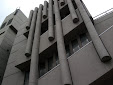
These Lomography images were taken in May on the University of Leeds campus. These are my two favourite images of the day taken with my Diana F+. Although it isn't clear what's going on in the above one, it is a superimposed image of the Roger Stevens Lecture Theatre and a campus signpost and the buildings behind it. I think it produces a slightly uncanny effect whereby you can't work out what buildings belong to what image. Also, the signpost is in such a place where it looks like the beige building on the right is abutted to the grey concrete building in the background.


This image is also superimposed. It is of the Clothworkers' Centenary Concert Hall (what used to be the Presbyterian Church) and a lovely tree nearby that was in bloom with yellow blossom. The effect is of golden light emanating from the church door, which is interesting from a religious perspective, even though it wasn't my intention.

Related Links:
Lomography
Presbyterian Church on Leodis
Roger Stevens Lecture Theatre - Listed Building

Monday, 6 June 2011

St George's Field, University of Leeds


Here are some recent images I took of St George's Field, what was Leeds General Cemetery, on the University of Leeds campus. The above one was taken with a sensecam. And the following two, black and white, were taken with my Diana F+.


The above image is the best one that I took with this film. One of the reasons I like it is because it looks like an old photograph, but was actually taken in May 2011. Why I like the image below is because the young man is challenging the traditional use of space by using the base of the Henry Price Halls of Residence - made from the original cemetery wall - as an object to traverse.