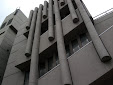
British ‘Red Brick’ universities have a specific history pertaining to the civic university movement developed out of the modernist focus on industry and private funding. While having much in common – a Humboldtian heritage, Victorian architecture, a science/engineering origin, a transition from college to university – there are differences. The University of Leeds is one example of the three which are city-based and have a campus precinct. While sharing many qualities with other Red Bricks, Leeds has a unique relationship with the its city: in order to develop the campus precinct, it was a condition of the council that the university be responsible for excavating a new ring road. The road connects the university to the city, but also separates it by introducing a cutting which scythes through the strata, dramatically altering the terrain. The university also has in its boundary terraced housing and a cemetery (at one time outside the campus). This project provides a cultural history of a specific campus and the manifold implications of its (ongoing) spatial negotiations; it also employs alternative strategies of exploring space, facilitating a new, critical reading of the civic university and use of space.
The narrative attached to Red Brick universities hinges around higher education; making knowledge accessible; ties to the local politics/economy. However, there exist alternative histories, local narratives and other voices that do not appear in the high level representations of the university. Intrinsic to the development of the university is a history that can be excavated through the space that has been (re)developed over time: a history of social relationships and human interaction. The campus reveals a type of “relational aesthetics” (Nicolas Bourriaud) which can be read off the surface of the terrain: campus as text. The topography provides a story of relationships between the university, outside agencies and individuals that occupy campus space. By entering the territory performatively, through psychogeographical methods and remapping space, questions can be posed around space/time, language and meaning-making.
The psychogeographical practice takes the form of the Situationist International's urban walking: the “study of the specific effects of the geographical environment, consciously organized or not, on the emotions and behavior of individuals.” I have termed the remapping of space “schizocartography”, developed from Félix Guattari's term “schizoanalysis”, which enables alternative existential modes for individuals in order to challenge dominant representations and power structures. Providing an opportunity for multiple ways of operating in space and reading the environment, it critiques the conventional ways of viewing, interpreting and mapping space.
In order to reveal the multiple narratives I will: examine university history through various texts (published documents, development plans, communiques between the university and relevant services) and cross-reference them with the campus; interrogate the actual space of the university to see what appears in the campus boundary; explore the topography to reveal how campus planning controls the movement of individuals, and investigate the logic behind the decisions that are made that influence vehicular and pedestrian motility; research the experiences of individuals who traverse campus space but who do not appear in representations of the university, such as cleaners and maintenance staff; relate findings back to the ‘grand narratives’ of the civic university and Leeds.
This methodology can be transferred to other campuses and beyond. Psychogeography and schizocartography allow a recomposition of traditional narratives that are often attached to the institution. They “institute new cleavages between other insides and other outsides and [...] offer a different metabolism of past-future” (Guattari); and form bridges between territories that have not previously existed.
Tuesday, 6 April 2010


Monday, 29 March 2010
Leodis Academus Island

This map takes the border of the University of Leeds, as it appears on maps of the campus, and turns it into an island. The map shows some places that exist (e.g. the apothecary is the School of Medicine), some that used to exist but no longer do (e.g. the horse trough), and some that are fiction. It is a map of a treasure island; the stars highlight where the treasure is located.
Tuesday, 23 March 2010
Walking Through The Mall
Friday October 15th 2004 1.30pm
Castle Mall, Norwich

Upon entering the Mall I had the sensation of wanting to duck my head as if I was entering a cavern. Once inside my attention was immediately caught by Aha’s “Take on Me” being discharged from Virgin. To my right I saw three consecutive food shops and made a mental note to buy a Millie’s Cookie when I left - it was almost impossible not to be 'sold to' even though my purpose for being there was that of an observer, not a shopper.
Dance music was emanating from First Sport. Then, my attention was immediately caught by the orange livery of the Halloween products in the card shop on the left. To the right I noticed the flickering images on the television screens in the Sony Centre and I began to understand how people could use this experience as a way of not having to think about the more important issues of life. I looked to the left again and saw F Hind, the jewellers, and thought to myself “all that bling looks cheap and repulsive”.
I started to get the sensation of a pouring-forth of 'stuff' (something lacking substance) and that as subjects we are there to soak it up, gratefully. I found this simultaneously repellent and fascinating. I could sense the subtle underlying philosophy of the mall, along the lines of “this will make you feel better”, “this will fill the void in your life”, “this will make you attractive to others and increase your sense of self-worth”, being subtly whispered to the shoppers.
I had to negotiate the game zone placed in the middle of the avenue and could still hear the computerised bleeping sounds after I had passed. A man said to his son “No, you don’t do it like that…”.
I started to get the feeling of being a discrete unit of consciousness moving through a landscape and then suddenly there was an opening of space as I moved into the well-area where the escalators were situated. I started to feel dissociated. I wasn’t there to connect in the same way as the shoppers. I was aware that my purpose was different.
Claire’s Accessories was so pink all I could think of was those sickly-sweet sugar mice with string tails that I had as a child. The Disney shop looked just like Aladdin’s Cave. Ahead of me I noticed an exhibition stand organised by the Norfolk Criminal Justice Board and Victim Support.
Behind the exhibition stand was a grand sweeping staircase, which looked like it should belong in a stately home. I sat on the bench nearby and listened to the background hum. People’s distant voices sounding like the mall machinery. A child was playing. I heard high-heels coming closer and then passing me. Someone from the cleansing department came past and swept something up. A barely audible announcement came over the PA. The same child started singing. I notice that there were a high proportion of women with prams.
I started to feel disconnected like I was cocooned in cotton wool. The sensory overload had actually turned into nothingness, something meaningless and beyond recognition. I suddenly had no frame of reference and got the sensation of being sucked out of the material dimensionality of the mall into a space just behind it.
I left the mall and went to Millie’s. The cookie, like the mall, was sweet and seductive and left a slightly disturbing, lingering taste in my mouth.
Castle Mall, Norwich

Upon entering the Mall I had the sensation of wanting to duck my head as if I was entering a cavern. Once inside my attention was immediately caught by Aha’s “Take on Me” being discharged from Virgin. To my right I saw three consecutive food shops and made a mental note to buy a Millie’s Cookie when I left - it was almost impossible not to be 'sold to' even though my purpose for being there was that of an observer, not a shopper.
Dance music was emanating from First Sport. Then, my attention was immediately caught by the orange livery of the Halloween products in the card shop on the left. To the right I noticed the flickering images on the television screens in the Sony Centre and I began to understand how people could use this experience as a way of not having to think about the more important issues of life. I looked to the left again and saw F Hind, the jewellers, and thought to myself “all that bling looks cheap and repulsive”.
I started to get the sensation of a pouring-forth of 'stuff' (something lacking substance) and that as subjects we are there to soak it up, gratefully. I found this simultaneously repellent and fascinating. I could sense the subtle underlying philosophy of the mall, along the lines of “this will make you feel better”, “this will fill the void in your life”, “this will make you attractive to others and increase your sense of self-worth”, being subtly whispered to the shoppers.
I had to negotiate the game zone placed in the middle of the avenue and could still hear the computerised bleeping sounds after I had passed. A man said to his son “No, you don’t do it like that…”.
I started to get the feeling of being a discrete unit of consciousness moving through a landscape and then suddenly there was an opening of space as I moved into the well-area where the escalators were situated. I started to feel dissociated. I wasn’t there to connect in the same way as the shoppers. I was aware that my purpose was different.
Claire’s Accessories was so pink all I could think of was those sickly-sweet sugar mice with string tails that I had as a child. The Disney shop looked just like Aladdin’s Cave. Ahead of me I noticed an exhibition stand organised by the Norfolk Criminal Justice Board and Victim Support.
Behind the exhibition stand was a grand sweeping staircase, which looked like it should belong in a stately home. I sat on the bench nearby and listened to the background hum. People’s distant voices sounding like the mall machinery. A child was playing. I heard high-heels coming closer and then passing me. Someone from the cleansing department came past and swept something up. A barely audible announcement came over the PA. The same child started singing. I notice that there were a high proportion of women with prams.
I started to feel disconnected like I was cocooned in cotton wool. The sensory overload had actually turned into nothingness, something meaningless and beyond recognition. I suddenly had no frame of reference and got the sensation of being sucked out of the material dimensionality of the mall into a space just behind it.
I left the mall and went to Millie’s. The cookie, like the mall, was sweet and seductive and left a slightly disturbing, lingering taste in my mouth.
Sunday, 14 February 2010
Guide Psychogeographique De University of Leeds
 This map is based on the Naked University Map which I included in my MA dissertation. I have taken the original image, based on Guy Debord's Naked City Map, and turned it into another Situationist-style map based on 'Guide Psychogeographique De Paris'. The ambiances of the quarters at the University of Leeds have been translated into song titles which are listed in the key.
Saturday, 9 January 2010
Leeds Psychogeography Group
I set up Leeds Psychogeography Group in 2009 and it ran till
2012. Talks were held in term time at the University of Leeds and were
available to people inside and outside academia. Speakers were invited to talk
to the group on a variety of subjects relating to the city, urban space, the
Situationists, human/urban/neo-geography, urban walking, local history. During
this period we had speakers from many backgrounds, including artists,
geographers, writers, urban walkers and film-makers. Walks were also organised
on a regular basis. While there are no longer any talks, you can still subscribe
to a psychogeography news mailing list and/or join Leeds Psychogeography Group on
facebook (see below). I use the mailing list to keep people updated on anything
psychogeography related including: conferences and talks; books and films;
artworks, walks and performances, etc.
Please note: You are welcome to contact me via my website to go on the mailing list that I maintain for psychogeography related news, or join the group on facebook: Leeds Psychogeography Group
Please note: You are welcome to contact me via my website to go on the mailing list that I maintain for psychogeography related news, or join the group on facebook: Leeds Psychogeography Group
Monday, 4 January 2010
Walkways

Often space is controlled in a subtle way: for example, the idea of 'walkways' popularised by university architects in the 1960s. Walkways were meant to join areas together and encourage students to 'bump into each other'. Even though this seems like a community-spirited idea, it does have the function of controlling space in such a way that students are discouraged from taking other routes. This image is based on a map and a drawing taken from the Chamberlin, Powell and Bon University of Leeds Development Plan (1963). Text has been added and dotted lines extended across both images in order to appropriate the images and make the overall look appear more seamless.
Situations

By actively engaging with urban space the Situationists International (SI) attempted to rearrange the material matter that appeared as urban décor, and even if they could not do this in concrete space, they had every intention of changing the psychic space of urbanism. These walks (dérives) became 'moments', or situations. The SI project that was directed at urbanism was about seizing a moment in time and space and attempting to change its aesthetics for a short time. This map is a modern take on the Naked City Map designed by the SI and is based on an actual dérive at the University of Leeds. The map is based on a GPS image taken during the walk and the images were taken at various stopping points which are highlighted on the map and appear as a mauve camera icon.
Subscribe to:
Posts (Atom)