Showing posts with label "university of leeds". Show all posts

Monday, 4 January 2010

Walkways


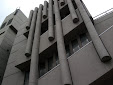
Often space is controlled in a subtle way: for example, the idea of 'walkways' popularised by university architects in the 1960s. Walkways were meant to join areas together and encourage students to 'bump into each other'. Even though this seems like a community-spirited idea, it does have the function of controlling space in such a way that students are discouraged from taking other routes. This image is based on a map and a drawing taken from the Chamberlin, Powell and Bon University of Leeds Development Plan (1963). Text has been added and dotted lines extended across both images in order to appropriate the images and make the overall look appear more seamless.

Friday, 27 November 2009

The Process of Power/Knowledge in the Institution

In Discipline and Punish (1975) Michel Foucault discusses how mechanisms and processes within institutions become normalised as part of an exercise of power. Foucault explains that the classical age brought with it a different approach to education. The body was required to become “docile” through its management by “disciplinary power” (1991: 156). The operations required to be carried out by the student were controlled down to the finest detail and Foucault provides information on how this training was carried out: students were given strict instruction on how to sit and write (1991: 152). Foucault makes it clear that this form of direction was not about teaching or instructing the student in a specific gesture; it actually imposed “the best relation between a gesture and the overall position of the body, which is the condition of efficiency and speed.” (ibid.). Not only was it required that the individual (the body) was controlled to the minutest degree, but also that, with the required training, eventually these gestures would become 'natural' (1991: 156). It is essentially for the perpetuation of any ideology that the subject assumes their position (both within the apparatus and in his/her body): the student in the school makes the appropriate gesture which has not only become organic for them but also concretises them in the material process of the institution. They act as they are instructed: they carry out actions (Althusser) in the form of these gestures (Foucault) which are materially inculcated in the body-politic.

For Foucault this body-politic is: “a set of material elements and techniques that serve as weapons, relays, communications routes and supports for the power and knowledge relations that invest human bodies and subjugate them by turning them into objects of knowledge.” (1991: 28). While it may initially seem that describing the contemporary student (or member of staff) as subjugated is a gross exaggeration of a state that the modern body could possibly be forced into in a democratic world; on closer examination it becomes apparent that power is applied in a much more subtle way in postmodernity. The seeds of the application of the power/knowledge process, that still operates in the institution today, are apparent in Foucault's exploration of education in Discipline and Punish. Before discussing how I believe Foucault's model of power dovetails with excellence in the posthistoric university, I shall briefly explain how, for Foucault, power works in relation to knowledge.

Foucault explains that thinking of power and knowledge as separate from each other, that they exist in detached domains, is a mistake; in fact “power produces knowledge” (1991: 27). Foucault says “there is no power relation without the correlative constitution of a field of knowledge, nor any knowledge that does no presuppose and constitute at the same time power relations.” (ibid.). Knowledge of something – for example, a field of theory or, indeed, knowledge of individuals – produces power; but also being in a position of power enables knowledge to be gleaned. Foucault explains that this reciprocal power/knowledge process involves the knowing subject, the known object and also the modes used in the procurement of that knowledge (1991: 27-28). In relation to micro-politics, this works in regards to knowledge of the individual, in particular the body, as is apparent in instructing students on how to sit and write. It is this that Foucault describes as “political anatomy” (1991: 28). However, he makes it clear that this is a procedure that does not decontextualise the subject, or the body; it is the analysis of a process, the body-politic, which means the individual cannot be removed from this activity and examined on their own in relation to power (ibid.).

Previously I discussed how the term 'excellence' fits in with the actions of the subject who is part of the university: excellence requires processes of qualification that materially situate the subject who is partaking in that process in the institution, and therefore in the ISA. Foucault explains how an obsession with procedures and rules becomes an economic process:
The meticulousness of the regulations, the fussiness of the inspections, the supervision of the smallest fragment of life and the body will soon provide, in the context of the school [...] an economic or technical rationality for this mystical calculus of the infinitesimal and the infinite. (1991: 140).

In the University of Excellence these are the qualifying gestures that measure the system's efficiency. However, describing them as simply 'gestures' implies that they are innocuous. By employing Althusser's ideological model we have seen how the individuals in the university become subjected through their actions. However, by applying Foucault's power/knowledge theory we can see how this process operates on the body itself. So, in a sense, this could be described as doubly material. If we hold that Althusser's subjection of the individual is material (actions take place within concrete apparatuses); and that, for Foucault, knowledge of the individual brings with it a process that propels them into a relationship of power through the control of the body (the material body as it functions within that particular domain of power), then excellence does not only invest the subject in the ideology of the specific ideological apparatus, it also physically represses them at the same time. While repression seems like an extremely strong term to use to describe what occurs within the university, when examining Foucault further it becomes apparent that this repression (subjugation) is actually quite subtle.

Interestingly, Foucault also uses religion to examine power in relation to what is required of the disciplined individual, as does Althusser when he talks about how by carrying out the actions required by God you are showing that you believe (for example, kneeling to pray). Foucault says that details are essential to theology, God expresses his wishes through these details: “For the disciplined man, as for the true believer, no detail is unimportant, but not so much for the meaning that it conceals within itself as for the hold it provides for the power that wishes to seize it.” (ibid.). The detailed procedures that are part of the practice of religion - instilled in the actions carried out by the individual - provide access to power which becomes utilised elsewhere. In the university this works in a number of ways. One example to consider would be the feedback students are constantly required to 'volunteer' on the various service sectors in the university, for example: teaching, accommodation, catering or the library. It may not initially seem that power is being relinquished in these moments: a tick box form may not appear to have any other function than that of an attempt to improves services. Could a feedback process that asks for your individual experience of your BA be considered differently: a qualitative form, taking part in a meeting or an interview. All the information collected is saved and used within, and outside, the institution. This is knowledge about the student, detailed information that, in fact, most members of the university are constantly providing, without question. This information becomes the data on which the university operates: plans are formed form it, ranking takes place based on it.

For Foucault ranking is part of the theme of classification which he situates in an epoch centred around the 18th and 19th centuries (the classical age). However, this ranking does not fix individuals, in the more obvious sense, in physical space; rather it propels them into this power/knowledge process (1991: 143). Foucault explains how disciplines of power work in relation to ranking: “Discipline is an art of rank, a technique for the transformation of arrangements. It individualizes bodies by a location that does not give them a fixed position, but distributes them and circulates them in a network of relations.” (1991: 146). The student at the university is constantly being assessed, and therefore ranked, through examinations, essays or feedback from lecturers or tutors: “The examination that places individuals in a field of surveillance also situates them in a network of writing; it engages them in a whole mass of documents that capture and fix them.” (1991: 189).

The data produced from these assessments is considered in the light of excellence; ultimately appearing in ranking tables which enable the university to sell themselves in the national and international marketplace. But, simultaneously, the effect on the individual – this process of evaluation does not just apply to students, but also staff – is one that puts them into circulation in relation to power: “[...] the table has the function of treating multiplicity itself, distributing it and deriving from it as many effects as possible.” (Foucault 1991: 149). In a sense, the data produced and circulated becomes a form of currency: the university exchanges its ranking tables for new students (fees). In a Marxian sense the students and staff sell themselves (their bodies) to the university in the form of their labour – the student may appear to be the customer but they also bring in fees from elsewhere, by attending the university (and completing their course) they bring in funding. In becoming “the target for new mechanisms of power” (Foucault 1991: 155) the knowledge produced by the interrogation of the student/staff creates another level of product, one that is utilised when it is put back into play. When the data collected from individuals appears in the ranking tables, it provides an financial return.

References
Foucault, Michel. 1991. Discipline and Punish: The Birth of the Prison, trans. by Alan Sheridan (London: Penguin Books).

Monday, 24 August 2009

Walking: The Act of Moving About

The walked paths taken by human beings through space is controlled by many urban features. There are the more obvious solid objects like walls and fences that prevent people from taking certain routes through space, but not all of these barriers are solid: they might simply exist in the form of a notice stating 'No Entry'. But, often space is controlled in a much more subtle way. For example, the idea of 'walkways' which were popularised by architects in the 1960s, especially in regards to university space. Walkways were meant to join areas of the campus together and also encourage students to 'bump into each other'. Even though this seems like an community-spirited idea, it has the function of controlling space in such a way that students are discouraged from taking other routes.

Merlin Coverley explains that it is only by challenging assumed routes and investigating the unnoticed and dismissed areas, that one can get any real sense of what exists behind the surface of what appears as the everyday (2006 : 12-13). The students, academics and staff of the university move across the campus surface on established well-worn paths. Individuals tend to follow the same routes, as much for expedience as anything else. It is extremely unlikely that an undergraduate student attending a three year course would cover the paths that appear on the university pedestrian route map in the time they are at the university, let alone any routes that do not appear. As individuals in a busy postmodern world, we need to have an actual reason to go somewhere in order to see to see a new space; we are unlikely to wander, just for the sake of it. There could be many reasons for this, the discussion of which could make for a project in its own right. However, 'cheap' cars and a culture that does not encourage walking, do not help. Previous generations in Britain (and other cultures) walked most of the time. For example, in the 1960s it was considered perfectly acceptable to allow your children to walk to school, even when quite young. Multiple transport options allow people to move from place to place easily, but this also discourages the process of seeing the movement between places as an event in itself, an exploration of space. Walking enables the minutiae of the environment to be examined. Guy Debord explains how the city discourages detours because of its make-up: “cities have a psychogeographical relief, with constant currents, fixed points and vortexes which strongly discourage entry into or exit from certain zones.” (1996: 22).

A large part of the practise behind this project has involved providing other paths around the University of Leeds campus in an effort to: challenge the established route; experience the campus in a different way; and as an attempt to probe the very fabric of the university in order to encourage it to reveal its history. This has taken the form of a number of dérives (see other blogs). Debord states: “The city is the locus of history because it is conscious of the past and also concentrates the social power that makes the historical undertaking possible.” (2005: 176). This can also be applied to the university. The past of the university exists in the very fabric of the campus, and it tells a story of power; not just in the form of administrative decisions such as those highlighted when discussing the Compulsory Purchase Orders, but also the less obvious ones about how an individual moves around the campus. This history does not only exist in historical documents; the actual campus itself can also be read in an attempt to investigate the past, and even the future.

Bibliography:
Coverley, Merlin. 2006. Psychogeography (Harpenden: Pocket Essentials).
Debord, Guy. 1996. 'Theory of the Dérive', Theory of the Dérive and Other Situationist Writings on the City, ed. by Libero Andreotti and Xavier Costa (Barcelona: Museu d'Art Contemporani de Barcelona). pp. 22-27.
Debord, Guy. 2005. The Society of the Spectacle (Detroit: Black and Red).

Monday, 17 August 2009

Lea Farm Drive Dérive

Wednesday August 5th 2009. We left Parkinson Court at the University of Leeds at approximately 5.00pm. Four members of the group were present. This dérive picked up where the Miniature Boulder Dérive left off, so the route had already been mapped out. The walk was concentrated at the South end of the university campus. This was our first evening dérive. The evening light, created a different ambience:

Evening Light

Below is the map of the route, including a superimposed map which was used to create the zigzag path made by the method mentioned in the previous blog.

Map and Route of Dérive

One of our stopping places was Leeds General Infirmary. We moved through the hospital, as if tourists. At one point a security guard came and asked us if we were looking for the exit. Whether he had overheard us, or was concerned about our photograph-taking, was not apparent.

We visited the Worsley Building again, which is a behemoth; truly a beautiful example of the 60s 'brutalist' architecture, very impressive. This is where the School of Dentistry is (no connection between brutalism and tooth extraction). Below is an image of the building from a short distance away, from a stopping point that took us slightly outside the perimeter of the campus:

Worsley Building

In the above image, the small triangular area on the opposite side of the road was unkempt. There was graffiti, much rubbish, cracked paving stones, broken pieces of metal sticking out of the ground. It is not clear if the property is that of the university, or the council. People seemed to use it to park their cars, in the spaces between the trees.

Much building work is being carried out on campus at the moment, the biggest project since the Chamberlin, Powell and Bon project of the 1960s. The contractors have signed up to the The Considerate Constructors Scheme, which is a code of conduct. On one of the hoardings around the new swimming pool area this tagline is displayed: “Improving the Image of Construction”. Unfortunately, this marketing move implies that it is just the 'image' of construction that needs to be improved rather than the 'reality' (although they could be considered to be one and the same, especially from the perspective of 'the spectacle').

At the end of the dérive, approximately 7.00pm, we realised that we had not picked up a found souvenir. We looked down at our feet and there was a bus ticket lying on the floor at this location:

The Bus Stop

The ticket said “Lea Farm Drive, Seacroft” on it, hence the name of the dérive. Having finished our walk we then entered the Victoria pub from the back entrance, which is a concrete ramp next to a car park in a modern building. You pass the trade bins to enter, in the semi-dark, a door and, going back in time, you emerge into Victoriana. It was rather like going through the back of the wardrobe to Narnia.

(all maps and images CC Tim Waters)

Sunday, 9 August 2009

The Naked University: The University of Leeds Campus


This map was based on walks around the university campus at the University of Leeds. The arrows are random and placed in terms of the aesthetics of the map. A key was created in order to attach song titles to the ambiances of the quarters. The cross indicates a building that is no longer there. It is in the process of being replaced with two larger ones: halls of residence.

Tuesday, 21 July 2009

White Horseman Dérive

Saturday July 19th 2009. We set off from the Parkinson Steps at the University of Leeds at approximately 11.45am. Four members of the new Leeds Psychogeography Group were present. We had a variety of printed downloaded maps of the university campus, including a maintenance one, which was quite detailed. We also had a GPS tracking device and software that mapped our route and tagged stopping points, enabling images or sound to be uploaded and indexed at these stages. Prior to leaving for the walk we had planned our route by throwing dice to decide which buildings (all numbered on the maps) we would stop at. Co-incidentally, a number of these buildings were collected together in the Lifton Place area, which is apparent when looking at the map (see link below).

http://maps.google.com/maps?f=q&source=s_q&hl=en&geocode=&q=http:%2F%2Fgeothings.net%2Fpsychogeography%2Fwhite_horseman_derive%2FDerive.kmz&ie=UTF8&z=16

As this was our first dérive it was quite experimental. Also, the four of us did not know each other well, so not only was it an exploration of urban space, but also one of psychic space. And, the fact we were all approaching psychogeography from a different perspective made the experience very interesting, as we all made note of different aspects of the environment: aural, aesthetic and spatial.

One of the first places we visited was St George's Field. It is an old cemetery which has been preserved and appears as a kind of oasis in the, mostly, modern-structured urban landscape of the campus. The cemetery is slightly hidden inasmuch as it is not signposted and there is no dedicated pavement that runs down the north edge of it. Below is a BBC link which includes a potted history of the cemetery:

http://www.bbc.co.uk/leeds/content/articles/2006/04/24/local_history_general_cemetery_feature.shtml

The university was quiet; even the act of trying a number of locked doors did not draw security out of their summer mothballs. We did bump into someone, not a student, who was also photographing the urban landscape of the campus. There were also workmen on a section of the university which is being redeveloped: doing some overtime, or catching up in order to meet the deadline which is contingent on them getting paid the amount they have declared in their original tender.

At one of the buildings (that came up twice when the dice was thrown), there was an exhibition from one of the Fine Art PhD students. So we took some time-out, visited the exhibition, drank some juice and chatted with the artist. The exhibition was on body hair. One of the works was a number of screens showing hair being removed, and the accompanying sounds.

At one point we discovered a lost wallet on a windowsill in a courtyard. There was nothing of importance left in the wallet, but it had been placed like a miniature triptych. An image of this can be seen at the above link. We also found a red badge containing an image of a white horseman, hence the name of the dérive. It has been decided that dérives will be named after found souvenirs on each walk.

The dérive lasted approximately 3 hours and ended when bodily functions and desires kicked in.