In Boston Square, Hunstanton, Norfolk, is a sensory park commissioned by Norfolk County Council and designed by Jeremey Stacey Architects. In the park is what looks like a homage to Seahenge which is a prehistoric structure that was found off the coast of Holme-next-the-Sea: a timber circle from the Bronze Age. It was discovered in 1998 and now resides in Lynn Museum. Here is a video I took in the sensory park, and it is my homage to the Stonehenge scene in This is Spinal Tap (1984), directed by Rob Reiner:
Boston Square Sensory Park
Below is the script from This is Spinal Tap, where it refers to Stonehenge (one of the funniest scenes in the film), including a link to the relevant section in the film:
Ian: Are you telling me that this is it? This is scenery? Have you ever been to Stonehenge?
Artist: No, I haven't been to Stonehenge.
Ian: The triptychs are...the triptychs are twenty feet high. You can stand four men up them!
Artist: Ian, I was...I was...I was supposed to build it eighteen inches high.
Ian: This is insane. This isn't a piece of scenery.
Artist: Look, look. Look, this is what I was asked to build. Eighteen inches. Right here, it specified eighteen inches. I was given this napkin, I mean...
Ian: Forget this! Fuck the napkin!!!
SPINAL TAP performs Stonehenge
(click here for film clip This is Spinal Tap )
HOTEL room after gig
David: I do not, for one, think that the problem was that the band was down. I think that the problem may have been...that there was a Stonehenge monument on the stage that was in danger of being crushed by a dwarf...
Related Links
Seahenge
Stonehenge
This is Spinal Tap
Wednesday, 23 March 2011


Saturday, 19 March 2011
Leeds Girls' High School - 'Development Opportunity'

A sign has finally gone up for the sale of the Elinor Lupton Centre building of the old Leeds Girls' High School in Headingley Lane. I spotted in when walking back from university so decided to have a wander around the building and take some snaps.
As you can see it is made in the same Portland Stone as the University of Leeds, popular for construction in this area in the 1920s and 1930s. It is a jurassic limestone and, interestingly, has tiny fossils in it if you looked closely.
According to this person who posted a photo on flickr, it is a grade 2 listed building and was purchased by the school in 1986 for £230,000:
Elinor Lupton Centre

I love this building and pass it every day on the way to and from university. I remember when I first came to Leeds (2005) it was still in use and drama performances were advertised on the board outside, in the same place as the 'for sale' board now appears. It would be lovely to see the building cared for again: some sand-blasting and graffiti removal.
The building is much bigger than it looks in my image. The Geograph link below shows a good image of the building and reflects its size much better.
There was a locked fence at the back and I managed to take this photo of this old sign through the railings:

Also, this detail I photogrpahed demonstrates the Greco-Roman influence in Art-Deco architecture of this period.

Related Links:
Leeds High School on Wikipedia
Elinor Lupton Centre on Geograph
Sunday, 6 March 2011
Walking to the Beach

Video: Walking to the Beach
Walking affirms, suspects, tries out, transgresses respects, etc., the trajectories it "speaks". All the modalities sing a part in this chorus, changing from step to step, stepping in through proportions, sequences, and intensities which vary according to the time, the path taken and the weather. These enunciatory operations are of an unlimited diversity. They therefore cannot be reduced to their graphic trail. (De Certeau 2006: 99)
Reading the Arcades/Reading the Promenades
This mini-blog is part of the above project. All my seaside schizocartography posts are available here:
Reading the Arcades/Reading the Promenades
Or click here to link to my previous blog on the Norfolk seaside resort of Hunstanton: The Seaside in Winter
Bibliography
De Certeau, Michel. 2006. 'Walking in the City', The Practice of Everyday Life, trans. by Steven Rendall (Berkeley, Los Angeles and London: University of California Press) pp. 91-110
Thursday, 24 February 2011
For the Benefit of Mr Kite

Photo: Simon Warner
A Dedication
I went to a workshop at the Stanley and Audrey Burton Gallery on Saturday February 19th. We made landscapes on a dinner plate, following a walk around the cemetery of St Georges Field at the University of Leeds. The above is my contribution and I would like to dedicate it to Pablo Fanque, and Christine Bairstow and her twin sister.
Christine Bairstow wrote to the Yorkshire Evening Post in 2008 to protest about the fact she cannot locate her twin sister who died in 1946. The gravestones were separated from the bodies in the ground during the landscaping of the space in the 1960s. Pablo Fanque, the first black circus owner in Britain, is buried in the cemetery along with his wife. The Beatles sang about Pablo Fanque on their Sergeant Peppers album in the song Being for the Benefit of Mr Kite (he is apparently also mentioned in a Cockney Rebel song - interesting).

Photo: CC Phill Harding
The above image shows the cemetery as it appears in 'real' space, as opposed to artistic/ideological/political space, which my plate represents. Below is a timeline of the cemetery that I put together from a number of sources, which are included in the bibliography below.
Cemetery Timeline
1833
Formation of Leeds General Cemetery Company (purchased the site for £11,000) (BBC 2006).
1835
On July 23rd the new cemetery was officially opened by architect John Clark (BBC 2006).
1922
Suggested acquisition of cemetery (Beresford 1975:144).
1930s
Graveyard nearly full, some graves neglected (Beresford 1975:144).
1947
University bursor re-opens question of cemetery acquisition (Beresford 1975:172).
Date unsure (1958-1963)
Cemetery closed and landscaped and original name was reverted: St George's Field (Beresford 1975:172).
1965
Local opposition to University of Leeds Bill, re: cemetery development (Beresford 1975:145).
1969
St Georges Field completed (Leodis 2010).
1984
Founding date of friends of the cemetery group (Dunk and Rugg 1994:80).
2006
On 24th April Dr Julie Rugg, of the Cemetery Research Group, unveiled the new blue plaque at the gatehouse. (Leeds Civic Trust 2006)
Bibliography
Dunk, Julie and Julie Rugg. 1994. The Management of Old Cemetery Land: Now and the Future (London: Shaw and Sons).
Beresford, M. W. 1975. ''Red brick and Portland Stone: A Building History', Studies in the History of a University 1987-1974, ed. by P.H.J.H Gosden and A.J. Taylor (Leeds: E.J. Arnold). pp. 133-180.
BBC, ‘Leeds’, Life and Death in Leeds, (2006),
Leeds Civic Trust, ‘Annual Report 2005/06’, Heritage and Conservation – Blue Plaques 1, (2006),
Leodis, ‘Woodhouse Cemetery’, (2010),
Related Links
St George's Field (BBC)
Simon Warner (artist)
Stanley and Audrey Burton Gallery
University of Leeds
Tuesday, 22 February 2011
The Site of Deconstruction

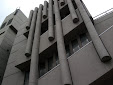
Here is an image I took on a mischievous psychogeographical trip around my school last night: The School of Fine Art, History of Art and Cultural Studies at the University of Leeds.
Tuesday, 15 February 2011
Walking the Board: University of Leeds Monopoly

This is Hyde and Ford playing University of Leeds monopoly over the Christmas period. Apparently the original game goes back to around 1903. It has lots of the campus buildings - Roger Stevens Lecture Theatre, The Great Hall - with many of the traditional monopoly features. I had hoped the counters would relate to the university, e.g. a book, a mortar board, a pint glass, but they are the traditional ones. The profits go to the alumni fund.
Relates websites:
Monopoly on Wikipedia
University of Leeds Monopoly
Saturday, 29 January 2011
Girl about campus// (a Boy about campus// rejoinder)
After spending the exam period working on her thesis and preparing for the first week of teaching in her solitary studio-flat, Girl about campus thought that all the stress was over. However, this week her world was shocked. First the well-deserved demise of Andy Gray and his sexist chum Richard Keys hits the news, then, just as Girl about campus was celebrating the sackings she read a column in the Leeds Student...

Relates websites:
Leeds Student
University of Leeds

Relates websites:
Leeds Student
University of Leeds
Subscribe to:
Posts (Atom)