Sunday, 27 June 2010

Candle House


Prior to Saturday 26th of June 2010 I had only seen Candle House (the Granary Wharf Building) from the train as it left or entered Leeds railway station. However, after attending the Urban Stories event I was fortunate enough to be able to go inside and view Leeds at 360 degrees from its 21st floor.

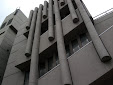
Candle House is a solid-looking phallic-shaped set of apartments made from a warm-coloured brick. It has the appearance of being sculpted out of a solid cylinder, rather like those carved candles made from different coloured layers of wax. The staggered effect that appears every few floors gives the building a twisted appearance which adds both a feeling of movement but also prevents too much symmetry from making the building seem dull and lifeless.

Light Shines on Candle House

As well as the 21st floor of Candle House, Urban Stories takes you to the Dark Arches. Joseph Collins regaled us with stories of ancient Leeds clans with punk hairdos; protracted battles between local Victorian Industrialists; and mythological rat people lurking in the network of tunnels off Neville St. The event is a must for anyone interested in local history, the ever-changing Leeds landscape and just great storytelling. Urban Stories is the last Saturday of the month on the same day as the Pannier Market.

For further information on Urban Stories contact Paul at paul.fallon@creativespaceman.com

Joseph Collins Pocket Universes

Monday, 21 June 2010

The Collage Seaside


“Collage is simultaneously innocent and devious.” Colin Rowe and Red Koetter

The above schizocartographic image was made by cutting photos of Hunstanton from various brochures and leaflets that advertise the seaside town. The pasted words and phrases are mostly popular terms that refer to seaside resorts, but were actually taken from the adverts of businesses or organisations located in the area. The other terms refer to the analysis and theory of urban space and have been added digitally. The quotes are comments on urban space by the following:

1 - Iain Sinclair
2 - Brian Jarvis
3 - Felix Guattari
4 - David Harvey
5 - Henri Lefebvre

This 'map' has been named after the book Collage City by Colin Rowe and Fred Koetter. It has been created for the following project 'Reading the Arcades/Reading the Promenades'.
Please see my blogs on A Schizocartography of Hunstanton located here:
Part 1
Part 2

Bibliography:
Row, Colin and Fred Koetter. 1987. Collage City (Cambridge, Massachusetts: The MIT Press).

Tuesday, 8 June 2010

Kirkstall Valley Subdub or The Prozac Walk

Sunday May 20th 2010. I set off from home with the intention of checking out the Kirkstall electricity sub-station (Leeds), which I had first stumbled upon in the summer of 2008.

National Grid Sub-stations

Redcote Lane
The entrance to Redcote Lane is from Kirkstall Road. It is a strange space (part hinterland, part heterotopia) with a number of leisure pursuits represented. These are juxtaposed with the preservation area that runs by the river and this large sub-station which dominates the end of Redcote Lane. As you enter Redcote Lane you can hear the cracking-crunching sound emanating from the recycling centre on the right. You then walk over a really interesting green iron(?) bridge that crosses the river Aire:


Past the bridge is a 'Fitness First' leisure centre and opposite is a small fenced-off part of the electricity sub-station. This is probably what the deep topographer Nick Papadimitriou would call an “adjunct” to the bigger system at the end of the lane. The golf course crosses the lane (between the first and second tees) and to the left there is a 'Goals' five-a-side football centre with the tagline “The Beautiful Game”. Most of the traffic in the lane (barely any, though) is for the leisure outlets.

Kirkstall Valley Nature Reserve
The gate at the entrance to the reserve on the right of the lane is designed by the children from Burley St Matthias School:


This gate takes you onto a path which stretches along the banks of the Aire and the Leeds and Liverpool Canal. I think it is possible the preservation area stretches as far as Kirkstall Abbey, but I have only walked part of it in the past, although from a window of an office on Kirkstall Road I have seen some interesting wildlife, including kingfishers. I spent the summer of 2008 working at this office in between my BA and MA. I used to gaze longingly into the river on hot days, thinking about arranging some kind of performative act which involved me donning a swimsuit and flinging myself into the Aire.

The Bridges
Right near the entrance to the nature reserve are two bridges. The first is a modern bridge used by the railway, bridge no. TJC3/22 (I am including the bridge references for the benefit of any train-spotters who like to search for this kind of information). Directly after that bridge, with barely any space in between, is the old, probably Victorian, bridge (TJC3/22A). A google search for these bridges throws up a Yorkshire Post article about water leaking from the base of the modern bridge, apparently threatening to flood the sub-station and 'Goals'. I really like the two bridges next to each other (the modern and postmodern). The Victorian bridge is particularly attractive and my photo does not do it justice:


The Electricity Sub-Station
As you pass under the bridges the sub-station is straight ahead. My second visit to it was not as aesthetically powerful as my first. I think this was because it was a surprise discovery the first time around. Nevertheless, I don't want to understate how imposing it is. Its dominance is of a monolithic nature.


The sub-station is surrounded by greenery and it sits in a kind of enclave amidst the trees, grass and foliage. So, you have the sound of birds and the wind blowing through the trees, and also the hum of the station. Different parts of the site emitted different sounds. At one point there was a clicking sound coming from the machinery, which sounded rather like a cricket.


Signs and Notices
I took a few photos of some of the signs but as I got to the point of taking a photo of an interesting looking National Grid sign which was falling apart, I got the visit-from-security. I had noticed the portakabin and knew there was someone in there but thought I could sneak past to the gate and get the shot. But, no chance. Mr. Jobsworth, bored to death in his cabin, was going to allow me to 'make his day'.


One of the signs had C E Electric UK written on it. Who, according to their website, are “...responsible for delivering electricity to over 3.8 million properties across the North East of England, Yorkshire and northern Lincolnshire.”:

C E Electric UK

On the same sign was another logo: SmartWater, which appears to be a police sponsored crime reduction initiative. I did see a police van drive around the area while I was there. Interestingly, they didn't see me as a 'threat', even though the security guard obviously did. What is SmartWater, you may ask? Well, their website explains that “...SmartWater is a colourless liquid solution that is simply dabbed onto the uneven surfaces of your valuables. It can be used to code all sorts of items such as jewellery, ornaments, electrical items and even your motor vehicle. Each bottle contains a unique chemical ‘code’ which is registered to you – conclusively proving ownership. It cannot be easily seen by the naked eye and is almost impossible to remove. The liquid glows under ultraviolet light making it easy for the Police to detect.”.

SmartWater

Concluding the Walk
After being caught by the security guard, I walked in the direction of the exit and I think the guard thought I had left. But, I actually continued to walk around the sub-sation and take more photos. I found a caravan storage park and also, at the back of the sub-station I found a place that moored boats:


I then sat down on the grass to write up some notes. But after about 5 minutes I could see the security guard walking towards me and I made a quick getaway. When I was walking back home up the hill towards Burley the sky ahead of me looked dark and ominous, whereas behind, over the valley, the sky was bright, sunny and dotted with white clouds. The two photos below are from the same spot on Argie Road: the first towards Headingley and the second towards Kirkstall Valley.


When I entered St Michaels Lane in Headingley I spotted a green and yellow pill on the pavement. I decided to name the walk after the pill, which turned out to be fluoxetine, aka Prozac.

Tuesday, 6 April 2010

The Unseen University: A Schizocartography of the Red Brick University Campus

British ‘Red Brick’ universities have a specific history pertaining to the civic university movement developed out of the modernist focus on industry and private funding. While having much in common – a Humboldtian heritage, Victorian architecture, a science/engineering origin, a transition from college to university – there are differences. The University of Leeds is one example of the three which are city-based and have a campus precinct. While sharing many qualities with other Red Bricks, Leeds has a unique relationship with the its city: in order to develop the campus precinct, it was a condition of the council that the university be responsible for excavating a new ring road. The road connects the university to the city, but also separates it by introducing a cutting which scythes through the strata, dramatically altering the terrain. The university also has in its boundary terraced housing and a cemetery (at one time outside the campus). This project provides a cultural history of a specific campus and the manifold implications of its (ongoing) spatial negotiations; it also employs alternative strategies of exploring space, facilitating a new, critical reading of the civic university and use of space.

The narrative attached to Red Brick universities hinges around higher education; making knowledge accessible; ties to the local politics/economy. However, there exist alternative histories, local narratives and other voices that do not appear in the high level representations of the university. Intrinsic to the development of the university is a history that can be excavated through the space that has been (re)developed over time: a history of social relationships and human interaction. The campus reveals a type of “relational aesthetics” (Nicolas Bourriaud) which can be read off the surface of the terrain: campus as text. The topography provides a story of relationships between the university, outside agencies and individuals that occupy campus space. By entering the territory performatively, through psychogeographical methods and remapping space, questions can be posed around space/time, language and meaning-making.

The psychogeographical practice takes the form of the Situationist International's urban walking: the “study of the specific effects of the geographical environment, consciously organized or not, on the emotions and behavior of individuals.” I have termed the remapping of space “schizocartography”, developed from FĂ©lix Guattari's term “schizoanalysis”, which enables alternative existential modes for individuals in order to challenge dominant representations and power structures. Providing an opportunity for multiple ways of operating in space and reading the environment, it critiques the conventional ways of viewing, interpreting and mapping space.
In order to reveal the multiple narratives I will: examine university history through various texts (published documents, development plans, communiques between the university and relevant services) and cross-reference them with the campus; interrogate the actual space of the university to see what appears in the campus boundary; explore the topography to reveal how campus planning controls the movement of individuals, and investigate the logic behind the decisions that are made that influence vehicular and pedestrian motility; research the experiences of individuals who traverse campus space but who do not appear in representations of the university, such as cleaners and maintenance staff; relate findings back to the ‘grand narratives’ of the civic university and Leeds.

This methodology can be transferred to other campuses and beyond. Psychogeography and schizocartography allow a recomposition of traditional narratives that are often attached to the institution. They “institute new cleavages between other insides and other outsides and [...] offer a different metabolism of past-future” (Guattari); and form bridges between territories that have not previously existed.

Monday, 29 March 2010

Leodis Academus Island


This map takes the border of the University of Leeds, as it appears on maps of the campus, and turns it into an island. The map shows some places that exist (e.g. the apothecary is the School of Medicine), some that used to exist but no longer do (e.g. the horse trough), and some that are fiction. It is a map of a treasure island; the stars highlight where the treasure is located.

Tuesday, 23 March 2010

Walking Through The Mall

Friday October 15th 2004 1.30pm
Castle Mall, Norwich


Upon entering the Mall I had the sensation of wanting to duck my head as if I was entering a cavern. Once inside my attention was immediately caught by Aha’s “Take on Me” being discharged from Virgin. To my right I saw three consecutive food shops and made a mental note to buy a Millie’s Cookie when I left - it was almost impossible not to be 'sold to' even though my purpose for being there was that of an observer, not a shopper.

Dance music was emanating from First Sport. Then, my attention was immediately caught by the orange livery of the Halloween products in the card shop on the left. To the right I noticed the flickering images on the television screens in the Sony Centre and I began to understand how people could use this experience as a way of not having to think about the more important issues of life. I looked to the left again and saw F Hind, the jewellers, and thought to myself “all that bling looks cheap and repulsive”.

I started to get the sensation of a pouring-forth of 'stuff' (something lacking substance) and that as subjects we are there to soak it up, gratefully. I found this simultaneously repellent and fascinating. I could sense the subtle underlying philosophy of the mall, along the lines of “this will make you feel better”, “this will fill the void in your life”, “this will make you attractive to others and increase your sense of self-worth”, being subtly whispered to the shoppers.

I had to negotiate the game zone placed in the middle of the avenue and could still hear the computerised bleeping sounds after I had passed. A man said to his son “No, you don’t do it like that…”.

I started to get the feeling of being a discrete unit of consciousness moving through a landscape and then suddenly there was an opening of space as I moved into the well-area where the escalators were situated. I started to feel dissociated. I wasn’t there to connect in the same way as the shoppers. I was aware that my purpose was different.

Claire’s Accessories was so pink all I could think of was those sickly-sweet sugar mice with string tails that I had as a child. The Disney shop looked just like Aladdin’s Cave. Ahead of me I noticed an exhibition stand organised by the Norfolk Criminal Justice Board and Victim Support.

Behind the exhibition stand was a grand sweeping staircase, which looked like it should belong in a stately home. I sat on the bench nearby and listened to the background hum. People’s distant voices sounding like the mall machinery. A child was playing. I heard high-heels coming closer and then passing me. Someone from the cleansing department came past and swept something up. A barely audible announcement came over the PA. The same child started singing. I notice that there were a high proportion of women with prams.

I started to feel disconnected like I was cocooned in cotton wool. The sensory overload had actually turned into nothingness, something meaningless and beyond recognition. I suddenly had no frame of reference and got the sensation of being sucked out of the material dimensionality of the mall into a space just behind it.

I left the mall and went to Millie’s. The cookie, like the mall, was sweet and seductive and left a slightly disturbing, lingering taste in my mouth.

Sunday, 14 February 2010

Guide Psychogeographique De University of Leeds

This map is based on the Naked University Map which I included in my MA dissertation. I have taken the original image, based on Guy Debord's Naked City Map, and turned it into another Situationist-style map based on 'Guide Psychogeographique De Paris'. The ambiances of the quarters at the University of Leeds have been translated into song titles which are listed in the key.