Thursday, 29 October 2009

Resituating the Ruins

In The University in Ruins Readings states that we need to accept that the posthistoric university is a “ruined institution”, but: “Those ruins must not be the object of a romantic nostalgia for a lost wholeness, but the site of an attempt to transvalue the fact that the University no longer inhabits a continuous history of progressive revelation of a unifying idea.” (1999: 129). He goes on to explain that part of the understanding of this involves becoming aware of the complex spaces of the university in which we attempt to reside, but are actually unable to because we are alienated from them (ibid.). In the chapter 'Dwelling in the Ruins' Readings provides a concrete example of these ruins: “The campus of the State University of New York (SUNY) at Buffalo is decorated by some artificial concrete ruins that allude to Greco-Roman temple architecture [...]” (1999: 169). Readings sees the simulated ruins at Buffalo, situated next to modern buildings, as being problematic because they ground the arts and sciences in a specific tradition that amongst other things, excludes the local other: “ruins are the objects of subjective appropriation and mastery, whether epistemological or aesthetic.” (1999: 170).


Figure 1: The Baird Point Columns
Image Courtesy of www.waymarking.com
According to the website that the above image was downloaded from, the columns have been situated on the edge of a man-made lake and are “a popular hangout for students”.


By looking at the image above (figure 1), it is not apparent what the past life of the columns is (be they from Classical Greece, Italy or elsewhere). They could have been created for the purpose of a sculpture. However the University of Buffalo website dedicates a page to them. They are known as The Baird Point Columns, and they do have a history. This is what the website says, under a section called 'Buildings:
The marble columns on the concrete platforms were once part of the old Federal Reserve Bank in downtown Buffalo, and for some years lay outside old Baird Hall on UB’s south campus before their relocation to the lake. The columns were dedicated as a memorial to servicemen and servicewomen. (University of Buffalo 2009)

How the School of Management describes the ruins is particularly interesting, fitting in with the posthistoric critique of Readings, just discussed: “The Baird Point Columns represent education as a foundation of life.” If the columns are seen in this context, then they could be considered nostalgic, a hankering back to the cultural aspect attached to the nation-state, even if that cultural concept is not one of the origins of that nation, and rather is an adopted one (Greco-Roman).


Figure 2: Resituating the Baird Point Columns
Image courtesy of University of Buffalo Archives
According to the Buffalo archives, the columns rise over 35 feet in height above the base. It also says “Today Baird Point is still used as a place for 'educational, cultural, and social activities'”. (University of Buffalo Libraries 2009).


The University of Buffalo archives dedicates a whole section to the Baird Point Columns and their resurrection (figure 2). It explains how the columns were saved during the Federal Reserve Bank's destruction in 1959; they were cleaned but not reused until 1978 where they were placed at their current position.

I do not think Readings is entirely accurate in describing the Baird Point Columns as “artificial concrete ruins”, as I believe this implies they have been created for the purpose of a representation that is one of obfuscation: the ruins are still the ruins of the bank even if they are not original Greek or Roman ruins. The university is not 'pretending' the ruins are from classical antiquity. The history of the columns is available for everyone to search out, even if that history is not at first apparent. What I think is particularly interesting, is that they came from a bank: the symbol of the university has been adopted from a financial institution. In 'Situationist Space' Thomas F. McDonough explains that “spectacle-culture” takes something away from public space that was once available to the individual; a city that once provided meaning and significance, now in ruins simply has the function of reproducing power: “its history is put back into play in harmless form as entertainment in, for example, tourist attractions where 'public' space is commodified [...]” (1994: 76).

The SI were not duped by the appeal of the ruins: “We have no predilection for the charms of the ruins.” (Situationist International 1996: 45). They proposed to use the ruins in a particular way, by representing the aesthetic in a new context, through détournement. What the SI proposed was to create something new for the people “out of the ruins of the spectacle” (Sadler 2001: 17). Debord says that the spectacle is “capital to such a degree of accumulation that it becomes an image.” (2005: 34). For Readings, the spectacular form of the university is built on excellence, and the performative bureaucratic structure that reproduces excellence: “The university of excellence is the simulacrum of the idea of a university.” (1999: 54). While for Debord “The spectacle corresponds to the historical moment at which the commodity completes its colonization of social life.” (2005: 42), for Readings this is at the point that the university's Enlightenment project for humanity and culture became taken over by one of excellence. But, as Readings explains with the help of Freud's model of the Unconscious: new buildings that are built out of the ruins of old ones, present only one image, where two are co-present in the unconscious (1999: 170). This creates a type of haunting, appearing as a threat, which cannot be questioned through traditional means:
To inhabit the ruins of the University must be to practice an institutional pragmatism that recognizes this threat, rather than to seek to redeem epistemological uncertainty by recourse to plenitude of aesthetic sensation (nostalgia) of epistemological mastery (knowledge as progress). (1999: 170-171).

Neither a Romantic aesthetic, nor a harking back to the humanist quest for knowledge as liberation, will enable a valuable critique of the posthistoric university.

McDonough explains that the dérive as a practice helps to reappropriate “public space from the realm of the myth, restoring it to its fullness, its richness, and its history.” (1994: 77). Walking in urban space, examining its décor and investigating its signs, enable that history to be revealed. McDonough goes on to say that: “The Situationists' antipathy toward the 'charms of the ruins' was precisely an acknowledgement that these “norms of abstract space” that construct the public domain as evacuated were not “charming at all'”. (ibid.). While the Baird Point Columns may appear 'beautiful' or 'magnificent' to people, and be aspirational for the students at Buffalo, something is still being hidden from them in the process of their resituation.

Bibliography:

Readings, Bill. 1999. The University in Ruins (Cambridge, Massachusetts and London: Harvard University Press).

McDonough, Thomas F. 'Situationist Space', October, 67, Winter (1994), 58-77.

Situationist International. 1996. Theory of the Dérive and Other Situationist Writings on the City, ed. by Libero Andreotti and Xavier Costa (Barcelona: Museu d'Art Contemporani de Barcelona).

Wednesday, 30 September 2009

Cartography: Representation and Revealing the Hidden

In 'Postmodern Temptations', in Postmodern Geography: Theory and Praxis, Claudio Minca explains that, historically, our concept of space has been dominated by the 'the metaphysics of representation', and in his essay he demonstrates the problem that this has created in regards to power and concealment. Minca says that the duality inherent in seeing abstract life and the concrete world as separate, has “colonized” our relationship with space (2001: 197-198). And, this worldview also has the dual effect of hiding that logic behind its structure:
The map, the classical tool of geographic descriptions of the world and its various 'parts', similarly embodies the logic of such a 'colonization'. It is through its simulation of more or less reliable reproductions of the territory, that mappings have succeeded in naturalizing the continual evocation of some underlying, objective reality which only awaits to be unveiled, to be narrated; a reality whose order – and whose very existence – necessarily depended on its representability.
(Minca 2001: 198).

Minca is saying that cartography has the process of naturalising the allocation (or acquisition) of territories that are inherent in its project. What it does is merely offer a representation of space as seen from a particular perspective; but over time this model of the world becomes concretised within a particular worldview. If this is the problem with the modernist geographic project of mapping, it is important to consider the impact of this on a postmodern cartographic project. It has been the aim of this project to lift the consumerist veil which cloaks the university, in order to challenge its corporate 'logic'. But, this is based on an assumption that there is an objective reality hiding underneath, that can be revealed. This assumption could be problematic if one is attempting to locate a locus of power within the university.

To further explain the problems of creating a cartography of the world, Minca provides a complex example of two types of maps: Map A is a map that is a representation of an area that sees itself as part of a project that exists because this materiality can only be realised through the actual territory; Map B is a hidden map of meaning that can only be brought to light through concrete actualisation; this is “the real referent” (2001: 212-213). A useful way of thinking about these models might be to apply the Freudian concepts of manifest (Map A) and latent (Map B) to them. Map A, then, becomes what appears to the dreamer (to the viewer of the map) and is a reproduction that becomes lost in the process of translation (the dreamwork). It is the exterior appearance of the dream that can be recounted upon waking; for the map it is what appears in place of the unrepresentable. Map B, as the latent one, becomes available through the decoding of the manifest map. It is the manifest map that draws the latent map into the light. Map B is interior and hidden. Minca explains that when Map B fits with Map A, we consider it to be 'real' (2001: 213). Overdetermination, in regards to maps, being the consequence of the (latent) elements of Map B being represented many times in the, fewer, manifest signs that appear in Map A. In a political sense, Althusser sees overdetermination as the multiple voices available in a given situation that represent different viewpoints. Even though the dream is the product of one person, it is often the result of competing internal voices that represents certain drives. The process of mapping, while the product of a particular worldview, can say as much about the terrain by what it disregards or sweeps aside, as it can by what it promotes in its ideological manifesto.

Minca describes this modernist cartographic model as “the 'secret' of the colonization of the world” because it is a closed logic and describes only one possible reality:
It is here that we come fact to face with the iron-clad logic of cartographic reason, a logic which recognizes the existence of the territory in the only form in which it is capable of conceiving it; as the representation of a plan, a project; essentially as the representation of the cartography which has produced it.
(2001: 214).

Minca's discussion on cartography hinges around the colonization of the world and not the form of representation capital takes in the postmodern world. However, what is comparable here is that capitalism represents a plan, even if that plan involves the illusion of incorporation (everyone can have a stake) or the idea that it has behind it that we are free citizens, existing in a free market, able to make free choices. Globalization is the culmination of this free-market model. But at the same time, the ideology behind this model disguises social relations. This is apparent in the way poorer countries, in their attempt to get a foothold in the dominant financial model, have to make sacrifices on a human level: for example, in negotiating with richer countries a rate to be paid for disposing of their nuclear waste for them. This exchange produces a whole new concept of space: territory is altered by becoming a prohibited space due to the dangers from radioactive matter imported from elsewhere in the world.

As Minca says of modern cartography, it is simply a representation of itself, of its own model. This is the simulacra of capitalism that the Situationists so abhorred, and of which Jean Baudrillard discusses when he talks about the simulated signs that proliferate in the postmodern environment, never finding a resting place. This is the power of capitalism's face; attempting to look behind that face might imply there is something static, solid and central hiding behind the surface. In an essay entitled 'Hiding the Target: Social Reproduction in the Privatized Urban Environment' Cindi Katz states that the concept of a “hidden city” implies that the globalizing machine takes advantage of the already existing imbalance in concrete social practices (2001: 93). But, she goes on to say: “The hidden city is itself an outcome and representation of what might be understood as 'postmodern geographical praxis', but so too is the project of its unhiding.” (ibid.). But, because there is no central place where capitalism exists, this does not mean it cannot be revealed. It just means, in a way, it is located everywhere. This makes the search for the signs of capitalism easier than first appears. In relation to the project at hand, the university, this becomes apparent when historically examining objects that exist in space.

Bibliography:
Katz, Cindi. 2001. ''Hiding the Target: Social Reproduction in the Privatized Urban Environment'', Postmodern Geography: Theory and Praxis, ed. by Claudio Minca (Oxford: Blackwell Publishers). pp. 93-110.
Minca, Claudio. 2001. 'Postmodern Temptations', Postmodern Geography: Theory and Praxis, ed. by Claudio Minca (Oxford: Blackwell Publishers). pp. 196-225.

Thursday, 17 September 2009

Revealing Objects

In an article entitled 'A world you never knew existed', part of a series called 'Secret Britain' in The Guardian newspaper, Iain Sinclair discussed his process of psychogeography and how this helps reveal a hidden Britain. As previously mentioned, the dérives on campus were organised around the element of chance and directed us to locations which otherwise we would remain ignorant of: “These sites, come upon by accident, prick our imagination, provoke reverie.” (Sinclair 2009: 5). Sinclair explains how it is only at the point of near extinction that some buildings become visible to us for the first time (ibid.).

On the University of Leeds walks, one of the focuses of interest on The White Horseman Dérive was the space of a building that was no longer there, and which had in its place a steel frame, awaiting the materials that would then enable it to manifest itself as the new Charles Morris Hall in 2010. As Sinclair succinctly states: “When you don't see it, it is still there. And when you do, it is on the point of disappearance.” (ibid.). Félix Guattari explains that through its use of a system of signs “the capitalist Signifier, as simulacrum of imaginary power, has the job of overcoding all the other Universes of value.” (1995: 105). At the university, the “capitalist Signifier”, in the form of excellence, rewrites other systems of value. It does this by dampening the effects of anything that threatens it, and by reproducing those values and effects it finds beneficial to its task.

Sinclair explains how the most hackneyed of objects appear intriguing when examined from a new perspective (2009: 6), and this has been the case on the dérives carried out on the University of Leeds campus:
It is astonishing how the multitude of explorers, out there in the British landscape, bring back evidence of worlds within worlds. The smallest entries in the gazetteer of personal treasures plays its part in forming a coherent whole, a fiction of disappearance and restitution. (ibid.).


The found souvenirs from the walks, have acted not only as names for the dérives, but also have been evidence of a history: on one walk, The Lea Farm Drive Dérive, the found souvenir was a bus ticket which contained the data of someone's journey. To those on the walk, all that remained of the person and/or their journey, was the ticket which was left as a trace of that event: they had taken a journey to/from Lea Farm Drive in Seacroft, Leeds.

The objects that form the urban environment, often appearing as disparate elements in space, can become re-connected when expressed in a new subjectivity. This can be seen in how the dérives actually function. For example, in the White Horseman Dérive the method of randomness for finding stopping points was by throwing dice and attributing the numbers that came up to the numbers of buildings on the standard university map. By following the route decided by the dice this created a new relationship for these buildings; the buildings became part of a new process. The output of the dérives became an expression of this, produced by a specific aesthetic response from those involved, one not organised by conventional power structures.

Bibliography:
Guattari, Félix. 1995. Chaosmosis: An ethico-aesthetic paradigm, trans. by Paul Bains and Julian Pefanis (Bloomington and Indianapolis: Indiana University Press).
Sinclair, Iain. 'A world you never new', 'Secret Britain', The Guardian, April 2009, pp. 4-6.

Tuesday, 1 September 2009

An Island of Heterotopia

At one time the cemetery of St George's Field in Leeds was on the edge of the university campus, but it now appears as an enclave within the campus itself. An aerial photo of the university, taken in 1953, shows it only bordered on one side by the university. Now, in 2009, it is bordered on all sides by university property. Over the years, the university has managed to appropriate the cemetery into its own space (this has been done in a spectacular way on one border of the cemetery: the wall of the cemetery that borders Clarendon Road has become the base of the Henry Price Building, a halls of residence). But, interestingly, the university also manages to somehow hide the cemetery, although it is not clear why this is the case. It is only signposted at the main point of entry, the main gate-house entrance, and no path for pedestrians exists near this entrance, only a road. The cemetery appears as a kind of island in the campus.

In his essay 'Of Other Spaces' Foucault classifies cemeteries as heterotopias. A heterotopia is an physical space that has the ability to incorporate a number of incompatible concepts of space within its single framework (Foucault 2001: 241). For the cemetery, these somewhat contradictory themes involve many aspects. For example, once the body is brought onto the ground of the cemetery it exists in a number of states, up to and including burial, and is regarded differently depending on those states. Foucault explains that it was not until the beginning of the 19th century that every person was given a right to their own box and space of land that accorded it; however, this coincided with the moving of cemeteries to the edge of towns and villages (ibid.). This is what the plaque outside St George's Field says:
Alarmed by the insanitary and overcrowded state of the Parish Church graveyard and body snatching, the Leeds elite bought £25 shares in the Leeds General Cemetery Company. It acquired St George’s Field and created this fine private cemetery, where many Leeds worthies lie.
Architect: John Clarke
Opened 1835


Because dead and decaying bodies brought with them the idea of illness and disease, this disturbed the Victorians, and cemeteries were “no longer the sacred and immortal heart of the city” (ibid.). Because of the acquisition of the cemetery of St George's Field by the Leeds elite, it became a private cemetery for the bourgeoisie. The utopian idea that graveyards enabled a space for everyone in their death, for St George's Fields at least, became changed to that of providing a space for those who could afford it.

Foucault explains that heterotopias are not like utopias, which are “sites with no real space.” (2001: 239). Utopias are unreal in that they are ideas about how society should be (ibid.). However, this notion of utopia is not opposed to heterotopia. Heterotopias are spaces that contain utopian notions but are different from all the other sites that they are connected to: “I believe that between utopias and these quite other sites, these heterotopias, there might be a sort of mixed, joint experience, which could be the mirror.” (ibid.). They are places where one sees oneself in a shadow-like form (ibid.).

Previously cemeteries (and churches) were the locus of the village, town or city, because they were tied in with the family, their history and lineage (2001: 241). The identity of the individual was heavily indebted to the family, and this was tied to geographical space at a time when people could not move about like they can today. The church, the centre of worship and congregation (and the moral compass), was attached to the cemetery which housed the bodies of dead relatives, providing a history for the family, and a security in a past, and hence a future. In their minds people could see themselves there in the graveyard: in the graves of their forefathers and in their own future place after death; like the mirror-effect of which Foucault speaks. The decline of the city-state, which came with the moving of the cemeteries to the outside of the centre of cultural space, heralds the beginning of a shift in cultural identity. This foreshadowed the decline of the concept of nation-state a century later.

What makes St George's Field particularly interesting as a heterotopia, is that in addition to the layers of meaning of space already associated with it because it is a cemetery, are those that have come about in recent history. Since the University of Leeds (and the accompanying Trust) became responsible for its upkeep, the space has changed again. The whole area has been landscaped, which has involved, among other things: making the original gravestones into paving stones that have become the actual paths of the cemetery; and relocating some gravestones into little oases, for the purposes of the aesthetics of the space, for example, by grouping them together under trees. Therefore, the bodies interned there cannot be located by their gravestones. This still causes distress for relatives today: Christine Bairstow wrote to the Yorkshire Evening Post in 2008, to protest about the fact she cannot locate her twin sister who died in 1946 (McTaggart 2008: 1). This makes the mirror motif of Foucault's even more complex. Christine Bairstow's twin (genetically as close a person to oneself that one can ever know) exists somewhere under the earth of the cemetery and cannot be located by her sister: she is simultaneously there and not there. This notion, while highlighting one of the qualities of a heterotopia, does not provide the counterpoint of the 'true' mirror: Christine knows her sister's body exists somewhere under the surface of the cemetery, but she cannot locate the actual point in space. On one of the dérives, a memorial to Christine's twin sister was discovered. She was 6 months old when she died.

In its redevelopment, another space has been juxtaposed on the cemetery: it is now a place of historic value in that it forms an archive for the university and for historians in general; it is also a space of aesthetic beauty, somewhere to be visited and admired for its landscaping and interesting architecture. It, too, provides a place of controversy: people cannot locate their relatives in space, since the gravestones have been relocated. In addition, the chapel (figure 9) now houses part of the university library archive. It is not used as a place of worship, but a place of storage. The God of religion has been replaced by technology's output, the God of bureaucracy. The space of the cemetery at St George's Field hangs on to a tenuous relationship with its past. Through its re-appropriation by the university - spatially and functionally - it has moved from sacred place and consecrated ground, to a symbol that reflects the function of the corporate university: the acquisition of property, the disregard of working-class space; and the firm emplacement of bureaucracy in its 'rightful' place at the centre.

Bibliography:
Foucault, Michel. 2001. 'Of Other Spaces', The Visual Culture Reader, ed. by Nicholas Mirzooeff (London and New York: Routledge). pp. 237-244.

Saturday, 29 August 2009

Anti-Production

This quote appears in Molecular Revolution: Psychiatry and Politics (1972). The use of the word 'anti-production' pre-dates the definition developed by Deleuze and Guattari together in their Capitalism and Schizophrenia series:
It is impossible to separate the production of any consumer commodity from the institution that supports that production. The same can be said of teaching, training, research, etc. The State machine and the machine of repression produce anti-production, that is to say signifiers that exist to block and prevent the emergence of any subjective process [...]. (1984: 34).

In regards to the university, the “consumer commodity” would be considered the knowledge that is being 'sold' to the student and which is produced at the end of a course in the form of awarding a degree which can be exchanged for a job, ideally one of capitalist-orientation. It is even the case that the student could be conceived of as the commodity, rather than the knowledge gained which appears in the form of the degree. Guattari is saying that any process that is antithetical to that of the capitalist project will be prevented from emerging (as much as is possible). The signs that capitalism creates, discourage any singular processes of individuation and attempt to reroute subjective desires back into capitalist production: this is anti-production. Although I am reluctant to use dialectical terms like outside/inside when discussing post-structuralist themes, it appears from this definition that anti-production is a process instigated outside the individual, by capitalism.

In the work that Deleuze and Guattari carried out together, anti-production represents a moment in production that occurs as a result of primal repression. For them anti-production appears to be autonomous but is not: it operates alongside production but is liable to being rerouted into the dominant productive processes and becoming recoded into the forms of representation used by that system. This definition, takes the form of an internal process that can become hi-jacked by capitalism.

(I would welcome any feedback from Deleuze and Guattari experts)


Bibliography
Guattari, Félix. 1984. Molecular Revolution: Psychiatry and Politics, trans. by Rosemary Sheed (Harmondsworth: Penguin Books).

Monday, 24 August 2009

Walking: The Act of Moving About

The walked paths taken by human beings through space is controlled by many urban features. There are the more obvious solid objects like walls and fences that prevent people from taking certain routes through space, but not all of these barriers are solid: they might simply exist in the form of a notice stating 'No Entry'. But, often space is controlled in a much more subtle way. For example, the idea of 'walkways' which were popularised by architects in the 1960s, especially in regards to university space. Walkways were meant to join areas of the campus together and also encourage students to 'bump into each other'. Even though this seems like an community-spirited idea, it has the function of controlling space in such a way that students are discouraged from taking other routes.

Merlin Coverley explains that it is only by challenging assumed routes and investigating the unnoticed and dismissed areas, that one can get any real sense of what exists behind the surface of what appears as the everyday (2006 : 12-13). The students, academics and staff of the university move across the campus surface on established well-worn paths. Individuals tend to follow the same routes, as much for expedience as anything else. It is extremely unlikely that an undergraduate student attending a three year course would cover the paths that appear on the university pedestrian route map in the time they are at the university, let alone any routes that do not appear. As individuals in a busy postmodern world, we need to have an actual reason to go somewhere in order to see to see a new space; we are unlikely to wander, just for the sake of it. There could be many reasons for this, the discussion of which could make for a project in its own right. However, 'cheap' cars and a culture that does not encourage walking, do not help. Previous generations in Britain (and other cultures) walked most of the time. For example, in the 1960s it was considered perfectly acceptable to allow your children to walk to school, even when quite young. Multiple transport options allow people to move from place to place easily, but this also discourages the process of seeing the movement between places as an event in itself, an exploration of space. Walking enables the minutiae of the environment to be examined. Guy Debord explains how the city discourages detours because of its make-up: “cities have a psychogeographical relief, with constant currents, fixed points and vortexes which strongly discourage entry into or exit from certain zones.” (1996: 22).

A large part of the practise behind this project has involved providing other paths around the University of Leeds campus in an effort to: challenge the established route; experience the campus in a different way; and as an attempt to probe the very fabric of the university in order to encourage it to reveal its history. This has taken the form of a number of dérives (see other blogs). Debord states: “The city is the locus of history because it is conscious of the past and also concentrates the social power that makes the historical undertaking possible.” (2005: 176). This can also be applied to the university. The past of the university exists in the very fabric of the campus, and it tells a story of power; not just in the form of administrative decisions such as those highlighted when discussing the Compulsory Purchase Orders, but also the less obvious ones about how an individual moves around the campus. This history does not only exist in historical documents; the actual campus itself can also be read in an attempt to investigate the past, and even the future.

Bibliography:
Coverley, Merlin. 2006. Psychogeography (Harpenden: Pocket Essentials).
Debord, Guy. 1996. 'Theory of the Dérive', Theory of the Dérive and Other Situationist Writings on the City, ed. by Libero Andreotti and Xavier Costa (Barcelona: Museu d'Art Contemporani de Barcelona). pp. 22-27.
Debord, Guy. 2005. The Society of the Spectacle (Detroit: Black and Red).

Monday, 17 August 2009

Lea Farm Drive Dérive

Wednesday August 5th 2009. We left Parkinson Court at the University of Leeds at approximately 5.00pm. Four members of the group were present. This dérive picked up where the Miniature Boulder Dérive left off, so the route had already been mapped out. The walk was concentrated at the South end of the university campus. This was our first evening dérive. The evening light, created a different ambience:

Evening Light

Below is the map of the route, including a superimposed map which was used to create the zigzag path made by the method mentioned in the previous blog.

Map and Route of Dérive

One of our stopping places was Leeds General Infirmary. We moved through the hospital, as if tourists. At one point a security guard came and asked us if we were looking for the exit. Whether he had overheard us, or was concerned about our photograph-taking, was not apparent.

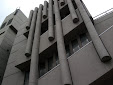
We visited the Worsley Building again, which is a behemoth; truly a beautiful example of the 60s 'brutalist' architecture, very impressive. This is where the School of Dentistry is (no connection between brutalism and tooth extraction). Below is an image of the building from a short distance away, from a stopping point that took us slightly outside the perimeter of the campus:

Worsley Building

In the above image, the small triangular area on the opposite side of the road was unkempt. There was graffiti, much rubbish, cracked paving stones, broken pieces of metal sticking out of the ground. It is not clear if the property is that of the university, or the council. People seemed to use it to park their cars, in the spaces between the trees.

Much building work is being carried out on campus at the moment, the biggest project since the Chamberlin, Powell and Bon project of the 1960s. The contractors have signed up to the The Considerate Constructors Scheme, which is a code of conduct. On one of the hoardings around the new swimming pool area this tagline is displayed: “Improving the Image of Construction”. Unfortunately, this marketing move implies that it is just the 'image' of construction that needs to be improved rather than the 'reality' (although they could be considered to be one and the same, especially from the perspective of 'the spectacle').

At the end of the dérive, approximately 7.00pm, we realised that we had not picked up a found souvenir. We looked down at our feet and there was a bus ticket lying on the floor at this location:

The Bus Stop

The ticket said “Lea Farm Drive, Seacroft” on it, hence the name of the dérive. Having finished our walk we then entered the Victoria pub from the back entrance, which is a concrete ramp next to a car park in a modern building. You pass the trade bins to enter, in the semi-dark, a door and, going back in time, you emerge into Victoriana. It was rather like going through the back of the wardrobe to Narnia.

(all maps and images CC Tim Waters)