Saturday, 3 July 2021

Psychogeography News - July 2021

Hello psychogeography lovers. I came across a lot of related news in the last month, so will continue to post the links with a brief description under a respective heading. I hope you find the newsletter interesting. More in August…

Psychogeography and Walking

It seems that Nick Cave (yes, he of Bad Seeds fame) has unintentionally been doing some psychogeography. You can read about him photographing lost gloves on his walks in The Guardian. Here’s another The Guardian articles on walking the Limestone Way of the Peak District. And, here, another piece of accidental psychogeography which includes interesting photos of bricked up windows in London, from the BBC website. Whereas this Youtuber is doing some ‘proper’ psychogeography by walking the most direct route on his “straight line mission” across Scotland (from The Guardian). The final two articles under this section look at ‘well-being’ and walking: one on walking with friends in The Guardian, and the other is research on mental health and hiking from The Conversation.

Architecture

Yanko Design has an interesting article which includes some lovely futuristic images of imagined spaces looking at green skyscrapers, while The Spaces has an alternative architectural guide to Venice. Here is a guide to the 2021 London Festival of Architecture in The Wallpaper and I am including this really useful link to all things Charles Jencks, as it has loads of useful resources on his work.

Cities

The Conversation has an article on the queer city and inclusivity and The Science Museum Group Journal has a brilliant journal article on science and the city, which seems to be open access. Here’s a The Guardian article about the pedestrianisation of Oxford Circus in London. And, on a more light-hearted note, here is a link to a novel entitled The Cat and the City by Nick Bradley (I am a big fan of both). Finally, under cities, this super 20 min film called ‘Organism’ by Hilary Harris (1975) from the Aeon website, shows “the city as an emergent form, with architecture as the skeleton and roads as the veins”.

The Weird or Random

On the more random side of all things spatial: bleak spaces that you come to love (this The Guardian article requires you to already to be a signed up member, although it is free). And, I will finish this blog on a bit of bonkerity: this chappy accidentally annexed France by moving some rock (from The Conversation).

Wednesday, 2 June 2021

Psychogeography News - June 2021


Here’s June’s psychogeography-related news. I hope there is something of interest for you here. Thanks for reading.

Psychogeography

The Fourth World Congress of Psychogeography is convening again in September, please click here for the up-to-date info (I apologise for missing the call date). Here’s a 2020 article in FAD Magazine about the Greek-American artist Gerasimos Floratos and his psychogeographical renderings exhibited at that time. And this BBC article looks at the art of ‘drain spotting’.

Cartography

This super online resource, from Stanford Libraries in the US, is about working with historical maps online. It includes geo-referencing, overlaying and exporting and comes in the form of a tutorial.

Architecture

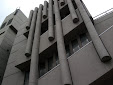
The Biennale Architecttura 2021 is now on. Here’s the official website. It’s on till November 2021 in Venice. I appreciate we can’t necessarily travel, but there looks like lots of useful links on there, and there may be online talks. This article in ArchDaily looks at the threat of demolition in regard to the brutalist Nagakin Capsule Tower in Tokyo. And, this website looks at 3D printed architecture.

Other

This is an interesting article in The Conversation about a farmer who moved a rock and accidentally changed a national border. And, finally, in The Guardian there is an article about some sewage works in Edinburgh: it's about exploring local spaces during lockdown.


Saturday, 8 May 2021

Psychogeography News - May 2021


Hello Folks. I hope you are enjoying the resurrected news. This is May's selection. I've got quite a few this month, so I am going to do my best to categorise them. I apologise if it is a bit The Guardian heavy!

Architecture

This month in architecture we have a discussion in Domus on Brutalism and post-punk, a connection I wouldn’t have made myself, even though I am a fan of both. There is some more news on Modernist architecture in The Guardian on the post-war architecture of Derby’s Assembly Rooms (and the hope to save them from the bulldozers), and another general discussion on Brutalist architecture which includes useful links to other sources.

Images and Films

The Guardian has an article on somebody who (probably doesn’t even realise he is a psychogeographer) and photographs social distancing signs. This artists fills potholes and manhole covers in beautiful mosaics and this photographer takes images of America by streetlight. The last one in this section is a super 3 min film of an urban commute by Hiroshi Kondo.

Walking and Psychogeography

Here you can read about the proposed green walks in London. This article will provide you with ten Great British walking trails and here is an article about getting lost in a new place.

Outside of the UK

And finally, an article on walking around Menorca during lockdown and a very good article on the Swedish architect Sigurd Lerewentz in The Wallpaper.

Friday, 2 April 2021

Psychogeography News - April 2021


After a hiatus of a few years, I have decided to attempt to resurrect the psychogeography news for this blog. I used to do it monthly, prior to that I did it via a mailing list. Anyway, it seems like I stopped it in November 2016, so that’s over 4 years! Anyway, I am going to give it another go. The news will contain anything related to: walking, the city, urban space, landscape, public art, architecture, space-related activism, and so on – so whatever loosely comes under the rubric of ‘psychogeography’. I hope you find it interesting:

The Guardian: A joyless trudge? No, thanks: why I am utterly sick of ‘going for a walk’

An entertainingly cynical, article by a Canadian living in the UK during lockdown. It covers anything from dodgy footwear to Margaret Thatcher. Click here for full article.

The Claude Glass Revolutionized the Way People Saw Landscape

This is a really interesting academic, short, article about how a little mirror, named after the landscape artist Claude Lorrain, changed the way people viewed the landscape. For those Situationists amongst you, Lorrain was of interest to them due to his depictions of ruins (“the charms of the ruins”). The Situationists had a problem with the nostalgia engendered by images of ruins (and ruins themselves) and actually used one of Lorrain’s paintings in one of their maps. Click here for the article.

The Guardian: Is that a unicorn? No it’s a teenager taking a hike in the great outdoors.

This is about the Ramblers attempts to get young people out and about (and bumbling) in Britain’s wide open spaces. Includes some research and stats, for those who are interested in that kind of thing. Full article here.

Revisiting the Concrete Architecture of Belgian Icon Juliaan Lampens

I’m a big fan of brutalist architecture (and even included a large section on the work of Chamberlin, Powell and Bon in my thesis). I’m not an expert, though, and hadn’t heard of this chappy. An interesting article, with some nice images, here in The Wallpaper.

French Artist Unveils New Optical Illusion Installation in Italy

This uncanny installation appears on the façade of the Pallazo Strozzi in Florence. It’s really fabulous and must be super to see in person. It reminds me of the opening to Civilization and its Discontents where Freud talks about how memory, and the unconscious, has the effect of forgetting. Freud uses a beautiful analogy of the ancient city of Rome to help him explain how the unconscious works (click here if you’d like to read my take on that). Click here for some images of the installation.

Building a Feminist City

This editorial, discussing the current focus on women’s safety in public space following Sarah Everard’s death, takes its starting point as Haussmann’s Paris (very Situationist). Click here to read the article in The Guardian.

Mouse Hole Update

A Really cute one to finish on. This from a blog entitled ‘Walks Between the Commons: American mom living in London’. It’s about a little mouse hole installation that local people decorate and offer gifts up to the pretend mice that live there, such as Christmas cards. It’s, basically, a sweet little bit of guerrilla urban creativity. Click here for the images.

Saturday, 6 March 2021

Online Cultural Theory Lectures by Doctor Hat


Below is a series of lectures available on YouTube which all took place in the famous Freud Disco Study in 2016. The lectures are predominantly of a cultural theory and psychogeography nature and cover areas such as: subjectivity, semiology, psychoanalysis, cartography, urban walking, ideology, etc. You can view an introduction here or click on the links below to take you to more information and to the online lecture itself:

Introduction to the Lecture Series
Are You Interpellated?
What is Myth?
What Does the Map Represent?


Introduction to the Lecture Series


Are You Interpellated?

Abstract: A lecture on the theory of ideology by Louis Althusser. By providing examples from popular culture and psychogeography, this lecture explores the concept of interpellation as discussed by Althusser in 'Ideology and the Ideological State Apparatuses'.

Audience: Undergraduate students in the area of cultural studies, psychogeography, politics, psychology, media and philosophy. Anyone interested in: neo-Marxist approaches, how ideology operates on individuals and how subjectivity is socio-politically formed.

What’s covered: ideology, interpellation, structuralism, the State, civic life, the family, subjectivity, psychogeography, popular culture (film).


What is Myth?

Abstract: A lecture on Roland Barthes’ Mythologies. Concentrating on his essay ‘Myth Today’, this lecture introduces Barthes’ second-order semiological system and demonstrates how to carry out a semiological analysis.

Audience: Undergraduate students in the area of cultural studies, literature, media and philosophy. Anyone interested in advertising, language or literature.

What’s covered: semiotics, language, myth, ideology, popular culture, structuralism.


What Does the Map Represent

Abstract: A lecture on mapping that critiques the modernist cartographic project. Themes explored are: the centred subject, inside/outside, map/territory and reality versus representation. This lecture compares the traditional analysis of maps with the psychoanalytical approach to dream analysis.

Audience: Undergraduate students in the area of cultural studies, cartography, postmodern geography, history and psychoanalysis. Anyone interested in maps in general.

What’s covered: cartography, ideology, dream analysis, representation, praxis, Sigmund Freud, Claudio Minca, world fairs.

Monday, 28 December 2020

The Alternative Conclusion to Walking Inside Out


A few weeks ago I posted the 'official' version of the conclusion of Walking Inside Out: Contemporary British Psychogeography (Rowman and Littlefield International 2015). However, if you would like a copy of the first version, the one that wasn't published, you can get a copy here. It deals specifically with the detractors of psychogeography. For those of you who don't want to download and read the full alternative conclusion, below is an extract:

Conclusion: Psychogeography PLC

by Tina Richardson

So as to keep up-to-date with any current media-related references to psychogeography, from time to time I type into my search engine ‘psychogeography’ followed by the month and year. In April 2014 I did the same and an article in the The Guardian paired psychogeography with the name of a Britpop singer: ‘Damon Albarn and the Heavy Seas Review – Rich in Personal Psychogeography’ (2014). If Coverley thought ‘the game was up’ following Self’s articles in The Independent, I wonder what this says about psychogeography today? Even though it could be easy to be cynical about its current populist and mutable use, this is not a particularly constructive approach to take towards psychogeography. Rather than seeing it as a co-opting of the term, or an aligning of some individuals to something ‘trendy’ that we feel they have little connection to, we might see this as a compliment.

In the introduction I mentioned how Sinclair has often been placed in the position of defender of the field of psychogeography. Psychogeography has plenty of detractors and, while this could be seen as a negative reflection of it, I prefer to see it as promoting valuable discussion. It also enables an academic engagement with critics who are often outside academia. While I do not see myself as the current ‘union rep’ of psychogeography, I would like to look at some of the comments by some critics and work through the issues they have raised, since they are a reflection of what individuals think about psychogeography in Britain today and are, therefore, part of the project at hand.

Sinclair has expressed his own concerns about the term, however these are often decontextualized by others into snappy quotes and at times represent a specific strand of psychogeography that he may be commenting on, or even another period of time in its development. For instance his references to it being a ‘franchise’ in the The Fortean Times are referring to an aspect of 1990s psychogeography: “There was a kind of strategy to this rebranding, I was quite happy to run with it as a franchise, as a way of talking about doing the things I'd always done and providing a useful description that could be discussed in public. It became a bit of a monster on the back of that” (Pilkington and Baker 2002, 3). [cont...] Please, click here for the full conclusion.


Friday, 4 December 2020

Christmas Alone? Six Tips and a Brilliant Mnemonic!


Please note: I wrote/posted this back in 2016, but am reposting it as I think it may be even more pertinent this year!

Your Singleton Xmas - Help is at Hand

I am becoming an expert at spending Xmas on my own, having spent 7 out of the last 11 alone, so I feel pretty well qualified to add my ideas to those available online. This blog is not directed at the elderly (there are many of those posts and articles already), but rather more to those who out of choice, because of 'family problems', geographical incompatibility or lack of opportunity spend Xmas on their own. It is also not about what to do to prevent yourself being alone, as this is also well covered elsewhere.

I spent my first Xmas on my own in 2006 and it was infinitely better than the previous one in 2005. 2006 was actually the best Xmas in a long time. While the Singleton Xmases since then have varied from 'OK' to 'good', I have developed a strategy over time, which I continue to work on and improve.

Here are my tips, framed in a mnemonic which is also a tip in its own right: FRIDGE!

1 FAMILY
If you have no family, are estranged from them, or they live in another part of the world, make your own family! Your family can consist of just you. At least you like ‘you’, you know what ‘you’ like, and you will be nice to ‘you’. If you are lucky enough to have a bobbins (for ‘bobbins’ read ‘pet’) then you are very fortunate as they are your family. Wrap a present from your bobbins to yourself and vice versa. Have a little present opening ceremony where they enjoy the wrapping paper much more than the present you bought them, and you really enjoy the present they gave you because you helped them buy it. If, like me, you got their present from them to you in September, then you may even be lucky enough to have forgotten what it was and it will still be a surprise on Xmas day! Jean-Paul, the existential degu, bought me a book on Soviet Bus Stops this year, but it took me a while to remember!

2 RITUAL
Follow old rituals and create new ones. Xmas is all about rituals: the rituals of the religious aspect of Christmas (if you follow a Christian-based religion), cultural rituals, rituals from your childhood, and so on. If some of the rituals from childhood are problematic, then drop them. If they don’t work this year, then don’t do them again. But, you can create new ones, and if they work they can become part of your 'Singleton Xmas' if you wish to employ them again in the future. I dress as if I am spending Xmas with others, I always have a Snowball while I’m putting my slap on, I put carols on on the radio first thing, and I always have melon for breakfast!

3 INDULGENCE
Indulge yourself. You have all the time to do this – one full 24 hr period at least. You don’t have to spend a lot of money. You can make crafty things for yourself (e.g. crackers), or make some foodstuffs (e.g. mince pies or delicious pickles). Make yourself a ‘proper’ Xmas meal and serve with a cracker and Xmas serviette. Get some gorgeous food in – stuff that you wouldn’t buy every day – such as truckles (a recent ritual I have added to my list). I like them as ‘objects’ and I also like their waxy covering. You can buy a few truckles quite cheaply. Much better than buying a mahoosive cheese selection and making yourself ill through gorging.

4 DRINK
This is a tricky one. I have tried over-drinking and under-drinking and can tell you, quite honestly, that under-drinking is better when you are on your own. Also, you will be more likely to actually remember the day itself. Either pace yourself (one ‘alcoholic’ followed by one ‘soft’) or stop drinking after a certain time. My strategy is to not start before 11.oo and to stop drinking when I start eating my Xmas lunch. I also then never get a hangover and can do it all over again on Boxing Day! Don’t forget to treat yourself to something nice that you don’t have often, so that it becomes a treat and part of your new ritual.

5 GIVING
We have already covered giving to yourself and your bobbins in terms of gifts. But I also mean here ‘forgiving’. I don’t mean you have to forgive others, although it may be the case and may be helpful to you (although it may not be). What I mean is be kind to yourself. Just because you are on your own doesn’t mean you are: a ‘bad’ person, are unworthy, are friendless or are unloved. It is just one day and you can make it anything from tolerable to great by being kind to yourself.

6 EFFORT
I do think effort is one of the most important things in my top tips, even though it is at the bottom of the list. I always get up early. I love the silence early on Xmas day, it reminds me of Charlton Heston in The Omega Man: it’s like the world ended overnight and you are the only one alive. Joking apart, languishing in bed will just put off the inevitable. Best get up early and prepare the veggies and then there is time to watch one of your favourite films or a boxset. White Christmas has been on my list previously, but this year I am going to watch Doctor Doolittle and West Side Story.

Well, I hope this has been helpful, folks. Over and out, and good luck on your Singleton Xmas.

If in doubt, don’t forget: FRIDGE!

EMERGENCY NUMBERS
Childline: 0800 1111
Samaritans: 116 123
Domestic Violence Hotline: 0808 2000 247
Mind: 0300 123 3393
Age UK: 0800 169 6565
RSPCA: 0300 1234 999

I would just like to add that I have very kind friends who I have spent Xmas with in this time-frame and which I really enjoyed. I also spent a great Xmas with a friend at my home in 2014.

Please feel free to comment.