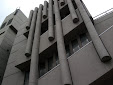
The term 'excellence', which Bill Readings describes as the “watchword of the University” (1999: 21), requires internal operations in order for it to be measured. These operations exist in the form of actions and practices carried out by individuals within the university: in particular, administrative staff, but also teaching staff and students. The assessments are considered to be quantifying procedures but are actually qualifying ones. The measuring systems used attempt to quantify something that cannot really be quantified (excellence is an empty and fluid term with no absolute measure). Really what is occurring is a qualifying gesture: the measuring of excellence is circular, it just enables excellence as a unit of measure to be reconfirmed. Thus, excellence is qualified (justified) in the measuring of itself. This is how the ideology of the university - this mirror-like process - enables actions to be sutured into its practices, at the same time reproducing itself as an Ideological State Apparatus (ISA), and its staff as subjects.
Louis Althusser discuses this mirror relationship in relation to how the subject of ideology connects with the Subject of ideology through a process of misrecognition. Providing an example of Christian religion he explains that “God is the Subject par excellence” (2006: 121). It is essential for the Subject of ideology that He reproduces Himself in the form of His subjects; and since man has been made in the image of God he will see himself in Him (2006: 122). Althusser explains that it is this “universal recognition” that becomes the “absolute guarantee” that subjects within the relevant apparatus will do what is required of them by the institution (2006: 123). However, he does acknowledge that there are “bad subjects” (those who do not conform) who might require some form of repressive action (ibid.).
Althusser uses the example highlighted by Blaise Pascal to demonstrate how actions inserted into practices actually work. And, here I am quoting Althusser quoting Pascal: “Pascal says more or less: 'Kneel down, move your lips in prayer, and you will believe.'” (2006: 114). For Pascal, to believe in God all that is required is that you pray. Althusser explains that, from the perspective of the single individual, this works through how the individual acts within the particular ISA: “[...] his ideas are his material actions inserted into material practices governed by rituals which are themselves defined by the material ideological apparatus from which derive the ideas of that subject.” (ibid.) (Althusser's italics). For individual staff who are part of the process of measuring excellence, this would involve such actions as: collating information on key performance indicators; processing student's feedback forms on their lecturer's; involvement in the peer review process; or developing knowledge transfer processes. But, the list is endless - mostly because these processes cannot be separated from the everyday operations of the university. One some level, everyone is working towards excellence.
Nevertheless, in the educational institution I do think there are individuals who might behave as 'good subjects' - they may go-through-the-motions of carrying out the relevant actions - but may not 'believe'. Not all the staff of the university who participate in its practices are unaware of what is occurring on an ideological level. I do not believe that all the university's members believe in the term 'excellence' or accept that the 'corporate university' model is the right one for them or others to exist in: some do not, in a wholesale way, relinquish themselves to the corporatised university, they understand the term 'excellence', how it works, and its ideological origins. But, I do think that the institution requires a certain level of 'buy-in' to its ideology in order for it to operate in the way that it does.
What is important to the university is that enough individuals are prepared to perpetuate the ideology of what Readings calls the “University of Excellence”. This is often done through the use of the word 'quality' - although, the term 'quality' is usually afforded to the university that operates as if it was a corporation, as opposed to the term 'excellence' which relates to the university as corporation (Readings 1999: 22). But Quality Assurance (QA) is still part of the process of measuring standards of excellence1. At the University of Leeds there is an Academic Quality and Standards Team that measures the excellence of the university's quality assurance procedures. So, even the processes that measure excellence are themselves measured. It is required that, in a kind of panoptic way, the university measures itself measuring. And, in relation to students, this works by seeing the student as a customer, and by so doing, creating a reciprocal relationship: the student also sees him/herself as customer and is, hence, supplied with a product-service - Althusser's “double mirror-connection” (2006: 122).
Readings says “Students in the University of Excellence are not like customers, they are customers.” (ibid.). So, providing that students within the institution behave like customers – they 'act', in the Althusserian sense, by participating in customer-like practices – then the university has customers rather than students. Students pay tuition fees and therefore demand a return on their investment in a product: a degree. Many students now believe in the supplier/customer dialectic which is manifest in the form of the educational institution. The phrase 'I've paid course fees and therefore I should get a better [insert university service/product/function]' is not uncommon. This equates to value-for-money. Readings says that what this does is situate (or for Althusser: 'subject') the student as “consumer”, rather than as an autonomous individual who can make their own well thought-out choices (1999: 27). This ties in to how it is essential that the ISA is able to get the subjects to “work by themselves”, which is done by making the subject think they are making a free choice, but also by “submitting them to a higher authority” and hence simultaneously requiring they relinquish that freedom (Althusser 2006: 123).
It is essential that this ideological process be seamless, opaque and 'instinctive' for its subjects: in other words, natural. Althusser says that the effect of this subjection is that it seems like a normal state of affairs, it is just the way things are (ibid.): we all live “'naturally' in ideology” (2006: 116). We take up 'positions' that, by definition, are subjected ones, without realising we are doing so. According to Althusser we are “always already subjects” (2006: 117): we are hailed as such and we take up our place in the apparatus.
Readings, too, discusses the 'natural'. He says that business management processes appear natural to those carrying them out, and he even uses the word “actions” when making this point (1999: 30). He explains that this works through the language used within management structures as part of administrative procedures; the processes adopted, and the language used to further their use, imply they are a natural path to take (ibid.). When discussing Total Quality Management Readings states: “[...] it is natural to adopt these means of planning, which are as old as humanity even though they were not formalized until the end of the 18th century.” (ibid.). While Readings is talking about procedures rather than individuals; it is the attitude of the subject adopting those procedures that naturalises their subjection due to their actions carried out in relation to them. A procedure is adopted, a material activity is carried out.
Bibliography
Readings, Bill. 1999. The University in Ruins (Cambridge, Massachusetts and London: Harvard University Press).
Althusser, Louis. 2006. 'Ideology and Ideological State Apparatuses (Notes Towards an Investigation)', Lenin and Philosophy and Other Essays, trans. by Ben Brewster (Delhi: Aakar Books) pp. 85-126.
Saturday, 21 November 2009


Forgotten Solo Dérive
Saturday November 21st 2009. I set off at 4.59am from the Parkinson Steps, on my own. Still dark, although a few birds were chirping, anticipating dawn which was still a while away. There were more people around than I had expected; mostly students coming back from their night out. My original plan was to walk the periphery of the campus (as shown on the map), to see how defined the edge of the campus is in real space, as compared to how it appeared on the map. I was also interested in how long it would take to walk around the university's circumference.
My secondary project (Freud always thought it useful to have a secondary project) was to look for university signs giving prohibiting instructions. As it turned out, this didn't reveal anything particularly interesting, so instead I decided to look for buildings that appeared on the map to be university property, but actually turned out to not be.
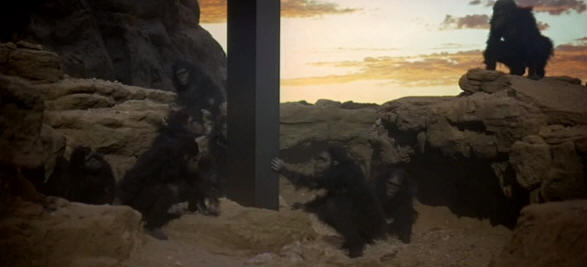
I did notice quite a few more of the monolithic university signs that are so commonplace within the campus boundary. While I do find them attractive, they do have a flavour of Kubrick's 2001, and are quite imposing. I guess we (the students) are the apes surrounding the stone (wisdom) and developing our tools (knowledge). I don't propose to continue the analogy, as it's too disturbing to contemplate.
Students beating their chests to get what they've paid for...
I found a large part of what appears on the map as the campus space dedicated to the NHS: The Mount. The NHS Choices website does acknowledge the existence of this site, located in Hyde Terrace, but provides no information on it, although one person seems to have 'rated' it. Further searching revealed it is for mental health teaching.
At one point, while photographing a clamping sign, I heard a man coming up behind me - I'd previously seen him pulling into a car park nearby. He asked me if he could help me, which translated basically means 'what do you think you are doing?' I told him I was a student doing research. He told me not to photograph the place next door, which he called 'Covance'. I actually hadn't noticed it, so then became interested in it. The sign said 'Covance. The Development Services Company.' which sounds very innocuous and actually turns out to be a clinical pharmaceutical company which carries out trials here, on students (people desperate for money) – particularly in anti-obesity and dental pain (possibly considered to be a target group due to their perceived as stereotypical lifestyles). The sign is clearly hiding that it is drug-related as it only says ' Development Services Company', where the website says 'Drug Development Services Company'. Interesting.
Covance Website
Drug Trials at the University of Leeds
Another business space I saw was near the business school: leedsinnovationcentre.co.uk It is a business centre. This is what the website says “Find out how close operational links with the University of Leeds and a personal touch from our staff really do make us different.”
The Leeds Innovation Centre
While walking towards Clarendon Road I saw a small sign attached to the wall saying 'isg' and an arrow. If you type in: isg leeds university into google, the first return appears with this headline: “ISG Wins £4m Leeds University refurb contract”. It turns out the ISG (Interior Services Group) are completing the final stages of refurbishment on the Michael Sadler building (according to the front page of Construction News), so perhaps the sign points towards the site office.
Constructions News on the “refurb contract”
Another link says that ISG are also doing the landscaping for the new childcare centre. So that's another £2.5m for them!
Building Talk on ISG's coup on the childcare centre
In total I saw four foxes on my walk: two crossing Woodhouse Lane and two near St Georges Field. Other nocturnal beings were a man working for Metro, the bus company, whose job was to clean all the bus stops. I went to the Metro website to see how much he might be paid, but the only vacancy was for a Bus Station Manager £23,489 - £28,579 per annum. I was also asked if I had a light by a young man who crossed the road to ask me. I said I was sorry but I hadn't and then he swore quite angrily, I was worried for a few yards that he might be behind me (originally he had been walking in the opposite direction), but it turns out he wasn't.
It was a short dérive and I was back at the steps by 5.37am. I headed into town to get breakfast at probably the only establishment open at that time. I noticed that the Rusty Building has a red light on top. I have decided to rename the building the Ginger Building in order to support the minority group.
The Ginger Building
After eating I walked back to Headingley. I suddenly realised that since I'd left home a mist had descended.
Note: The dérive has been named the Forgotten Solo Dérive as I forgot to pick up the customary souvenir.
My secondary project (Freud always thought it useful to have a secondary project) was to look for university signs giving prohibiting instructions. As it turned out, this didn't reveal anything particularly interesting, so instead I decided to look for buildings that appeared on the map to be university property, but actually turned out to not be.
I did notice quite a few more of the monolithic university signs that are so commonplace within the campus boundary. While I do find them attractive, they do have a flavour of Kubrick's 2001, and are quite imposing. I guess we (the students) are the apes surrounding the stone (wisdom) and developing our tools (knowledge). I don't propose to continue the analogy, as it's too disturbing to contemplate.
Students beating their chests to get what they've paid for...
I found a large part of what appears on the map as the campus space dedicated to the NHS: The Mount. The NHS Choices website does acknowledge the existence of this site, located in Hyde Terrace, but provides no information on it, although one person seems to have 'rated' it. Further searching revealed it is for mental health teaching.
At one point, while photographing a clamping sign, I heard a man coming up behind me - I'd previously seen him pulling into a car park nearby. He asked me if he could help me, which translated basically means 'what do you think you are doing?' I told him I was a student doing research. He told me not to photograph the place next door, which he called 'Covance'. I actually hadn't noticed it, so then became interested in it. The sign said 'Covance. The Development Services Company.' which sounds very innocuous and actually turns out to be a clinical pharmaceutical company which carries out trials here, on students (people desperate for money) – particularly in anti-obesity and dental pain (possibly considered to be a target group due to their perceived as stereotypical lifestyles). The sign is clearly hiding that it is drug-related as it only says ' Development Services Company', where the website says 'Drug Development Services Company'. Interesting.
Covance Website
Drug Trials at the University of Leeds
Another business space I saw was near the business school: leedsinnovationcentre.co.uk It is a business centre. This is what the website says “Find out how close operational links with the University of Leeds and a personal touch from our staff really do make us different.”
The Leeds Innovation Centre
While walking towards Clarendon Road I saw a small sign attached to the wall saying 'isg' and an arrow. If you type in: isg leeds university into google, the first return appears with this headline: “ISG Wins £4m Leeds University refurb contract”. It turns out the ISG (Interior Services Group) are completing the final stages of refurbishment on the Michael Sadler building (according to the front page of Construction News), so perhaps the sign points towards the site office.
Constructions News on the “refurb contract”
Another link says that ISG are also doing the landscaping for the new childcare centre. So that's another £2.5m for them!
Building Talk on ISG's coup on the childcare centre
In total I saw four foxes on my walk: two crossing Woodhouse Lane and two near St Georges Field. Other nocturnal beings were a man working for Metro, the bus company, whose job was to clean all the bus stops. I went to the Metro website to see how much he might be paid, but the only vacancy was for a Bus Station Manager £23,489 - £28,579 per annum. I was also asked if I had a light by a young man who crossed the road to ask me. I said I was sorry but I hadn't and then he swore quite angrily, I was worried for a few yards that he might be behind me (originally he had been walking in the opposite direction), but it turns out he wasn't.
It was a short dérive and I was back at the steps by 5.37am. I headed into town to get breakfast at probably the only establishment open at that time. I noticed that the Rusty Building has a red light on top. I have decided to rename the building the Ginger Building in order to support the minority group.
The Ginger Building
After eating I walked back to Headingley. I suddenly realised that since I'd left home a mist had descended.
Note: The dérive has been named the Forgotten Solo Dérive as I forgot to pick up the customary souvenir.
Thursday, 19 November 2009
Louis Althusser, Ideology and the Practices of the Institution
In 'Ideology and Ideological State Apparatuses (Notes Towards an Investigation)' (1969) Louis Althusser explains how he has developed his term 'ideology' from that of Karl Marx. He explains, that for Marx, ideology was a set of “ideas and representations which dominate the mind of a man or a social group.” (2006: 107). Althusser then goes on to distinguish the differences between a theory of ideologies and a theory of ideology: a theory of ideologies is grounded in history due to the class positions represented in the social formations taking place around it; whereas a theory of ideology is not oriented in history, because there is no position outside of ideology that can enable history to reflect ideology's position (ibid.).
Althusser explains that in Marx and Engel's The German Ideology the term 'ideology' is reworked, and he describes it as no longer being a Marxist one (ibid.). In this version ideology is completely unreal and can be compared more to a dream: “All its reality is external to it.” (Althusser 2006: 108). Althusser states that it is because of this that ideology's history is outside of it, leaving the individual with only their own concrete bearing (ibid.). It is this that distinguishes Althusser's project – the development of a theory of ideology – from a theory of ideologies in general, and he puts a convincing argument forward to explain how he works on the term 'ideology' in The German Ideology to form his own version in respect to his thesis. He demonstrates that if ideology is a dream, this means it must be a “negative determination”; also if ideology has no history that pertains to it (all it has is a perverted version of history) then this too is a negative thesis as “it has no history of its own.” (ibid). Althusser's main problem with this negative thesis in relation to The German Ideology appears to be with his observation of the work in general being a “positivist and historicist” one. To clarify his position, to propel his own thesis forward, and to demonstrate the difference between a theory of ideologies and one of ideology, Althusser states:
This would be a 'positive' thesis for Althusser because he believes that there is a structure in which ideology rests that transcends history: the form that ideology takes, and how it operates, has been the same throughout time (2006: 108-109).
Before discussing how Althusser's model of ideology fits into my discussion of the educational institution, and in particular the university campus, I would like to introduce Althusser's two theses that make up his essay. The first, which shows a radical displacement of Marx's original model; and the second which materially situates ideology.
“Thesis I: Ideology represents the imaginary relationship of individuals to their real conditions of existence.” (Althusser 2006: 109). Whereas for Marx ideology is an illusion because it it misrepresents 'reality' to the proletariat, for Althusser it is the actual relationship between the individual and 'reality' that is misrepresented. Althusser concedes that this first thesis is a negative one in its representation of the object which is distorted (ibid.). He also believes that if ideology takes the form that he proposes, then this dispenses both with the idea that the authors of ideologies are powerful groups of people who deliberately mislead the less powerful 'other'; also the concept of alienation that was so important to Marx also, therefore, becomes irrelevant (2006: 112).
“Thesis II: Ideology has a material existence.” (Althusser 2006: 112). This material existence exists in the practices which are oriented in the Ideological State Apparatuses (ISAs) - the ISAs being the following institutions: religious, educational, political, cultural, legal, along with the family and communications (Althusser 2006: 96). Because for Althusser this misrepresented relationship which is ideology, is “endowed with a material existence.” (2006: 113), these practices are “the realization of an ideology” and they “always exist in an apparatus” (Althusser 2006: 112). Althusser offers the church as an example of an institution that provides an apparatus for the individual to partake in a practice and thus realise its ideology. This is what he says about how this process works:
Althusser sees the actions that are carried out in relation to, for example, belief, duty and justice, correspond to attitudes in the subject that mean that they render themselves to a particular worldview (ibid.). And, for Althusser, both the attitude of the individual, and the practices in which they are involved, are material (ibid.); as he confirms, they are “actions inserted into practices.” (2006: 114).
A particularly interesting point Althusser makes in relation to how these practices operate on ideology is how by actually participating in them belief is produced (ibid.). It does not matter whether you believe or not, because the actions you carry out presuppose a belief that exists within that apparatus. Hence, the effects of the practice retroactively produces its cause through subjecting the individual. Therefore, the individual as subject is both the cause and effect. These actions are the effects of the ideological apparatus of which the individual is subjected, but they are also what produce him as the subject, as the cause of the effects. This is an integral part of Althusser's theory on structural causality. Why this is important for the institution (useful in terms of the promulgation of its ideology), is that those engaging in it, perhaps even at first sceptically, will eventually become subjected to it. This, I believe, is how the administration of the educational institution works, specifically in relation to 'excellence'.
Bibliography
Althusser, Louis. 2006. 'Ideology and Ideological State Apparatuses (Notes Towards an Investigation)', Lenin and Philosophy and Other Essays, trans. by Ben Brewster (Delhi: Aakar Books) pp. 85-126.
Althusser explains that in Marx and Engel's The German Ideology the term 'ideology' is reworked, and he describes it as no longer being a Marxist one (ibid.). In this version ideology is completely unreal and can be compared more to a dream: “All its reality is external to it.” (Althusser 2006: 108). Althusser states that it is because of this that ideology's history is outside of it, leaving the individual with only their own concrete bearing (ibid.). It is this that distinguishes Althusser's project – the development of a theory of ideology – from a theory of ideologies in general, and he puts a convincing argument forward to explain how he works on the term 'ideology' in The German Ideology to form his own version in respect to his thesis. He demonstrates that if ideology is a dream, this means it must be a “negative determination”; also if ideology has no history that pertains to it (all it has is a perverted version of history) then this too is a negative thesis as “it has no history of its own.” (ibid). Althusser's main problem with this negative thesis in relation to The German Ideology appears to be with his observation of the work in general being a “positivist and historicist” one. To clarify his position, to propel his own thesis forward, and to demonstrate the difference between a theory of ideologies and one of ideology, Althusser states:
[…] I think it is possible to hold that ideologies have a history of their own (although it is determined in the last instance by the class struggle); and on the other, I think it is possible to hold that ideology in general has no history, not in a negative sense (its history is external to it), but in an absolutely positive sense. (ibid.).
This would be a 'positive' thesis for Althusser because he believes that there is a structure in which ideology rests that transcends history: the form that ideology takes, and how it operates, has been the same throughout time (2006: 108-109).
Before discussing how Althusser's model of ideology fits into my discussion of the educational institution, and in particular the university campus, I would like to introduce Althusser's two theses that make up his essay. The first, which shows a radical displacement of Marx's original model; and the second which materially situates ideology.
“Thesis I: Ideology represents the imaginary relationship of individuals to their real conditions of existence.” (Althusser 2006: 109). Whereas for Marx ideology is an illusion because it it misrepresents 'reality' to the proletariat, for Althusser it is the actual relationship between the individual and 'reality' that is misrepresented. Althusser concedes that this first thesis is a negative one in its representation of the object which is distorted (ibid.). He also believes that if ideology takes the form that he proposes, then this dispenses both with the idea that the authors of ideologies are powerful groups of people who deliberately mislead the less powerful 'other'; also the concept of alienation that was so important to Marx also, therefore, becomes irrelevant (2006: 112).
“Thesis II: Ideology has a material existence.” (Althusser 2006: 112). This material existence exists in the practices which are oriented in the Ideological State Apparatuses (ISAs) - the ISAs being the following institutions: religious, educational, political, cultural, legal, along with the family and communications (Althusser 2006: 96). Because for Althusser this misrepresented relationship which is ideology, is “endowed with a material existence.” (2006: 113), these practices are “the realization of an ideology” and they “always exist in an apparatus” (Althusser 2006: 112). Althusser offers the church as an example of an institution that provides an apparatus for the individual to partake in a practice and thus realise its ideology. This is what he says about how this process works:
The individual in question behaves in such and such a way, adopts such and such a practical attitude, and, what is more, participates in certain regular practices which are those of the ideological apparatus on which 'depend' the ideas which he has in all consciousness freely chosen as a subject.
(2006: 113).
Althusser sees the actions that are carried out in relation to, for example, belief, duty and justice, correspond to attitudes in the subject that mean that they render themselves to a particular worldview (ibid.). And, for Althusser, both the attitude of the individual, and the practices in which they are involved, are material (ibid.); as he confirms, they are “actions inserted into practices.” (2006: 114).
A particularly interesting point Althusser makes in relation to how these practices operate on ideology is how by actually participating in them belief is produced (ibid.). It does not matter whether you believe or not, because the actions you carry out presuppose a belief that exists within that apparatus. Hence, the effects of the practice retroactively produces its cause through subjecting the individual. Therefore, the individual as subject is both the cause and effect. These actions are the effects of the ideological apparatus of which the individual is subjected, but they are also what produce him as the subject, as the cause of the effects. This is an integral part of Althusser's theory on structural causality. Why this is important for the institution (useful in terms of the promulgation of its ideology), is that those engaging in it, perhaps even at first sceptically, will eventually become subjected to it. This, I believe, is how the administration of the educational institution works, specifically in relation to 'excellence'.
Bibliography
Althusser, Louis. 2006. 'Ideology and Ideological State Apparatuses (Notes Towards an Investigation)', Lenin and Philosophy and Other Essays, trans. by Ben Brewster (Delhi: Aakar Books) pp. 85-126.
Thursday, 29 October 2009
Resituating the Ruins
In The University in Ruins Readings states that we need to accept that the posthistoric university is a “ruined institution”, but: “Those ruins must not be the object of a romantic nostalgia for a lost wholeness, but the site of an attempt to transvalue the fact that the University no longer inhabits a continuous history of progressive revelation of a unifying idea.” (1999: 129). He goes on to explain that part of the understanding of this involves becoming aware of the complex spaces of the university in which we attempt to reside, but are actually unable to because we are alienated from them (ibid.). In the chapter 'Dwelling in the Ruins' Readings provides a concrete example of these ruins: “The campus of the State University of New York (SUNY) at Buffalo is decorated by some artificial concrete ruins that allude to Greco-Roman temple architecture [...]” (1999: 169). Readings sees the simulated ruins at Buffalo, situated next to modern buildings, as being problematic because they ground the arts and sciences in a specific tradition that amongst other things, excludes the local other: “ruins are the objects of subjective appropriation and mastery, whether epistemological or aesthetic.” (1999: 170).

Figure 1: The Baird Point Columns
Image Courtesy of www.waymarking.com
According to the website that the above image was downloaded from, the columns have been situated on the edge of a man-made lake and are “a popular hangout for students”.
By looking at the image above (figure 1), it is not apparent what the past life of the columns is (be they from Classical Greece, Italy or elsewhere). They could have been created for the purpose of a sculpture. However the University of Buffalo website dedicates a page to them. They are known as The Baird Point Columns, and they do have a history. This is what the website says, under a section called 'Buildings:
The marble columns on the concrete platforms were once part of the old Federal Reserve Bank in downtown Buffalo, and for some years lay outside old Baird Hall on UB’s south campus before their relocation to the lake. The columns were dedicated as a memorial to servicemen and servicewomen. (University of Buffalo 2009)
How the School of Management describes the ruins is particularly interesting, fitting in with the posthistoric critique of Readings, just discussed: “The Baird Point Columns represent education as a foundation of life.” If the columns are seen in this context, then they could be considered nostalgic, a hankering back to the cultural aspect attached to the nation-state, even if that cultural concept is not one of the origins of that nation, and rather is an adopted one (Greco-Roman).

Figure 2: Resituating the Baird Point Columns
Image courtesy of University of Buffalo Archives
According to the Buffalo archives, the columns rise over 35 feet in height above the base. It also says “Today Baird Point is still used as a place for 'educational, cultural, and social activities'”. (University of Buffalo Libraries 2009).
The University of Buffalo archives dedicates a whole section to the Baird Point Columns and their resurrection (figure 2). It explains how the columns were saved during the Federal Reserve Bank's destruction in 1959; they were cleaned but not reused until 1978 where they were placed at their current position.
I do not think Readings is entirely accurate in describing the Baird Point Columns as “artificial concrete ruins”, as I believe this implies they have been created for the purpose of a representation that is one of obfuscation: the ruins are still the ruins of the bank even if they are not original Greek or Roman ruins. The university is not 'pretending' the ruins are from classical antiquity. The history of the columns is available for everyone to search out, even if that history is not at first apparent. What I think is particularly interesting, is that they came from a bank: the symbol of the university has been adopted from a financial institution. In 'Situationist Space' Thomas F. McDonough explains that “spectacle-culture” takes something away from public space that was once available to the individual; a city that once provided meaning and significance, now in ruins simply has the function of reproducing power: “its history is put back into play in harmless form as entertainment in, for example, tourist attractions where 'public' space is commodified [...]” (1994: 76).
The SI were not duped by the appeal of the ruins: “We have no predilection for the charms of the ruins.” (Situationist International 1996: 45). They proposed to use the ruins in a particular way, by representing the aesthetic in a new context, through détournement. What the SI proposed was to create something new for the people “out of the ruins of the spectacle” (Sadler 2001: 17). Debord says that the spectacle is “capital to such a degree of accumulation that it becomes an image.” (2005: 34). For Readings, the spectacular form of the university is built on excellence, and the performative bureaucratic structure that reproduces excellence: “The university of excellence is the simulacrum of the idea of a university.” (1999: 54). While for Debord “The spectacle corresponds to the historical moment at which the commodity completes its colonization of social life.” (2005: 42), for Readings this is at the point that the university's Enlightenment project for humanity and culture became taken over by one of excellence. But, as Readings explains with the help of Freud's model of the Unconscious: new buildings that are built out of the ruins of old ones, present only one image, where two are co-present in the unconscious (1999: 170). This creates a type of haunting, appearing as a threat, which cannot be questioned through traditional means:
To inhabit the ruins of the University must be to practice an institutional pragmatism that recognizes this threat, rather than to seek to redeem epistemological uncertainty by recourse to plenitude of aesthetic sensation (nostalgia) of epistemological mastery (knowledge as progress). (1999: 170-171).
Neither a Romantic aesthetic, nor a harking back to the humanist quest for knowledge as liberation, will enable a valuable critique of the posthistoric university.
McDonough explains that the dérive as a practice helps to reappropriate “public space from the realm of the myth, restoring it to its fullness, its richness, and its history.” (1994: 77). Walking in urban space, examining its décor and investigating its signs, enable that history to be revealed. McDonough goes on to say that: “The Situationists' antipathy toward the 'charms of the ruins' was precisely an acknowledgement that these “norms of abstract space” that construct the public domain as evacuated were not “charming at all'”. (ibid.). While the Baird Point Columns may appear 'beautiful' or 'magnificent' to people, and be aspirational for the students at Buffalo, something is still being hidden from them in the process of their resituation.
Bibliography:
Readings, Bill. 1999. The University in Ruins (Cambridge, Massachusetts and London: Harvard University Press).
McDonough, Thomas F. 'Situationist Space', October, 67, Winter (1994), 58-77.
Situationist International. 1996. Theory of the Dérive and Other Situationist Writings on the City, ed. by Libero Andreotti and Xavier Costa (Barcelona: Museu d'Art Contemporani de Barcelona).

Figure 1: The Baird Point Columns
Image Courtesy of www.waymarking.com
According to the website that the above image was downloaded from, the columns have been situated on the edge of a man-made lake and are “a popular hangout for students”.
By looking at the image above (figure 1), it is not apparent what the past life of the columns is (be they from Classical Greece, Italy or elsewhere). They could have been created for the purpose of a sculpture. However the University of Buffalo website dedicates a page to them. They are known as The Baird Point Columns, and they do have a history. This is what the website says, under a section called 'Buildings:
The marble columns on the concrete platforms were once part of the old Federal Reserve Bank in downtown Buffalo, and for some years lay outside old Baird Hall on UB’s south campus before their relocation to the lake. The columns were dedicated as a memorial to servicemen and servicewomen. (University of Buffalo 2009)
How the School of Management describes the ruins is particularly interesting, fitting in with the posthistoric critique of Readings, just discussed: “The Baird Point Columns represent education as a foundation of life.” If the columns are seen in this context, then they could be considered nostalgic, a hankering back to the cultural aspect attached to the nation-state, even if that cultural concept is not one of the origins of that nation, and rather is an adopted one (Greco-Roman).

Figure 2: Resituating the Baird Point Columns
Image courtesy of University of Buffalo Archives
According to the Buffalo archives, the columns rise over 35 feet in height above the base. It also says “Today Baird Point is still used as a place for 'educational, cultural, and social activities'”. (University of Buffalo Libraries 2009).
The University of Buffalo archives dedicates a whole section to the Baird Point Columns and their resurrection (figure 2). It explains how the columns were saved during the Federal Reserve Bank's destruction in 1959; they were cleaned but not reused until 1978 where they were placed at their current position.
I do not think Readings is entirely accurate in describing the Baird Point Columns as “artificial concrete ruins”, as I believe this implies they have been created for the purpose of a representation that is one of obfuscation: the ruins are still the ruins of the bank even if they are not original Greek or Roman ruins. The university is not 'pretending' the ruins are from classical antiquity. The history of the columns is available for everyone to search out, even if that history is not at first apparent. What I think is particularly interesting, is that they came from a bank: the symbol of the university has been adopted from a financial institution. In 'Situationist Space' Thomas F. McDonough explains that “spectacle-culture” takes something away from public space that was once available to the individual; a city that once provided meaning and significance, now in ruins simply has the function of reproducing power: “its history is put back into play in harmless form as entertainment in, for example, tourist attractions where 'public' space is commodified [...]” (1994: 76).
The SI were not duped by the appeal of the ruins: “We have no predilection for the charms of the ruins.” (Situationist International 1996: 45). They proposed to use the ruins in a particular way, by representing the aesthetic in a new context, through détournement. What the SI proposed was to create something new for the people “out of the ruins of the spectacle” (Sadler 2001: 17). Debord says that the spectacle is “capital to such a degree of accumulation that it becomes an image.” (2005: 34). For Readings, the spectacular form of the university is built on excellence, and the performative bureaucratic structure that reproduces excellence: “The university of excellence is the simulacrum of the idea of a university.” (1999: 54). While for Debord “The spectacle corresponds to the historical moment at which the commodity completes its colonization of social life.” (2005: 42), for Readings this is at the point that the university's Enlightenment project for humanity and culture became taken over by one of excellence. But, as Readings explains with the help of Freud's model of the Unconscious: new buildings that are built out of the ruins of old ones, present only one image, where two are co-present in the unconscious (1999: 170). This creates a type of haunting, appearing as a threat, which cannot be questioned through traditional means:
To inhabit the ruins of the University must be to practice an institutional pragmatism that recognizes this threat, rather than to seek to redeem epistemological uncertainty by recourse to plenitude of aesthetic sensation (nostalgia) of epistemological mastery (knowledge as progress). (1999: 170-171).
Neither a Romantic aesthetic, nor a harking back to the humanist quest for knowledge as liberation, will enable a valuable critique of the posthistoric university.
McDonough explains that the dérive as a practice helps to reappropriate “public space from the realm of the myth, restoring it to its fullness, its richness, and its history.” (1994: 77). Walking in urban space, examining its décor and investigating its signs, enable that history to be revealed. McDonough goes on to say that: “The Situationists' antipathy toward the 'charms of the ruins' was precisely an acknowledgement that these “norms of abstract space” that construct the public domain as evacuated were not “charming at all'”. (ibid.). While the Baird Point Columns may appear 'beautiful' or 'magnificent' to people, and be aspirational for the students at Buffalo, something is still being hidden from them in the process of their resituation.
Bibliography:
Readings, Bill. 1999. The University in Ruins (Cambridge, Massachusetts and London: Harvard University Press).
McDonough, Thomas F. 'Situationist Space', October, 67, Winter (1994), 58-77.
Situationist International. 1996. Theory of the Dérive and Other Situationist Writings on the City, ed. by Libero Andreotti and Xavier Costa (Barcelona: Museu d'Art Contemporani de Barcelona).
Wednesday, 30 September 2009
Cartography: Representation and Revealing the Hidden
In 'Postmodern Temptations', in Postmodern Geography: Theory and Praxis, Claudio Minca explains that, historically, our concept of space has been dominated by the 'the metaphysics of representation', and in his essay he demonstrates the problem that this has created in regards to power and concealment. Minca says that the duality inherent in seeing abstract life and the concrete world as separate, has “colonized” our relationship with space (2001: 197-198). And, this worldview also has the dual effect of hiding that logic behind its structure:
Minca is saying that cartography has the process of naturalising the allocation (or acquisition) of territories that are inherent in its project. What it does is merely offer a representation of space as seen from a particular perspective; but over time this model of the world becomes concretised within a particular worldview. If this is the problem with the modernist geographic project of mapping, it is important to consider the impact of this on a postmodern cartographic project. It has been the aim of this project to lift the consumerist veil which cloaks the university, in order to challenge its corporate 'logic'. But, this is based on an assumption that there is an objective reality hiding underneath, that can be revealed. This assumption could be problematic if one is attempting to locate a locus of power within the university.
To further explain the problems of creating a cartography of the world, Minca provides a complex example of two types of maps: Map A is a map that is a representation of an area that sees itself as part of a project that exists because this materiality can only be realised through the actual territory; Map B is a hidden map of meaning that can only be brought to light through concrete actualisation; this is “the real referent” (2001: 212-213). A useful way of thinking about these models might be to apply the Freudian concepts of manifest (Map A) and latent (Map B) to them. Map A, then, becomes what appears to the dreamer (to the viewer of the map) and is a reproduction that becomes lost in the process of translation (the dreamwork). It is the exterior appearance of the dream that can be recounted upon waking; for the map it is what appears in place of the unrepresentable. Map B, as the latent one, becomes available through the decoding of the manifest map. It is the manifest map that draws the latent map into the light. Map B is interior and hidden. Minca explains that when Map B fits with Map A, we consider it to be 'real' (2001: 213). Overdetermination, in regards to maps, being the consequence of the (latent) elements of Map B being represented many times in the, fewer, manifest signs that appear in Map A. In a political sense, Althusser sees overdetermination as the multiple voices available in a given situation that represent different viewpoints. Even though the dream is the product of one person, it is often the result of competing internal voices that represents certain drives. The process of mapping, while the product of a particular worldview, can say as much about the terrain by what it disregards or sweeps aside, as it can by what it promotes in its ideological manifesto.
Minca describes this modernist cartographic model as “the 'secret' of the colonization of the world” because it is a closed logic and describes only one possible reality:
Minca's discussion on cartography hinges around the colonization of the world and not the form of representation capital takes in the postmodern world. However, what is comparable here is that capitalism represents a plan, even if that plan involves the illusion of incorporation (everyone can have a stake) or the idea that it has behind it that we are free citizens, existing in a free market, able to make free choices. Globalization is the culmination of this free-market model. But at the same time, the ideology behind this model disguises social relations. This is apparent in the way poorer countries, in their attempt to get a foothold in the dominant financial model, have to make sacrifices on a human level: for example, in negotiating with richer countries a rate to be paid for disposing of their nuclear waste for them. This exchange produces a whole new concept of space: territory is altered by becoming a prohibited space due to the dangers from radioactive matter imported from elsewhere in the world.
As Minca says of modern cartography, it is simply a representation of itself, of its own model. This is the simulacra of capitalism that the Situationists so abhorred, and of which Jean Baudrillard discusses when he talks about the simulated signs that proliferate in the postmodern environment, never finding a resting place. This is the power of capitalism's face; attempting to look behind that face might imply there is something static, solid and central hiding behind the surface. In an essay entitled 'Hiding the Target: Social Reproduction in the Privatized Urban Environment' Cindi Katz states that the concept of a “hidden city” implies that the globalizing machine takes advantage of the already existing imbalance in concrete social practices (2001: 93). But, she goes on to say: “The hidden city is itself an outcome and representation of what might be understood as 'postmodern geographical praxis', but so too is the project of its unhiding.” (ibid.). But, because there is no central place where capitalism exists, this does not mean it cannot be revealed. It just means, in a way, it is located everywhere. This makes the search for the signs of capitalism easier than first appears. In relation to the project at hand, the university, this becomes apparent when historically examining objects that exist in space.
Bibliography:
Katz, Cindi. 2001. ''Hiding the Target: Social Reproduction in the Privatized Urban Environment'', Postmodern Geography: Theory and Praxis, ed. by Claudio Minca (Oxford: Blackwell Publishers). pp. 93-110.
Minca, Claudio. 2001. 'Postmodern Temptations', Postmodern Geography: Theory and Praxis, ed. by Claudio Minca (Oxford: Blackwell Publishers). pp. 196-225.
The map, the classical tool of geographic descriptions of the world and its various 'parts', similarly embodies the logic of such a 'colonization'. It is through its simulation of more or less reliable reproductions of the territory, that mappings have succeeded in naturalizing the continual evocation of some underlying, objective reality which only awaits to be unveiled, to be narrated; a reality whose order – and whose very existence – necessarily depended on its representability.(Minca 2001: 198).
Minca is saying that cartography has the process of naturalising the allocation (or acquisition) of territories that are inherent in its project. What it does is merely offer a representation of space as seen from a particular perspective; but over time this model of the world becomes concretised within a particular worldview. If this is the problem with the modernist geographic project of mapping, it is important to consider the impact of this on a postmodern cartographic project. It has been the aim of this project to lift the consumerist veil which cloaks the university, in order to challenge its corporate 'logic'. But, this is based on an assumption that there is an objective reality hiding underneath, that can be revealed. This assumption could be problematic if one is attempting to locate a locus of power within the university.
To further explain the problems of creating a cartography of the world, Minca provides a complex example of two types of maps: Map A is a map that is a representation of an area that sees itself as part of a project that exists because this materiality can only be realised through the actual territory; Map B is a hidden map of meaning that can only be brought to light through concrete actualisation; this is “the real referent” (2001: 212-213). A useful way of thinking about these models might be to apply the Freudian concepts of manifest (Map A) and latent (Map B) to them. Map A, then, becomes what appears to the dreamer (to the viewer of the map) and is a reproduction that becomes lost in the process of translation (the dreamwork). It is the exterior appearance of the dream that can be recounted upon waking; for the map it is what appears in place of the unrepresentable. Map B, as the latent one, becomes available through the decoding of the manifest map. It is the manifest map that draws the latent map into the light. Map B is interior and hidden. Minca explains that when Map B fits with Map A, we consider it to be 'real' (2001: 213). Overdetermination, in regards to maps, being the consequence of the (latent) elements of Map B being represented many times in the, fewer, manifest signs that appear in Map A. In a political sense, Althusser sees overdetermination as the multiple voices available in a given situation that represent different viewpoints. Even though the dream is the product of one person, it is often the result of competing internal voices that represents certain drives. The process of mapping, while the product of a particular worldview, can say as much about the terrain by what it disregards or sweeps aside, as it can by what it promotes in its ideological manifesto.
Minca describes this modernist cartographic model as “the 'secret' of the colonization of the world” because it is a closed logic and describes only one possible reality:
It is here that we come fact to face with the iron-clad logic of cartographic reason, a logic which recognizes the existence of the territory in the only form in which it is capable of conceiving it; as the representation of a plan, a project; essentially as the representation of the cartography which has produced it.(2001: 214).
Minca's discussion on cartography hinges around the colonization of the world and not the form of representation capital takes in the postmodern world. However, what is comparable here is that capitalism represents a plan, even if that plan involves the illusion of incorporation (everyone can have a stake) or the idea that it has behind it that we are free citizens, existing in a free market, able to make free choices. Globalization is the culmination of this free-market model. But at the same time, the ideology behind this model disguises social relations. This is apparent in the way poorer countries, in their attempt to get a foothold in the dominant financial model, have to make sacrifices on a human level: for example, in negotiating with richer countries a rate to be paid for disposing of their nuclear waste for them. This exchange produces a whole new concept of space: territory is altered by becoming a prohibited space due to the dangers from radioactive matter imported from elsewhere in the world.
As Minca says of modern cartography, it is simply a representation of itself, of its own model. This is the simulacra of capitalism that the Situationists so abhorred, and of which Jean Baudrillard discusses when he talks about the simulated signs that proliferate in the postmodern environment, never finding a resting place. This is the power of capitalism's face; attempting to look behind that face might imply there is something static, solid and central hiding behind the surface. In an essay entitled 'Hiding the Target: Social Reproduction in the Privatized Urban Environment' Cindi Katz states that the concept of a “hidden city” implies that the globalizing machine takes advantage of the already existing imbalance in concrete social practices (2001: 93). But, she goes on to say: “The hidden city is itself an outcome and representation of what might be understood as 'postmodern geographical praxis', but so too is the project of its unhiding.” (ibid.). But, because there is no central place where capitalism exists, this does not mean it cannot be revealed. It just means, in a way, it is located everywhere. This makes the search for the signs of capitalism easier than first appears. In relation to the project at hand, the university, this becomes apparent when historically examining objects that exist in space.
Bibliography:
Katz, Cindi. 2001. ''Hiding the Target: Social Reproduction in the Privatized Urban Environment'', Postmodern Geography: Theory and Praxis, ed. by Claudio Minca (Oxford: Blackwell Publishers). pp. 93-110.
Minca, Claudio. 2001. 'Postmodern Temptations', Postmodern Geography: Theory and Praxis, ed. by Claudio Minca (Oxford: Blackwell Publishers). pp. 196-225.
Thursday, 17 September 2009
Revealing Objects
In an article entitled 'A world you never knew existed', part of a series called 'Secret Britain' in The Guardian newspaper, Iain Sinclair discussed his process of psychogeography and how this helps reveal a hidden Britain. As previously mentioned, the dérives on campus were organised around the element of chance and directed us to locations which otherwise we would remain ignorant of: “These sites, come upon by accident, prick our imagination, provoke reverie.” (Sinclair 2009: 5). Sinclair explains how it is only at the point of near extinction that some buildings become visible to us for the first time (ibid.).
On the University of Leeds walks, one of the focuses of interest on The White Horseman Dérive was the space of a building that was no longer there, and which had in its place a steel frame, awaiting the materials that would then enable it to manifest itself as the new Charles Morris Hall in 2010. As Sinclair succinctly states: “When you don't see it, it is still there. And when you do, it is on the point of disappearance.” (ibid.). Félix Guattari explains that through its use of a system of signs “the capitalist Signifier, as simulacrum of imaginary power, has the job of overcoding all the other Universes of value.” (1995: 105). At the university, the “capitalist Signifier”, in the form of excellence, rewrites other systems of value. It does this by dampening the effects of anything that threatens it, and by reproducing those values and effects it finds beneficial to its task.
Sinclair explains how the most hackneyed of objects appear intriguing when examined from a new perspective (2009: 6), and this has been the case on the dérives carried out on the University of Leeds campus:
The found souvenirs from the walks, have acted not only as names for the dérives, but also have been evidence of a history: on one walk, The Lea Farm Drive Dérive, the found souvenir was a bus ticket which contained the data of someone's journey. To those on the walk, all that remained of the person and/or their journey, was the ticket which was left as a trace of that event: they had taken a journey to/from Lea Farm Drive in Seacroft, Leeds.
The objects that form the urban environment, often appearing as disparate elements in space, can become re-connected when expressed in a new subjectivity. This can be seen in how the dérives actually function. For example, in the White Horseman Dérive the method of randomness for finding stopping points was by throwing dice and attributing the numbers that came up to the numbers of buildings on the standard university map. By following the route decided by the dice this created a new relationship for these buildings; the buildings became part of a new process. The output of the dérives became an expression of this, produced by a specific aesthetic response from those involved, one not organised by conventional power structures.
Bibliography:
Guattari, Félix. 1995. Chaosmosis: An ethico-aesthetic paradigm, trans. by Paul Bains and Julian Pefanis (Bloomington and Indianapolis: Indiana University Press).
Sinclair, Iain. 'A world you never new', 'Secret Britain', The Guardian, April 2009, pp. 4-6.
On the University of Leeds walks, one of the focuses of interest on The White Horseman Dérive was the space of a building that was no longer there, and which had in its place a steel frame, awaiting the materials that would then enable it to manifest itself as the new Charles Morris Hall in 2010. As Sinclair succinctly states: “When you don't see it, it is still there. And when you do, it is on the point of disappearance.” (ibid.). Félix Guattari explains that through its use of a system of signs “the capitalist Signifier, as simulacrum of imaginary power, has the job of overcoding all the other Universes of value.” (1995: 105). At the university, the “capitalist Signifier”, in the form of excellence, rewrites other systems of value. It does this by dampening the effects of anything that threatens it, and by reproducing those values and effects it finds beneficial to its task.
Sinclair explains how the most hackneyed of objects appear intriguing when examined from a new perspective (2009: 6), and this has been the case on the dérives carried out on the University of Leeds campus:
It is astonishing how the multitude of explorers, out there in the British landscape, bring back evidence of worlds within worlds. The smallest entries in the gazetteer of personal treasures plays its part in forming a coherent whole, a fiction of disappearance and restitution. (ibid.).
The found souvenirs from the walks, have acted not only as names for the dérives, but also have been evidence of a history: on one walk, The Lea Farm Drive Dérive, the found souvenir was a bus ticket which contained the data of someone's journey. To those on the walk, all that remained of the person and/or their journey, was the ticket which was left as a trace of that event: they had taken a journey to/from Lea Farm Drive in Seacroft, Leeds.
The objects that form the urban environment, often appearing as disparate elements in space, can become re-connected when expressed in a new subjectivity. This can be seen in how the dérives actually function. For example, in the White Horseman Dérive the method of randomness for finding stopping points was by throwing dice and attributing the numbers that came up to the numbers of buildings on the standard university map. By following the route decided by the dice this created a new relationship for these buildings; the buildings became part of a new process. The output of the dérives became an expression of this, produced by a specific aesthetic response from those involved, one not organised by conventional power structures.
Bibliography:
Guattari, Félix. 1995. Chaosmosis: An ethico-aesthetic paradigm, trans. by Paul Bains and Julian Pefanis (Bloomington and Indianapolis: Indiana University Press).
Sinclair, Iain. 'A world you never new', 'Secret Britain', The Guardian, April 2009, pp. 4-6.
Tuesday, 1 September 2009
An Island of Heterotopia
At one time the cemetery of St George's Field in Leeds was on the edge of the university campus, but it now appears as an enclave within the campus itself. An aerial photo of the university, taken in 1953, shows it only bordered on one side by the university. Now, in 2009, it is bordered on all sides by university property. Over the years, the university has managed to appropriate the cemetery into its own space (this has been done in a spectacular way on one border of the cemetery: the wall of the cemetery that borders Clarendon Road has become the base of the Henry Price Building, a halls of residence). But, interestingly, the university also manages to somehow hide the cemetery, although it is not clear why this is the case. It is only signposted at the main point of entry, the main gate-house entrance, and no path for pedestrians exists near this entrance, only a road. The cemetery appears as a kind of island in the campus.
In his essay 'Of Other Spaces' Foucault classifies cemeteries as heterotopias. A heterotopia is an physical space that has the ability to incorporate a number of incompatible concepts of space within its single framework (Foucault 2001: 241). For the cemetery, these somewhat contradictory themes involve many aspects. For example, once the body is brought onto the ground of the cemetery it exists in a number of states, up to and including burial, and is regarded differently depending on those states. Foucault explains that it was not until the beginning of the 19th century that every person was given a right to their own box and space of land that accorded it; however, this coincided with the moving of cemeteries to the edge of towns and villages (ibid.). This is what the plaque outside St George's Field says:
Because dead and decaying bodies brought with them the idea of illness and disease, this disturbed the Victorians, and cemeteries were “no longer the sacred and immortal heart of the city” (ibid.). Because of the acquisition of the cemetery of St George's Field by the Leeds elite, it became a private cemetery for the bourgeoisie. The utopian idea that graveyards enabled a space for everyone in their death, for St George's Fields at least, became changed to that of providing a space for those who could afford it.
Foucault explains that heterotopias are not like utopias, which are “sites with no real space.” (2001: 239). Utopias are unreal in that they are ideas about how society should be (ibid.). However, this notion of utopia is not opposed to heterotopia. Heterotopias are spaces that contain utopian notions but are different from all the other sites that they are connected to: “I believe that between utopias and these quite other sites, these heterotopias, there might be a sort of mixed, joint experience, which could be the mirror.” (ibid.). They are places where one sees oneself in a shadow-like form (ibid.).
Previously cemeteries (and churches) were the locus of the village, town or city, because they were tied in with the family, their history and lineage (2001: 241). The identity of the individual was heavily indebted to the family, and this was tied to geographical space at a time when people could not move about like they can today. The church, the centre of worship and congregation (and the moral compass), was attached to the cemetery which housed the bodies of dead relatives, providing a history for the family, and a security in a past, and hence a future. In their minds people could see themselves there in the graveyard: in the graves of their forefathers and in their own future place after death; like the mirror-effect of which Foucault speaks. The decline of the city-state, which came with the moving of the cemeteries to the outside of the centre of cultural space, heralds the beginning of a shift in cultural identity. This foreshadowed the decline of the concept of nation-state a century later.
What makes St George's Field particularly interesting as a heterotopia, is that in addition to the layers of meaning of space already associated with it because it is a cemetery, are those that have come about in recent history. Since the University of Leeds (and the accompanying Trust) became responsible for its upkeep, the space has changed again. The whole area has been landscaped, which has involved, among other things: making the original gravestones into paving stones that have become the actual paths of the cemetery; and relocating some gravestones into little oases, for the purposes of the aesthetics of the space, for example, by grouping them together under trees. Therefore, the bodies interned there cannot be located by their gravestones. This still causes distress for relatives today: Christine Bairstow wrote to the Yorkshire Evening Post in 2008, to protest about the fact she cannot locate her twin sister who died in 1946 (McTaggart 2008: 1). This makes the mirror motif of Foucault's even more complex. Christine Bairstow's twin (genetically as close a person to oneself that one can ever know) exists somewhere under the earth of the cemetery and cannot be located by her sister: she is simultaneously there and not there. This notion, while highlighting one of the qualities of a heterotopia, does not provide the counterpoint of the 'true' mirror: Christine knows her sister's body exists somewhere under the surface of the cemetery, but she cannot locate the actual point in space. On one of the dérives, a memorial to Christine's twin sister was discovered. She was 6 months old when she died.
In its redevelopment, another space has been juxtaposed on the cemetery: it is now a place of historic value in that it forms an archive for the university and for historians in general; it is also a space of aesthetic beauty, somewhere to be visited and admired for its landscaping and interesting architecture. It, too, provides a place of controversy: people cannot locate their relatives in space, since the gravestones have been relocated. In addition, the chapel (figure 9) now houses part of the university library archive. It is not used as a place of worship, but a place of storage. The God of religion has been replaced by technology's output, the God of bureaucracy. The space of the cemetery at St George's Field hangs on to a tenuous relationship with its past. Through its re-appropriation by the university - spatially and functionally - it has moved from sacred place and consecrated ground, to a symbol that reflects the function of the corporate university: the acquisition of property, the disregard of working-class space; and the firm emplacement of bureaucracy in its 'rightful' place at the centre.
Bibliography:
Foucault, Michel. 2001. 'Of Other Spaces', The Visual Culture Reader, ed. by Nicholas Mirzooeff (London and New York: Routledge). pp. 237-244.
In his essay 'Of Other Spaces' Foucault classifies cemeteries as heterotopias. A heterotopia is an physical space that has the ability to incorporate a number of incompatible concepts of space within its single framework (Foucault 2001: 241). For the cemetery, these somewhat contradictory themes involve many aspects. For example, once the body is brought onto the ground of the cemetery it exists in a number of states, up to and including burial, and is regarded differently depending on those states. Foucault explains that it was not until the beginning of the 19th century that every person was given a right to their own box and space of land that accorded it; however, this coincided with the moving of cemeteries to the edge of towns and villages (ibid.). This is what the plaque outside St George's Field says:
Alarmed by the insanitary and overcrowded state of the Parish Church graveyard and body snatching, the Leeds elite bought £25 shares in the Leeds General Cemetery Company. It acquired St George’s Field and created this fine private cemetery, where many Leeds worthies lie.
Architect: John Clarke
Opened 1835
Because dead and decaying bodies brought with them the idea of illness and disease, this disturbed the Victorians, and cemeteries were “no longer the sacred and immortal heart of the city” (ibid.). Because of the acquisition of the cemetery of St George's Field by the Leeds elite, it became a private cemetery for the bourgeoisie. The utopian idea that graveyards enabled a space for everyone in their death, for St George's Fields at least, became changed to that of providing a space for those who could afford it.
Foucault explains that heterotopias are not like utopias, which are “sites with no real space.” (2001: 239). Utopias are unreal in that they are ideas about how society should be (ibid.). However, this notion of utopia is not opposed to heterotopia. Heterotopias are spaces that contain utopian notions but are different from all the other sites that they are connected to: “I believe that between utopias and these quite other sites, these heterotopias, there might be a sort of mixed, joint experience, which could be the mirror.” (ibid.). They are places where one sees oneself in a shadow-like form (ibid.).
Previously cemeteries (and churches) were the locus of the village, town or city, because they were tied in with the family, their history and lineage (2001: 241). The identity of the individual was heavily indebted to the family, and this was tied to geographical space at a time when people could not move about like they can today. The church, the centre of worship and congregation (and the moral compass), was attached to the cemetery which housed the bodies of dead relatives, providing a history for the family, and a security in a past, and hence a future. In their minds people could see themselves there in the graveyard: in the graves of their forefathers and in their own future place after death; like the mirror-effect of which Foucault speaks. The decline of the city-state, which came with the moving of the cemeteries to the outside of the centre of cultural space, heralds the beginning of a shift in cultural identity. This foreshadowed the decline of the concept of nation-state a century later.
What makes St George's Field particularly interesting as a heterotopia, is that in addition to the layers of meaning of space already associated with it because it is a cemetery, are those that have come about in recent history. Since the University of Leeds (and the accompanying Trust) became responsible for its upkeep, the space has changed again. The whole area has been landscaped, which has involved, among other things: making the original gravestones into paving stones that have become the actual paths of the cemetery; and relocating some gravestones into little oases, for the purposes of the aesthetics of the space, for example, by grouping them together under trees. Therefore, the bodies interned there cannot be located by their gravestones. This still causes distress for relatives today: Christine Bairstow wrote to the Yorkshire Evening Post in 2008, to protest about the fact she cannot locate her twin sister who died in 1946 (McTaggart 2008: 1). This makes the mirror motif of Foucault's even more complex. Christine Bairstow's twin (genetically as close a person to oneself that one can ever know) exists somewhere under the earth of the cemetery and cannot be located by her sister: she is simultaneously there and not there. This notion, while highlighting one of the qualities of a heterotopia, does not provide the counterpoint of the 'true' mirror: Christine knows her sister's body exists somewhere under the surface of the cemetery, but she cannot locate the actual point in space. On one of the dérives, a memorial to Christine's twin sister was discovered. She was 6 months old when she died.
In its redevelopment, another space has been juxtaposed on the cemetery: it is now a place of historic value in that it forms an archive for the university and for historians in general; it is also a space of aesthetic beauty, somewhere to be visited and admired for its landscaping and interesting architecture. It, too, provides a place of controversy: people cannot locate their relatives in space, since the gravestones have been relocated. In addition, the chapel (figure 9) now houses part of the university library archive. It is not used as a place of worship, but a place of storage. The God of religion has been replaced by technology's output, the God of bureaucracy. The space of the cemetery at St George's Field hangs on to a tenuous relationship with its past. Through its re-appropriation by the university - spatially and functionally - it has moved from sacred place and consecrated ground, to a symbol that reflects the function of the corporate university: the acquisition of property, the disregard of working-class space; and the firm emplacement of bureaucracy in its 'rightful' place at the centre.
Bibliography:
Foucault, Michel. 2001. 'Of Other Spaces', The Visual Culture Reader, ed. by Nicholas Mirzooeff (London and New York: Routledge). pp. 237-244.
Subscribe to:
Posts (Atom)