Showing posts with label Jean Baudrillard. Show all posts

Wednesday, 19 February 2025

Tina on Trump: Truth, Reality, Language & Myth

Below are the posts I have written on Donald Trump, all in one place, for easy access. I started writing these in 2016. They are academic critiques based on some of my own observations and underpinned with, mostly, poststructural philosophical cultural theory. I hope you find them interesting:

Nov 2016: #PresidentTrump - A Simulated Hold-Up

May 2016: Myth Today: Truth and Trumph in a Trump World

May 2020: #Post-Truth - Trump, Truth and Treachery in the Post Post-Modern

Saturday, 21 October 2017

The Precession of the Demolition: A Baudrillardian Thought Experiment


By Fenella Brandenburg

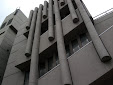
I was talking to Tina Richardson this week, my new colleague, about the office that we share and the building we are housed in at the University of Leeds. It’s now known as '28 University Road' and is temporarily being used by our school, The School of Design. There is a notice on it that says 'Formerly Geography East'. Tina says she knows it as a geography building as she taught there a few years ago and some of her geography friends had their offices there, too. Apparently the building is due for demolition, and even though it looks like a dodgy little white stucco temporary building, it has an interesting history, being at one time a maltings.


As you can see from the above image, there is a big old map in the background, just outside our office. There is also another old map in the corridor. The building is very warm, although I have not worked out where all the heat is coming from (maybe an underwater spring reminiscent of Journey to the Centre of the Earth), and the corridor has a strong whiff of some kind of sweet-smelling mould, which I actually really like. It is quite scruffy and you could say it is 'falling apart', but it definitely has a charm and we both really like it there. In fact we don’t want to move, which brings me to the purpose of this guest post, which, in a way, I am writing on behalf of both of us: if we staged a pretend sit-in on the day the demolition begins - the day when university officials appear in hi viz jackets with their clipboards, and men with hydraulic excavators and loaders enter the building – what would happen?

Bear in mind this is not a real sit-in. It is just a pretend (fake), one!

Well, as has been written before by Tina Richardson in a post about staging a pretend faint in a public place (A Hysterical Simulacra), all the apparatus that would be employed in a real situation would also be employed in a false one, since, from the outside, both look the same. This is Jean Baudrillard’s concept of the simulacra. You will not be able to stage a fake sit-in, because, as Baudrillard says: “the network of artificial signs will become inextricably mixed up with real elements”. He goes on to explain that it is required that “everything is reduced to the real…to the established order itself” and the system operates in order to “devour any attempt at simulation”. In other words, the structure, as it appears in organisational form (what Louis Althusser describes as the ideological state apparatus), is unable to see beyond its own ideological appearance and incapable of seeing anything above its own order of simulation.

However, Baudrillard also goes on to say, and I think this is actually key in these types of thought experiments, it actually occurs even before “institutions and justice come into play”. Which is interesting as initially this sounds a bit like a contradiction. Nevertheless, what he says following this is: the simulation can never be punished as such, because it can only either be punished as a less serious offence (because of a lack of consequences), or as a crime against the judiciary when various state officials become involved (e.g. the police). He goes onto say that either way it is never punished for what it is, a simulation, “since it is precisely as such than no equivalence with the real is possible, and hence no repression either. The challenge of simulation is never admitted by power”.


So, what about staging a sit-in?

Picture this: myself, plus Dr Richardson, and the odd member of staff, a group of recruited students (maybe from The School of Performance and Cultural Industries) 'stage' our sit-in in the student common room, right near the entrance to 28 University Road. We all know that this is a performance. We are not there to make a protest or get in the way of the bulldozers. This is a simulation. The contractors open the door to see a whole load of protesters sitting in the common room, with their placards saying 'Save 28 University Road', 'Keep this wonderful heritage site!' and 'Don't demolish the famous maltings'. They go back to the site office to get the boss. He takes one look at the resistant academics and students and heads to the university administration building, returning with the man-from-estates who promptly calls the police for fear of any potential litigation somewhere down the line...

At what point did this simulation become real?

Saturday, 18 February 2017

Down the Postmodern Rabbit Hole or Reflections on Post-Truth Reality (Part 1)


Part 1: Are We Really in a Post-Truth World?

By Fenella Brandenburg

I was discussing the possibility of the idea of post-situationism last week when visiting a colleague at Huddersfield University and later reiterated the conversation to Tina Richardson. She asked me how this might fit into to the current concept of post-truth and invited me to write a guest post for her blog. This post is in two parts that I have set up in question form:

Part 1: Are we really in a post-truth world?
Part 2: How can we challenge ‘truth’ today?

It wouldn’t be a stretch to say that post-truth was the word of the year in 2016, not least because of its new dictionary inclusion. But, these kinds of phrases are always problematic when taken up into media discourses, because eventually they begin to self-deconstruct, although one could say that is a positive side-effect. In the West at least, we can all recognise the major socio-political shift that took place in 2016, nevertheless post-truth is not really new and doesn’t herald a new cultural epoch, despite the seismic shift we all feel has befallen us. Post-truth sits perfectly well into the concepts that, as theorists, we situate within postmodernity. One only needs to pick up a text by Jean Baudrillard to understand that the grounds for post-truth have been being built on for many decades. We don’t even need to look at his 21st Century texts to find the seeds of post-truth, because he set it out neatly for us in his formulation for the simulacra (levels two, three and four) in 1981:

Level 1: “it is the reflection of a profound reality”
Level 2: “it masks and denatures a profound reality”
Level 3: “it masks the absence of a profound reality”
Level 4: “it has no relation to any reality whatsoever; it is its own pure simulacrum” (2006: 6)

Feel free to choose any of the above to apply to a specific situation you are attempting to analyse under the rubric of post-truth!

We can also look at the significant work that Michel Foucault has carried out in regards to truth, power, knowledge and discourse to understand that truth has no bearing on something that can be considered absolute, or real, in any sense at all. In regards to the semantics of a specific instance, ‘truth’ is not a function of the words and sentences themselves, but the whole network of factors which form that specific utterance in the propagation of a specific statement (for example a media announcement - as it would have been for Donald Trump on Thursday 16 February 2017). These statements exists through a form of appropriation and are legitimised through the utilisation of the forces that exist in an event-like state around them. For Foucault “a true discourse engenders or ‘manufactures’ something that does not yet exist, that is, ‘fictions’ it” (1980: 193). There we have it! We are not in a post-truth period at all, it is simply that the very concepts that underpin postmodernity have just reached critical mass and have finally been recognised on a quotidian level.

But…..whether you believe that post-truth is a new or even ‘real’ thing doesn’t change the fact that we sense that something has shifted to a very significant degree. So, what does this also say about how we can question the current climate of alt-facts? I will be covering this in the next part of the post in regards to deconstruction and post-structural theory

Bibliography:
Baudrillard, Jean. Simulacra and Simulation. Translated by Sheila Faria Glaser. The University of Michigan Press: Ann Arbor, 2006.
Foucault, Michel. Power/Knowledge: Selected Interviews and Other Writings 1972-1977, ed. by Colin Gordon. Translated by Colin Gordon, Leo Marshall, John Mepham and Kate Soper. Hemel Hempstead: Harvester Press, 1980.

Tuesday, 23 December 2014

A Hysterical Simulacra: “To the established order they are always of the order of the real”.


There was a really interesting article in the 18 December 2014 edition of the London Review of Books entitled 'Writing Machines: Tom McCarthy on Realism and the Real'. McCarthy discusses the real, realism and reality in the context of literature, drawing on the likes of Jacques Lacan (amongst others). Discussing J. G. Ballard’s Crash, in particular the character Vaughan’s staged car crashes, McCarthy invokes Lacan, stating: “This is a real that happens, or forever threatens to happen, not as a result of the artist ‘getting it right’ or being authentic, but rather as a radical and disastrous eruption inside the always and irremediably inauthentic”.

This reminded me of Jean Baudrillard’s ‘The Precession of the Simulacra’, in particular his description of a possible staged hold-up. Baudrillard talks about how to “feign a violation” and goes on to say that:
There is no ‘objective’ difference: the gestures, the signs are the same as for a real robbery, the signs do not lean to one side or another. To the established order they are always of the order of the real.
This got me thinking about what might happen if you staged a faint as a form of intervention: the gestures, the signs are the same as for a real faint. Baudrillard says one would need to create as much disruption as possible, while staying as close as one could to ‘the truth’. This would be required so as to “test the reaction of the apparatus to a perfect simulacrum”. But, he adds, “You won’t be able to do it: the network of artificial signs will become inextricable mixed up with real elements”. Your collapsing/swooning will engender an emergency situation whereby ‘the system’ kicks into play: people will come to your rescue, first aid will be called! As Baudrillard explains: “you will immediately find yourself once again, without wishing it, in the real, one of whose functions is precisely to devour any attempt at simulation, to reduce everything to the real”!