Showing posts with label Leeds General Cemetery. Show all posts
Saturday, 28 January 2012
The Psychogeography of Other Spaces: St George's Field
Michel Foucault offers the space and concept of a cemetery as an example of a heterotopia; he explains that it is such because over time the function of the cemetery has changed to reflect the prevailing culture. (2001: 241) At one time being the centre of the city, reflecting a more religious community spirit, in the Victorian times which brought with them not only a more atheistic attitude but also a greater awareness of disease, they were moved to the suburbs. (ibid.) St George's Field (the cemetery at the University of Leeds) as it is discussed on this blogspot, confirms Foucault's second principle of the heterotopia, a historical place that has a determined position within culture, which can then be superseded by another function at a later time (ibid.): in this case, the change of use from graveyard to garden.
What is interesting about St George's Field, is that it not only holds true of the basic principles of what classifies a heterotopic space, it also has further qualities that a 'regular' cemetery might not. These further qualities have come about because of its condition of reuse set out in the 1960s. For example, as Foucault states in his third principle: "The heterotopia is capable of juxtaposing in a single real place several places, several sites that are in themselves incompatible." (ibid.) Is it possible for the cemetery to also be a garden? Can it comfortably be a sanctified place of rest for the dead and also a park-like area, open to all and contained within the boundaries and administrative structure of a university campus? I pose these questions, not because I intend to answer them, but so as to highlight the tensions inherent in the place. These very tensions being what creates a heterotopia in the first place. Foucault describes these simultaneous places as being "foreign to one another" (ibid.) and while the example of the cemetery as a heterotopia is apparent enough, he also provides the garden as an example of a heterotopia, because in antiquity gardens were originally created to represent a small version of the world. (2001: 238) To complicate the space of St George's Field further, the chapel is also a storage place for the university library and even has a library code assigned to it as a storage facility: STCHA. Foucault also classifies libraries as heterotopias, because they represent the modernist concept of "accumulating everything, of establishing a sort of general archive, the will to enclose [...] the idea of constituting a place of all times that is itself outside of time and inaccessible to its ravages". (2001: 242) Maybe this is even more so for St George's Field: since the chapel is already a preserved building, it is even more stable as a place than our high street public libraries, that have been under threat in the past few years.
Foucault uses the mirror to explain the relationship with utopias (sites without places) and heterotopias. He describes the mirror as a type of utopia, by his own definition "a placeless place". (2001: 239) The mirror projects us into a place where we are not. However, the mirror is also a heterotopia in the sense that it does exist as a real object in space, enabling us to "discover [our] absence from the place where [we are]", since we can see we are located elsewhere. (ibid.) This has the effect whereby the gaze as it is located in the ground of the reflection, can be traced back towards us as the viewer, via the glass, and back into ourselves through our eyes, where we become restructured. (ibid.) As Foucault states, this has the effect of making the location of the subject conjured in the act of looking at the glass both "absolutely real" and "absolutely unreal". (ibid.) For a heterotopia such as a cemetery, this mirroring effect might also be evoked by the surface of the ground and the gravestones locating 'loved ones'.
The mirroring effect that Foucault mentions, as they relate to a relationship between heterotopias and utopias, is very pertinent to the cemetery, especially in relation to the visitor of a grave. Firstly, because cemeteries, as they were developed in the nineteenth century, were a utopian concept. It was considered that everyone, rich or poor, had a right to a place of burial. Sylvia Barnard explains how the 'guinea graves' (paupers graves) operated in Leeds in Victorian times. These graves contained many bodies, all listed on a single gravestone located above them. The poor would pay approximately a pound to bury their family member, and were assured of a 'proper' burial with their relative listed, in the form of minimal information, on the gravestone. Barnard describes the practice as a "brilliant and humanitarian concept" (2009: 54) Secondly, one can view the surface of cemetery land as a kind of mirror. A visitor to the burial plot of a family member actually gazes at the headstone and the surface of the grave, but, in a sense, they are also looking past the surface to the body below. This produces a recognition inherent in kinship, where one sees oneself in other family members. So the visitor also sees themselves, especially in family plots where a space is also kept available for a spouse who is still alive. Even though married couples are not biologically related, this mirroring could still be considered to occur in the sense that the unit created in marriage produces a projection whereby the other half of the unit reaffirms oneself. So the husband or wife visiting the grave of their partner, sees a reflection of themselves echoing back from the surface in a shadow-like form, a reflection "that enables me to see myself there where I am absent". (Foucault 2001: 240)
Please note: The images shown here, despite looking old, were taken in 2010 with a lomography camera, a Diana F+.
Links:
St George's Field, Fallow Again: A Schizocartography
Dying to Find It: Where is the University Cemetery?
References:
Barnard, Sylvia M. 2009. To Prove I'm Not Forgot: Living and Dying in a Victorian City (Stroud: The History Press).
Foucault, Michel. 2001. 'Of Other Spaces', The Visual Culture Reader, ed. by Nicholas Mirzooeff (London and New York: Routledge). pp. 237-244.
Sunday, 22 January 2012
Saturday, 14 January 2012
Dying to find it: Where is the university cemetery?
St George's Field at the University of Leeds
At the University of Leeds there is an area located at the north edge of the campus known as St George's Field. This 'field' - referred to as a 'garden' on the signs located at its entrances - can be seen on the campus maps provided by the university under the label 'St Georges Field'. As you can see from my reappropriated map below, this space takes up a large percentage of the surface area of the campus:
Until the 1960s St George's Field was a cemetery. Previously known as Woodhouse Cemetery and also Leeds General Cemetery, prior to it first becoming a cemetery in 1833 it was known as 'St Georges Field'. In 1969, when its function as a working cemetery was officially terminated, it reverted back to the name 'St Georges Field'. All the university maps refer to this space as St George's Field and there is very little historical information about it on the university website. If one types the word 'cemetery' into the university search engine, the first four items do include reference to the cemetery but take you to the university library archive, listing data on St George's Field. Most of the other links refer to "Cemetery Road" (the road that runs adjacent to St George's Field) and "Cemetery Lodge" (a part of the gatehouse of the original cemetery that still remains and exists as office and studio space for the School of Fine Art, History of Art and Cultural Studies). However, if one types 'St George's Field' into the university search engine a number of links appear from various departments at the university, for instance the Estates Office, and Access and Community Engagement. Also included are links that take you to information on some events that have been held there in the past few years, and to information on Pablo Fanque (the first black circus owner in Britain, who died in 1871 and is buried there along with his wife).
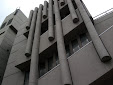
St George's Field is surrounded on all sides by walls and/or metal railings. At some places the wall is quite high on the outside, but because parts of the cemetery terrain are higher than the surrounding land, the walls can appear lower from the inside in some places. On the most northern side the area is bordered by the Henry Price Halls of Residence which sits, in a cantilever-effect, on the original wall of the cemetery and overlooks this field. The halls themselves are on the uppermost edge of the campus, facing Clarendon Road and, across from there, Woodhouse Moor (locally known as Hyde Park, although Hyde Park is actually the nearby neighbourhood in Leeds). The east-most side of the field is bordered primarily by engineering department buildings, but also a road, which includes a pedestrian path for only part of its length. While this is where the cemetery gatehouse is located, and there is a blue plaque outside stating that it was a cemetery, there are no signposts to the field in this area or anywhere on campus, only small signs like those located at all the entrances to the garden. The west edge of the field is bordered by a number of departments including Geography and also the School of Design. Behind these buildings can be found a small entrance into the field which is serviced by some steps. The southern edge of the cemetery is well hidden by a number of buildings including part of Chemistry. However, if one is curious enough to look, another entrance can be found to the field here via a metal staircase behind these buildings.
Once in St George's Field the area is presented to you as a well-kept, landscaped park-like space. In the centre is the original chapel, now, apparently, storage space for the library. A main path leads to the chapel, from the gatehouse and from the back of the School of Geography. Much of this path is made from paupers' gravestones which list a number of people located in one burial plot (these paupers' gravestones are just about viewable in the first image in the blog). The chapel is in the middle of the space. The rest of the field is mostly a grass surface, with copse-like areas of trees and shrubs which have gravestones (but not paupers gravestones) located in them. There are also a number of old, large trees which are indexed with a metal number tag. The area is not completely flat even though some photographs suggest that it is.
From an aesthetic perspective, the space is extremely pleasing to look at and quite peaceful despite not being far from the main road leading north-west out of Leeds. It looks more like a well-maintained municipal park than a cemetery. Since I already knew of the cemetery before I first saw it, I cannot say how it would feel to come across it by accident. However, I should imagine it would be a delightful surprise and maybe even produce a slightly uncanny reaction, because, in a sense, it is out of place and out of time, yet it is familiar due to its similarity to other parks one might have come across elsewhere in Britain. What is interesting, in this regard, is that despite it appearing to be temporally and spatially out of context, it was there long before the university, so one could argue that it is really the university which is 'out of place'. St George's Field could even be considered to be a little haven within the sea of learning and teaching and, in fact, on their website the Equality Service Department at the University of Leeds recommend it as a place for "quiet contemplation".
As well as the gravestones which are located in pockets, there are a few large monument-type memorials (the above image is of a memorial to Leeds firemen). Upon closer examination there are a number of small memorials dotted about the area which appear in the form of small wooden plaques close to the ground, where gravestones appear to be either absent or never existed in the first place. There is also another path which eventually joins the main path. Part of this path is slightly hidden by shrubbery, but actually leads through more gravestones. The far end of this path leads through the wall on the north edge, to another entrance/exit. There is also a large, stone, free-standing, arch located near the Henry Price building (see below) and a similar one nearby, which is situated in the original wall and has now been filled in.
The area is open to both university staff, students and the public, nevertheless most of the time it is very much empty of people, even in good weather. However, it is a short-cut, so it is used by those who know about it to head south across campus. Also, at times you can see people walking around looking at the gravestones, and on occasions one can come across other 'events' occurring there.
So, my question is: why is the cemetery 'hidden'?
Links:
A Trip to St George's Field on a Not So Hotsy Totsy Sunny Day
An Island of Heterotopia
St Georges Field, University of Leeds
Monday, 6 June 2011
St George's Field, University of Leeds
Here are some recent images I took of St George's Field, what was Leeds General Cemetery, on the University of Leeds campus. The above one was taken with a sensecam. And the following two, black and white, were taken with my Diana F+.
The above image is the best one that I took with this film. One of the reasons I like it is because it looks like an old photograph, but was actually taken in May 2011. Why I like the image below is because the young man is challenging the traditional use of space by using the base of the Henry Price Halls of Residence - made from the original cemetery wall - as an object to traverse.
Subscribe to:
Posts (Atom)